Emergencies associated with pregnancy and delivery: peripartum hemorrhage
- PMID: 19471625
- PMCID: PMC2680565
- DOI: 10.3238/arztebl.2008.0629
Emergencies associated with pregnancy and delivery: peripartum hemorrhage
Abstract
Introduction: Peripartum hemorrhage is one of the leading causes of maternal death worldwide (25%).
Methods: Selective literature review, including international guidelines, for assessment of the causes and optimal management of this condition.
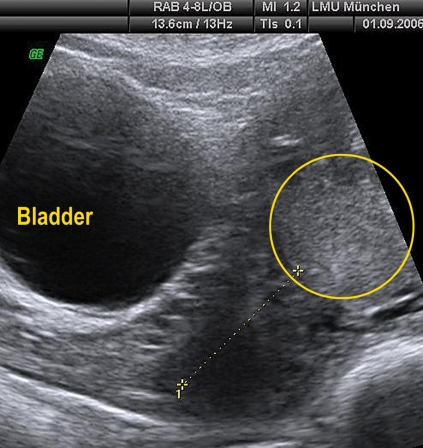
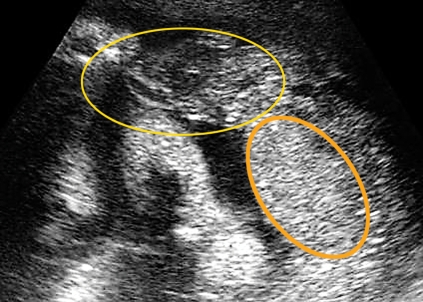
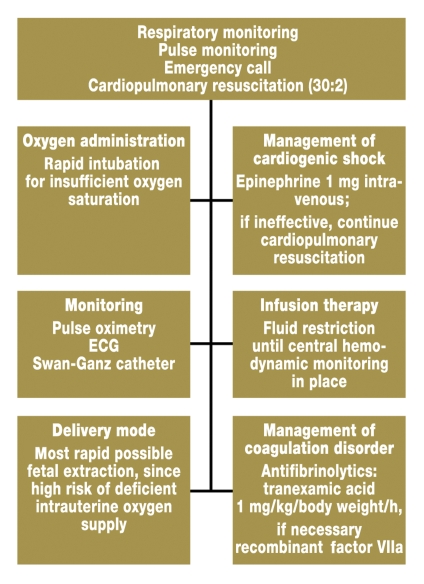
Results: The major causes of hemorrhage are uterine atony, placenta previa, and abruptio placentae. The diagnosis of hemorrhage is suspected from its clinical manifestations and confirmed by ultrasonography. In placenta previa, the placenta is implanted in the lower uterine segment and may cover the internal cervical os. Placenta previa is more common in older and multiparous mothers, as well as in mothers who have previously undergone a cesarean section. Placental abruption is defined as separation of the placenta from the uterine wall before delivery of the infant. The risk factors for this condition include preeclampsia, advanced maternal age, and trauma. When it presents with manifestations of acute blood loss, premature abruption placentae must be diagnosed rapidly and treated without delay to save the life of the mother and child. A rare, but highly lethal, cause of bleeding is amniotic fluid embolism, which manifests itself with sudden and unexplained peripartum respiratory distress and cardiovascular collapse. Amniotic fluid embolism is associated with high fetal and maternal mortality (20% and 60% to 80%, respectively) even when it is optimally treated.
Discussion: Peripartum hemorrhage is an important source of maternal and fetal morbidity and mortality. The prognosis for both mother and child can be markedly improved if the risk factors for hemorrhage are recognized and the problem is treated rapidly and appropriately when it arises.
Keywords: amniotic fluid embolism; maternal mortality; placenta previa; preterm abruption of placenta; third-trimester hemorrhage; uterine atony.
Figures
Comment in
-
Different Products.Dtsch Arztebl Int. 2009 Feb;106(7):113; author reply 114. doi: 10.3238/arztebl.2009.0113a. Epub 2009 Feb 13. Dtsch Arztebl Int. 2009. PMID: 19562023 Free PMC article. No abstract available.
-
Cardiovascular side effects.Dtsch Arztebl Int. 2009 Feb;106(7):113; author reply 114. doi: 10.3238/arztebl.2009.0113b. Epub 2009 Feb 13. Dtsch Arztebl Int. 2009. PMID: 19562024 Free PMC article. No abstract available.
References
-
- Hellgren M. Hemostasis during normal pregnancy and puerperium. Semin Thromb Hemost. 2003;29:125–130. - PubMed
-
- Kainer F. Blutungen im 3. Trimenon. In: Schneider H, Husslein P, Schneider KTM, et al., editors. Geburtshilfe. Berlin, Heidelberg, New York: Springer; 2000. pp. 539–553.
-
- Welsch H. Müttersterblichkeit während Geburt und Wochenbett bei vaginaler Entbindung und Sectio caesarea. Gynäkologe. 1997;30:742–756.
-
- AWMF-Leitlinie der Deutschen Gesellschaft für Gynäkologie und Geburtshilfe (DGGG) Plazentationsstörungen bei Status nach Sectio - Risk-Management zur Vermeidung von Müttersterbefällen 015/046 2005
-
- Royal College of Obstetricians and Gynaecologists (RCOG) Guideline No 27; Placenta previa and placenta accreta: Diagnosis and management. London: RCOG Press; 2005.
LinkOut - more resources
Full Text Sources