


Correlates of individual differences in compensatory nicotine self-administration in rats following a decrease in nicotine unit dose
- PMID: 19475400
- PMCID: PMC3601673
- DOI: 10.1007/s00213-009-1567-7
Correlates of individual differences in compensatory nicotine self-administration in rats following a decrease in nicotine unit dose
Abstract
Rationale: The ability of tobacco harm reduction strategies to produce significant reductions in toxin exposure is limited by compensatory increases in smoking behavior. Characterizing factors contributing to the marked individual variability in compensation may be useful for understanding this phenomenon and assessing the feasibility of harm reduction interventions.
Objective: The objective of the study was to use an animal model of human compensatory smoking that involves a decrease in unit dose supporting nicotine self-administration (NSA) to examine potential contributors to individual differences in compensation.
Methods: Rats were trained for NSA during daily 23-h sessions at a unit dose of 0.06 mg/kg/inf until responding was stable. The unit dose was then reduced to 0.03 mg/kg/inf for at least 10 sessions. Following reacquisition of NSA at the training dose and extinction, single-dose nicotine pharmacokinetic parameters were determined.
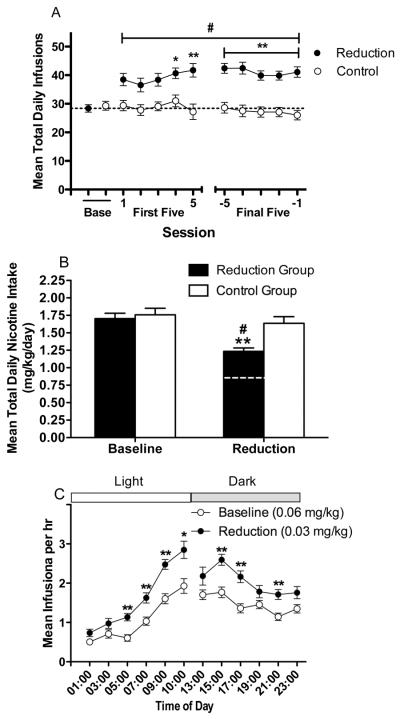
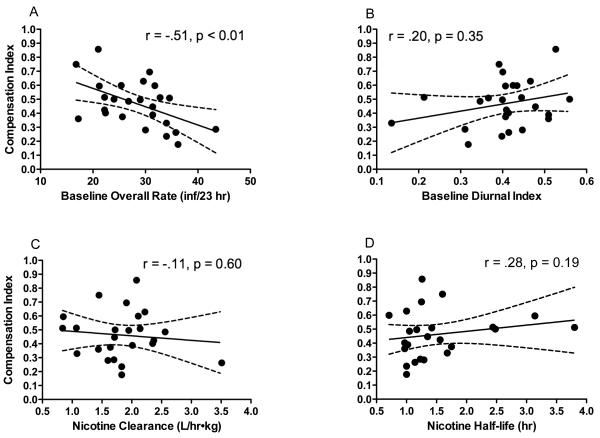
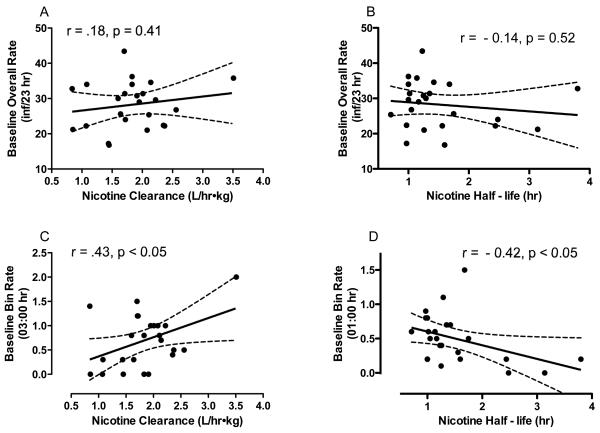
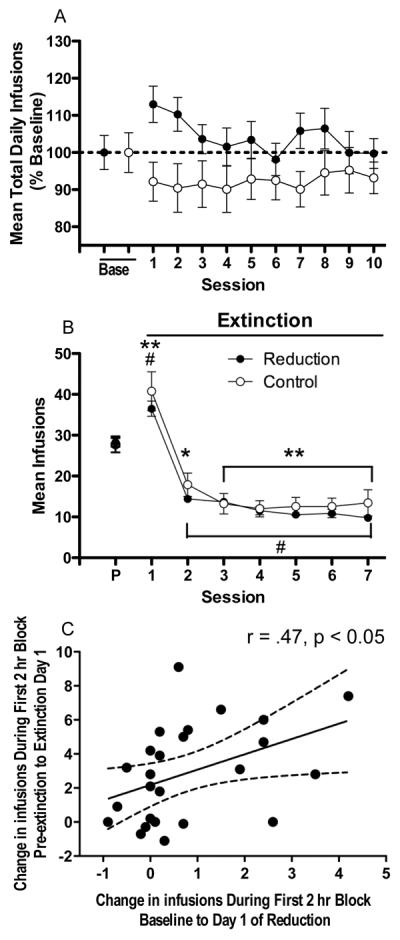
Results: Decreases in nicotine intake following dose reduction were proportionally less than the decrease in unit dose, indicating partial compensation. Compensatory increases in infusion rates were observed across the course of the 23-h sessions. The magnitude of compensation differed considerably between rats. Rats exhibiting the highest baseline infusion rates exhibited the lowest levels of compensation. Nicotine pharmacokinetic parameters were not significantly correlated with compensation. Infusion rates immediately returned to pre-reduction levels when baseline conditions were restored.
Conclusions: These findings provide initial insights into correlates of individual differences in compensation following a reduction in nicotine unit dose. The present assay may be useful for characterizing mechanisms and potential consequences of the marked individual differences in compensatory smoking observed in humans.
Figures

References
-
- Abrams DB, Herzog TA, Emmons KM, Linnan L. Stages of change versus addiction: a replication and extension. Nicotine Tob Res. 2000;2:223–9. - PubMed
-
- Bardo MT, Green TA, Crooks PA, Dwoskin LP. Nornicotine is self-administered intravenously by rats. Psychopharmacology (Berl) 1999;146:290–6. - PubMed
-
- Becker KM, Rose JE, Albino AP. A randomized trial of nicotine replacement therapy in combination with reduced-nicotine cigarettes for smoking cessation. Nicotine Tob Res. 2008;10:1139–48. - PubMed
-
- Belluzzi JD, Wang R, Leslie FM. Acetaldehyde enhances acquisition of nicotine self-administration in adolescent rats. Neuropsychopharmacology. 2005;30:705–12. - PubMed
-
- Benowitz NL. Pharmacology of nicotine: addiction and therapeutics. Annu Rev Pharmacol Toxicol. 1996;36:597–613. - PubMed
Publication types
MeSH terms
Substances
Grants and funding
LinkOut - more resources
Full Text Sources
