. 2009 May 22;4(5):e5672.
doi: 10.1371/journal.pone.0005672.

Combination therapy using chimeric monoclonal antibodies protects mice from lethal H5N1 infection and prevents formation of escape mutants

Affiliations

Combination therapy using chimeric monoclonal antibodies protects mice from lethal H5N1 infection and prevents formation of escape mutants

Mookkan Prabakaran et al. PLoS One. .

Abstract

Background: Given that there is a possibility of a human H5N1 pandemic and the fact that the recent H5N1 viruses are resistant to the anti-viral drugs, newer strategies for effective therapy are warranted. Previous studies show that single mAbs in immune prophylaxis can be protective against H5N1 infection. But a single mAb may not be effective in neutralization of a broad range of different strains of H5N1 and control of potential neutralization escape mutants.

Methods/principal findings: We selected two mAbs which recognized different epitopes on the hemagglutinin molecule. These two mAbs could each neutralize in vitro escape mutants to the other and in combination could effectively neutralize viruses from clades 0, 1, 2.1, 2.2, 2.3, 4, 7 and 8 of influenza A H5N1 viruses. This combination of chimeric mAbs when administered passively, pre or post challenge with 10 MLD50 (50% mouse lethal dose) HPAI H5N1 influenza A viruses could protect 100% of the mice from two different clades of viruses (clades 1 and 2.1). We also tested the efficacy of a single dose of the combination of mAbs versus two doses. Two doses of the combination therapy not only affected early clearance of the virus from the lung but could completely prevent lung pathology of the H5N1 infected mice. No escape variants were detected after therapy.

Conclusions/significance: Our studies provide proof of concept that the synergistic action of two or more mAbs in combination is required for preventing the generation of escape mutants and also to enhance the therapeutic efficacy of passive therapy against H5N1 infection. Combination therapy may allow for a lower dose of antibody to be administered for passive therapy of influenza infection and hence can be made available at reduced economic costs during an outbreak.


Conflict of interest statement

Competing Interests: The authors have declared that no competing interests exist.

Figures

Figure 1
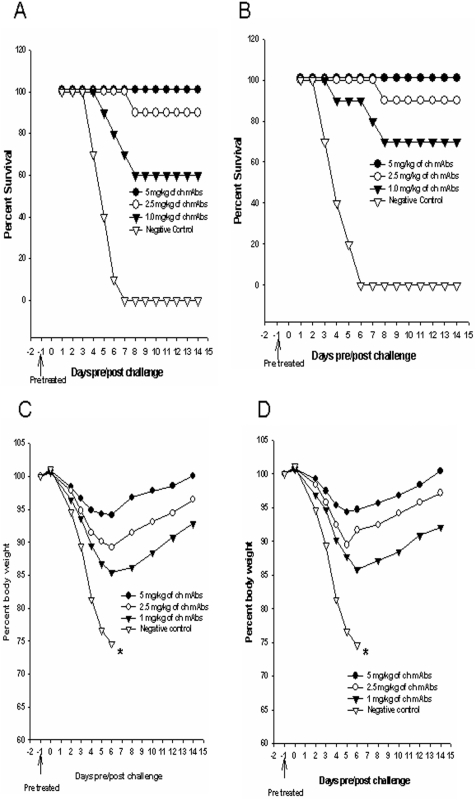
Figure 1. Prophylactic efficacy of the combination of chimeric mAbs in mice.
Groups of mice (n = 10) were pre-treated intraperitoneally with 1 mg/kg, 2.5 mg/kg, 5 mg/kg or 0 mg/kg (PBS) of the combination of ch-mAbs, one day before challenge with 10MLD50 of mouse-adapted HPAI H5N1 from A/Vietnam/1203/2004 (A and C) or clade 2.1 virus A/TLL013/06 (B and D). An irrelevant IgG1 monoclonal antibody (specific for porcine circovirus) was used as a negative control. Mice were monitored for survival (A and B) and weight loss (C and D) throughout a 14 day observation period. The results are expressed in terms of percent survival and percent body weight (at the beginning of the trial) respectively.
Figure 2
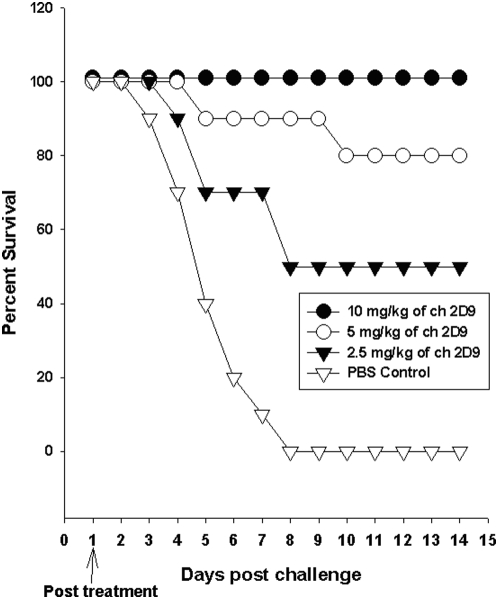
Figure 2. Therapeutic potential of a single mAb against H5N1 influenza infection in mice.
Groups of mice (n = 10) were infected with mouse-adapted HPAI H5N1 from clade 2.1 virus A/TLL013/06. Twenty fours after viral challenge, the mice were treated via intra-peritoneal route with 2.5 mg/kg, 5 mg/kg, 10 mg/kg or 0 mg/kg (PBS) of a single ch-mAb 2D9. Mice were monitored for survival throughout a 14 day observation period. The results are expressed in terms of percent survival.
Figure 3
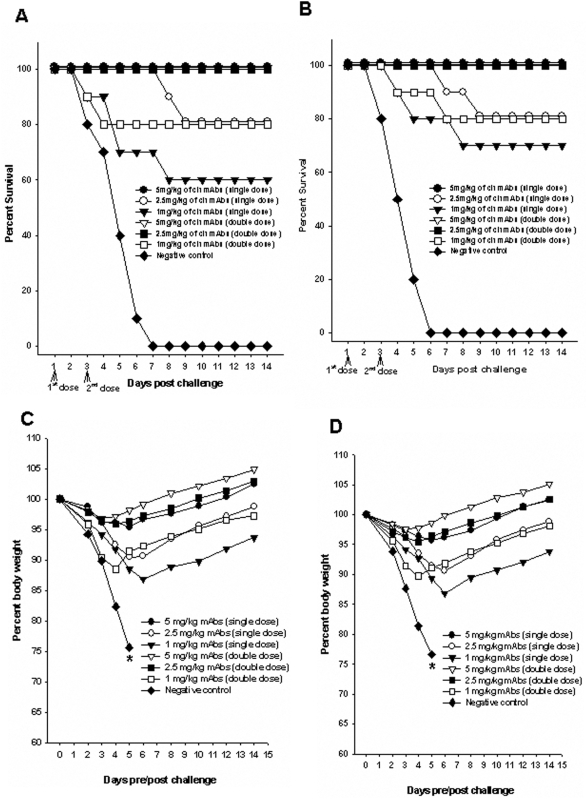
Figure 3. Therapeutic potential of one versus two doses of the combination of chimeric mAbs in mice.
Groups of mice (n = 10) were infected with mouse-adapted HPAI H5N1 from Clade 1 A/Vietnam/1203/2004 (A and C) and clade 2.1 virus A/TLL013/06 (B and D). For treatment with a single dose, 24 h after viral challenge, the mice were treated via intra-peritoneal route with 1.0 mg/kg, 2.5 mg/kg, 5 mg/kg or 0 mg/kg (PBS) of the combination of mAbs. For treatment with two doses, different sets of mice were treated twice with similar doses of chimeric mAbs 24 h and 72 h after the viral challenge. An irrelevant IgG1 monoclonal antibody (specific for porcine circovirus) was used as a negative control. Mice were monitored for survival (A and B) and weight loss (C and D) throughout a 14 day observation period. The results are expressed in terms of percent survival and percent body weight (at the beginning of the trial) respectively.
Figure 4
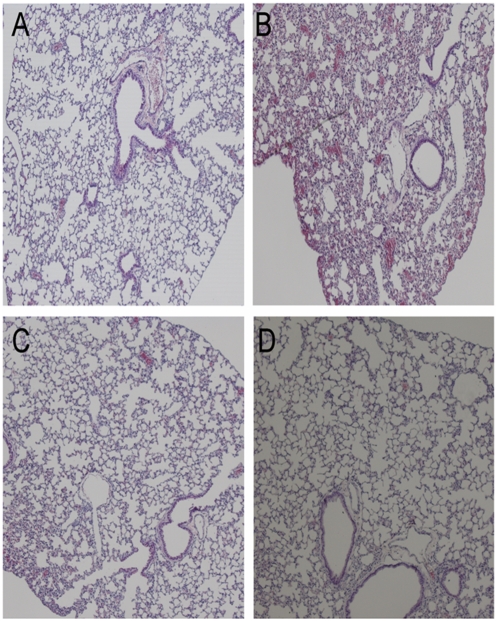
Figure 4. Histopathology of lung tissue in passively treated mice.
Photomicrographs of hematoxylin and eosin stained lung sections of mice treated with single or double doses of the combination of mAbs after post experimental viral infection with Clade 1 A/Vietnam/1203/2004 H5N1 virus at 6 days post challenge. A) Normal morphology seen in uninfected mice, B) infected and untreated mice, C) mice treated with a single dose of 5 mg/kg of ch-mAbs at 24 h post infection, D) mice treated with two doses of 5 mg/kg of ch-mAbs at 24 h and 72 h post infection.
Figure 5
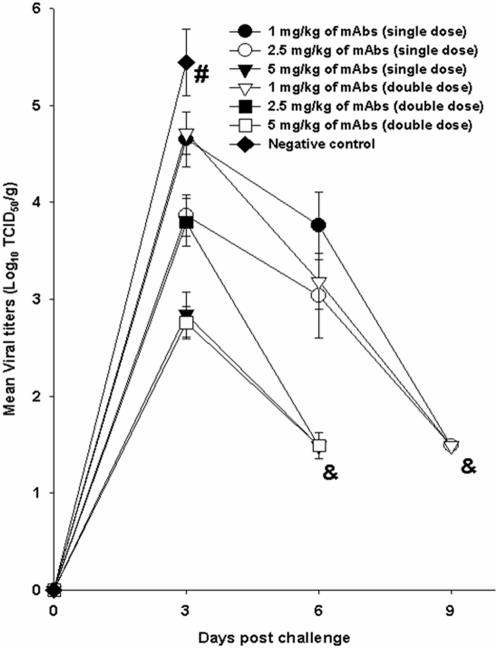
Figure 5. Measurement of viral infectivity titers in the lungs of mice experimentally infected with HPAI H5N1 (A/Vietnam/1203/2004- Clade 1) virus.
For single dose treatment, 24 h after viral challenge, the mice were treated via intra-peritoneal route with 1.0 mg/kg, 2.5 mg/kg, 5 mg/kg or 0 mg/kg (PBS) of the combination of mAbs. For the double therapy experiment, different sets of mice were treated with similar doses of chimeric mAbs 24 h and 72 h after the viral challenge. The viral loads were measured in the lungs of the infected animals on days 3, 6 and 9 post challenge. The results are expressed in terms of mean value of log TCID50/g±(S.E). (# represents no survival of any animals in the group and & represents undetectable viral titers). The lower limit of detection was 1.5 log10 TCID50/g.

References

    1. Veits J, Romer-Oberdorfer A, Helferich D, Durban M, Suezer Y, et al. Protective efficacy of several vaccines against highly pathogenic H5N1 avian influenza virus under experimental conditions. Vaccine. 2008;26:1688–1696. - PubMed
    1. Li KS, Guan Y, Wang J, Smith GJ, Xu KM, et al. Genesis of a highly pathogenic and potentially pandemic H5N1 influenza virus in eastern Asia. Nature. 2004;430:209–213. - PubMed
    1. de Jong MD, Hien TT. Avian influenza A (H5N1)-Review. J Clin Virol. 2006;35:2–13. - PMC - PubMed
    1. Le QM, Kiso M, Someya K, Sakai YT, Nguyen TH, et al. Avian flu: Isolation of drug-resistant H5N1 virus. Nature. 2005;437:1108. - PubMed
    1. Casadevall A, Dadachova E, Pirofski L. Passive antibody therapy for infectious diseases. Nat Rev Microbiol. 2004;2:695–703. - PubMed

Publication types

MeSH terms