


Stem cell factor and its soluble receptor (c-kit) in serum of asthmatic patients- correlation with disease severity
- PMID: 19480722
- PMCID: PMC2701918
- DOI: 10.1186/1471-2466-9-27
Stem cell factor and its soluble receptor (c-kit) in serum of asthmatic patients- correlation with disease severity
Abstract
Background: SCF (stem cell factor) is a pleiotropic cytokine exerting its role at different stages of bone marrow development and affecting eosinophil activation, mast cells and basophil chemotaxis and survival. The aim of the study was to assess concentration of SCF and its soluble receptor c-kit (sc-kit) in peripheral blood of patients with asthma referring it to asthma severity and phenotype.
Methods: The study involved 107 patients with bronchial asthma, well characterized with respect to severity and 21 healthy controls. Concentration of SCF and sc-kit in the patients serum were measured by ELISA method.
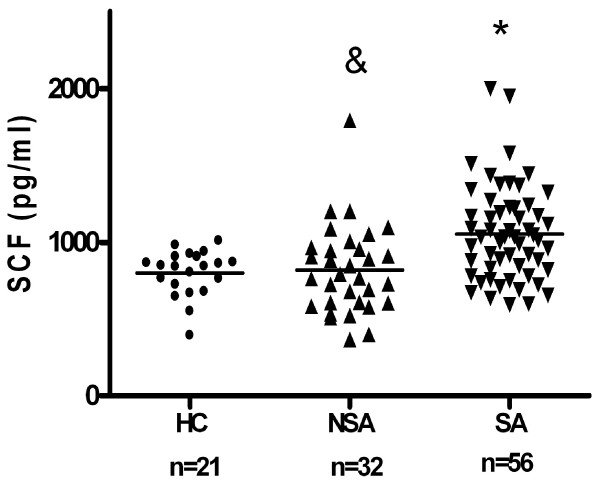
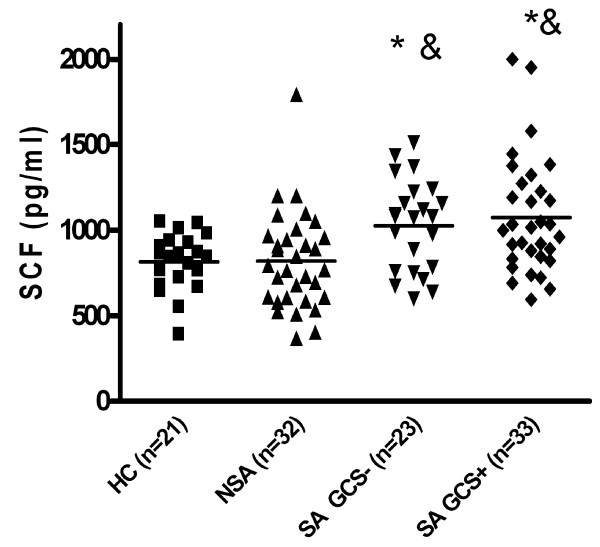
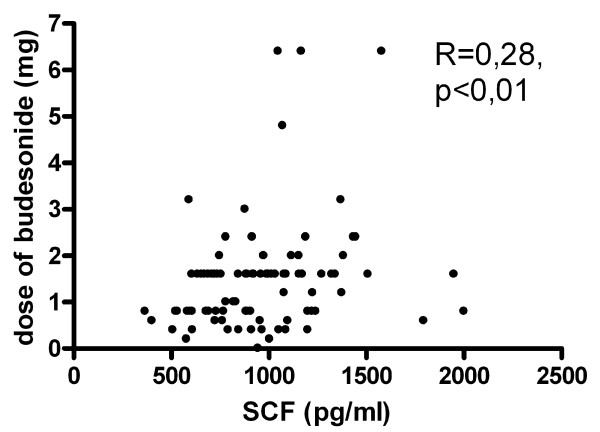
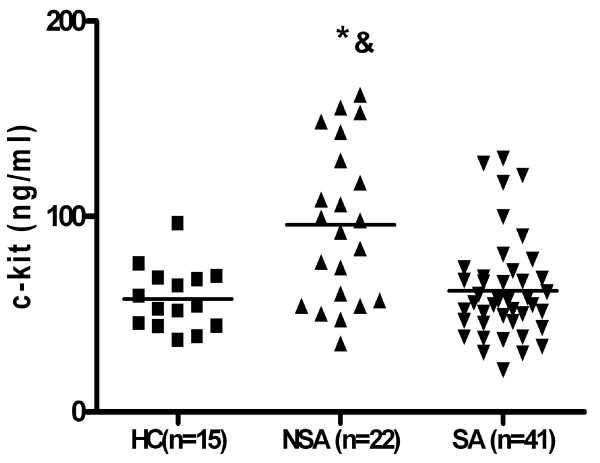
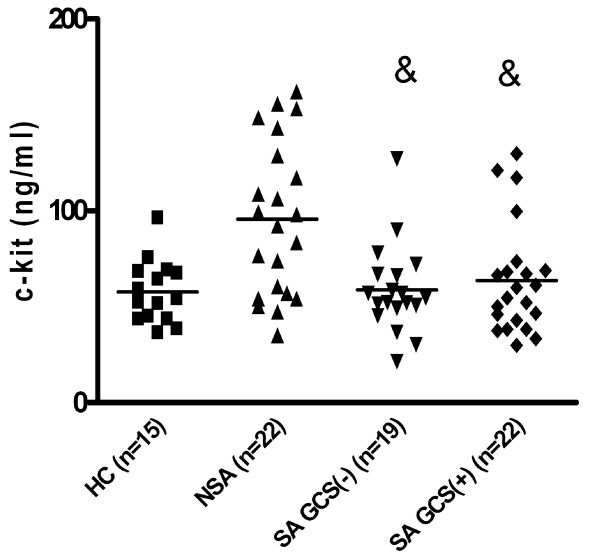
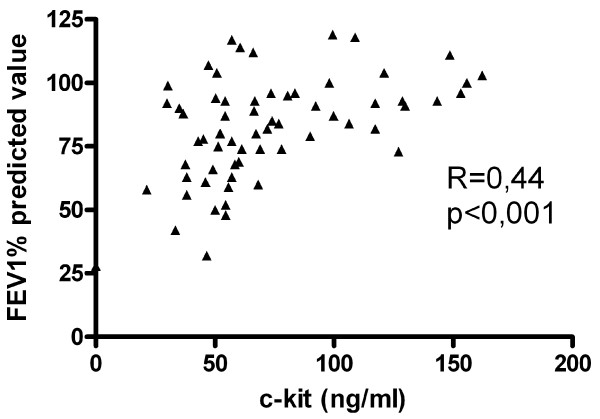
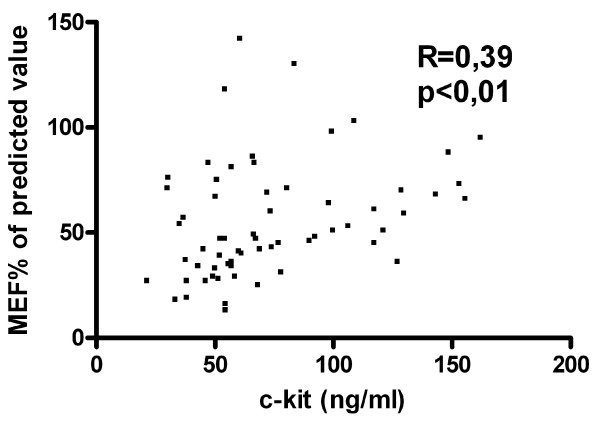
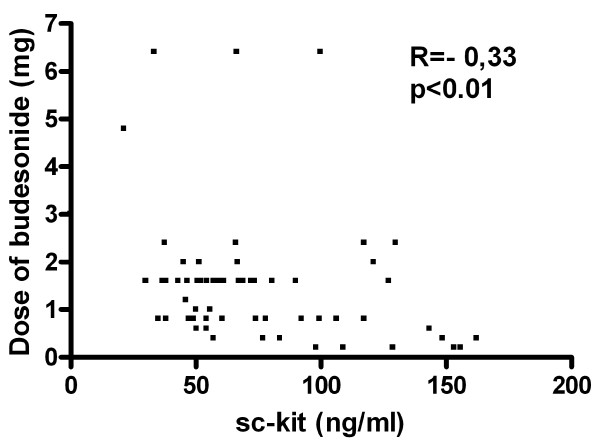
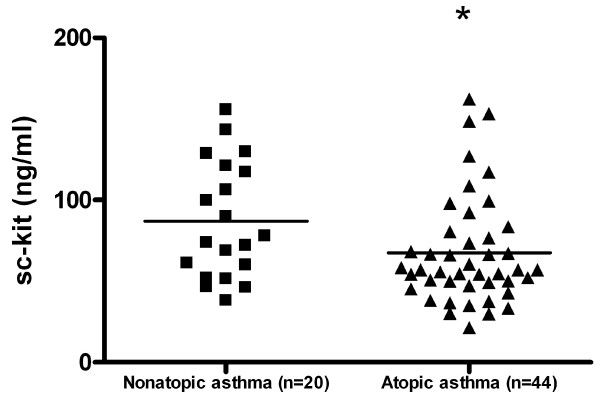
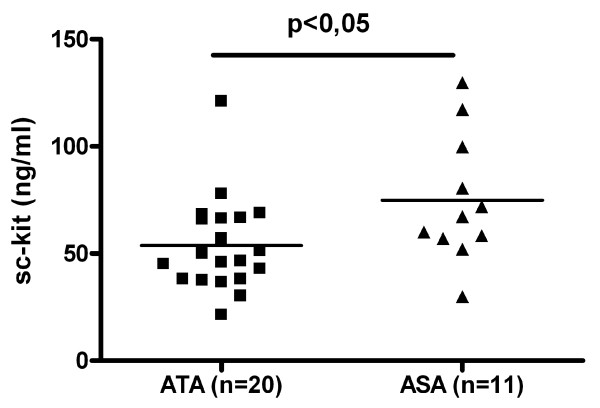
Results: Mean serum SCF level in the group of asthmatics (n = 88) was significantly higher as compared to healthy controls (1010 pg/ml +/- 37 vs 799 +/- 33; p < 0,001). The level of SCF was higher in patients with severe asthma as compared to patients with non-severe asthma (1054 +/- 41 pg/ml vs 819 +/- 50; p < 0,01) and correlated with dose of inhaled glucocorticosteroids taken by the patients to achieve asthma control (R = 0,28; p < 0,01). The mean sc-kit serum level did not differ between asthmatic patients and healthy controls, however the level of sc-kit in non-severe asthmatics was significantly higher as compared to patients with severe asthma and healthy controls. In asthmatic patients (n = 63) the level of sc-kit correlated positively with FEV1% predicted value (R = 0,45; p < 0,001) and MEF25% predicted value (R = 0,33; p < 0,01). The level of sc-kit inversely correlated with the dose of inhaled glucocorticosteroids taken by the patients (R = -0,26; p < 0,01).
Conclusion: Serum levels of SCF and its soluble receptor c-kit seem to be reflect asthma severity suggesting a role for these molecules in asthmatic inflammation.
Figures
References
-
- Galli SJ, Zsebo KM, Geissler EN. The kit ligand, stem cell factor. Adv Immunol. 1994;55:1–96. - PubMed
-
- Möhle R, L K. Hematopoietic growth factors for hematopoietic stem cell mobilization and expansion. Semin Hematol. 2007;44:193–202. - PubMed
-
- Oliveira SH, Taub DD, Nagel J, Smith R, Hogaboam CM, Berlin A, Lukacs NW. Stem cell factor induces eosinophil activation and degranulation: mediator release and gene array analysis. Blood. 2002;100:4291–4297. - PubMed
-
- Heinemann A, Sturm GJ, Ofner M, Sturm EM, Weller C, Peskar BA, Hartnell A. Stem cell factor stimulates the chemotaxis, integrin upregulation, and survival of human basophils. J Allergy Clin Immunol. 2005;116:820–826. - PubMed
-
- Al-Muhsen SZ, Shablovsky G, Olivenstein R, Mazer B, Q H. The expression of stem cell factor and c-kit receptor in human asthmatic airways. Clin Exp Allergy. 2004;34:911–916. - PubMed
MeSH terms
Substances
LinkOut - more resources
Full Text Sources
Medical
