


Biomarkers of response and resistance to antiangiogenic therapy
- PMID: 19483739
- PMCID: PMC3057433
- DOI: 10.1038/nrclinonc.2009.63
Biomarkers of response and resistance to antiangiogenic therapy
Abstract
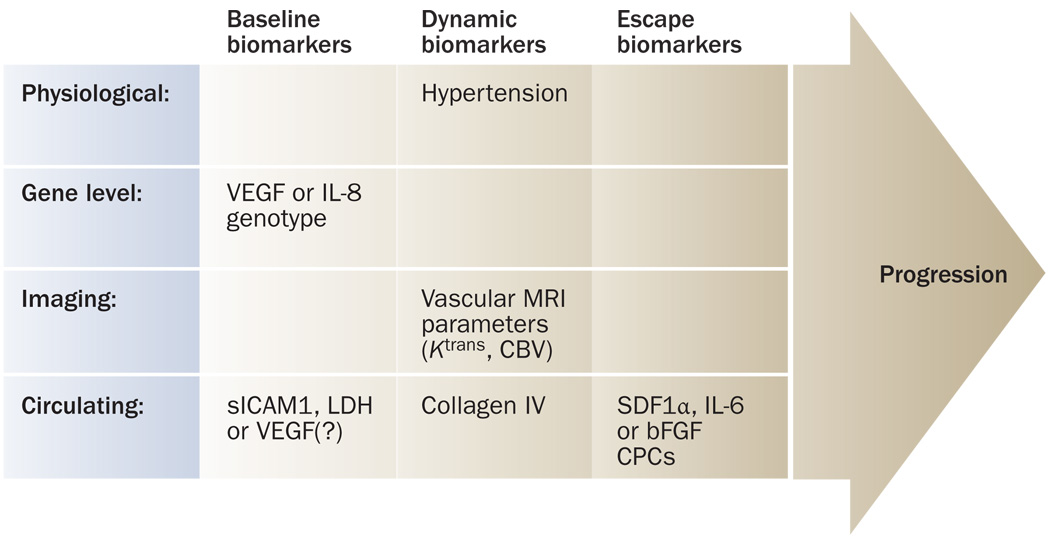
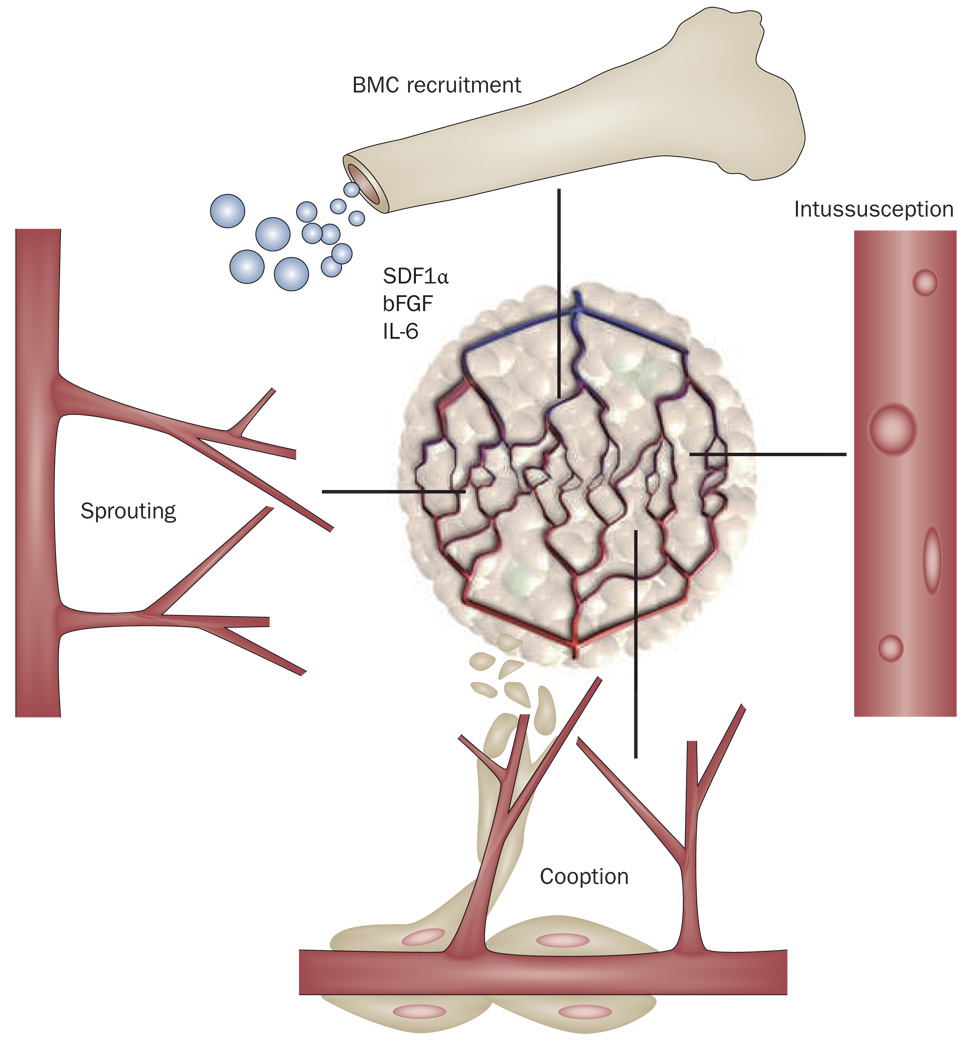
No validated biological markers (or biomarkers) currently exist for appropriately selecting patients with cancer for antiangiogenic therapy. Nor are there biomarkers identifying escape pathways that should be targeted after tumors develop resistance to a given antiangiogenic agent. A number of potential systemic, circulating, tissue and imaging biomarkers have emerged from recently completed phase I-III studies. Some of these are measured at baseline (for example VEGF polymorphisms), others are measured during treatment (such as hypertension, MRI-measured K(trans), circulating angiogenic molecules or collagen IV), and all are mechanistically based. Some of these biomarkers might be pharmacodynamic (for example, increase in circulating VEGF, placental growth factor) while others have potential for predicting clinical benefit or identifying the escape pathways (for example, stromal-cell-derived factor 1alpha, interleukin-6). Most biomarkers are disease and/or agent specific and all of them need to be validated prospectively. We discuss the current challenges in establishing biomarkers of antiangiogenic therapy, define systemic, circulating, tissue and imaging biomarkers and their advantages and disadvantages, and comment on the future opportunities for validating biomarkers of antiangiogenic therapy.
Figures
References
-
- Carmeliet P, Jain RK. Angiogenesis in cancer and other diseases. Nature. 2000;407:249–257. - PubMed
-
- Jain RK. Molecular regulation of vessel maturation. Nat. Med. 2003;9:685–693. - PubMed
-
- Folkman J. Tumor angiogenesis: therapeutic implications. N. Engl. J. Med. 1971;285:1182–1186. - PubMed
-
- Hurwitz H, et al. Bevacizumab plus irinotecan, fluorouracil, and leucovorin for metastatic colorectal cancer. N. Engl. J. Med. 2004;350:2335–2342. - PubMed
-
- Miller K, et al. Paclitaxel plus bevacizumab versus paclitaxel alone for metastatic breast cancer. N. Engl. J. Med. 2007;357:2666–2676. - PubMed
Publication types
MeSH terms
Substances
Grants and funding
- R01-CA 85140/CA/NCI NIH HHS/United States
- R01 CA126642/CA/NCI NIH HHS/United States
- R21 CA099237/CA/NCI NIH HHS/United States
- R01-CA 129371/CA/NCI NIH HHS/United States
- R01 CA 57683/CA/NCI NIH HHS/United States
- R01 CA 126642/CA/NCI NIH HHS/United States
- P41-RR 14075/RR/NCRR NIH HHS/United States
- P01 CA080124/CA/NCI NIH HHS/United States
- R01 CA115767/CA/NCI NIH HHS/United States
- R21-CA 117079/CA/NCI NIH HHS/United States
- R21 CA117079/CA/NCI NIH HHS/United States
- R01 CA085140/CA/NCI NIH HHS/United States
- R01 CA129371/CA/NCI NIH HHS/United States
- P41 RR014075/RR/NCRR NIH HHS/United States
- K24 CA125440/CA/NCI NIH HHS/United States
- R01-CA 115767/CA/NCI NIH HHS/United States
- P01-CA 80124/CA/NCI NIH HHS/United States
- M01 RR001066/RR/NCRR NIH HHS/United States
- R01 CA057683/CA/NCI NIH HHS/United States
- M01-RR 01066/RR/NCRR NIH HHS/United States
- R21-CA 99237/CA/NCI NIH HHS/United States
- K24-CA 125440/CA/NCI NIH HHS/United States
LinkOut - more resources
Full Text Sources
Other Literature Sources
Medical
