Early-life stress induces long-term morphologic changes in primate brain
- PMID: 19487631
- PMCID: PMC3873603
- DOI: 10.1001/archgenpsychiatry.2009.52
Early-life stress induces long-term morphologic changes in primate brain
Abstract
Context: Traumatic experiences in early childhood are associated with increased risk of developing stress-related disorders, which are linked to structural brain abnormalities. However, it is unclear whether these volumetric brain changes are present before disease onset or reflect the consequences of disease progression.
Objective: To identify structural abnormalities in the nonhuman primate brain that may predict increased risk of stress-related neuropsychiatric disorders in human beings.
Design: Rhesus monkeys were divided into 2 groups at birth: a group raised with their mothers and other juvenile and adult animals (mother reared) and a group raised with 3 age-matched monkeys only (peer reared) for the first 6 months of life. Anatomical brain images were acquired in juvenile male and female rhesus monkeys using magnetic resonance imaging.
Setting: National Institutes of Health Animal Center in Poolesville, Maryland. Subjects Twenty-eight rhesus monkeys (Macaca mulatta) aged 24 to 30 months were used for the study.
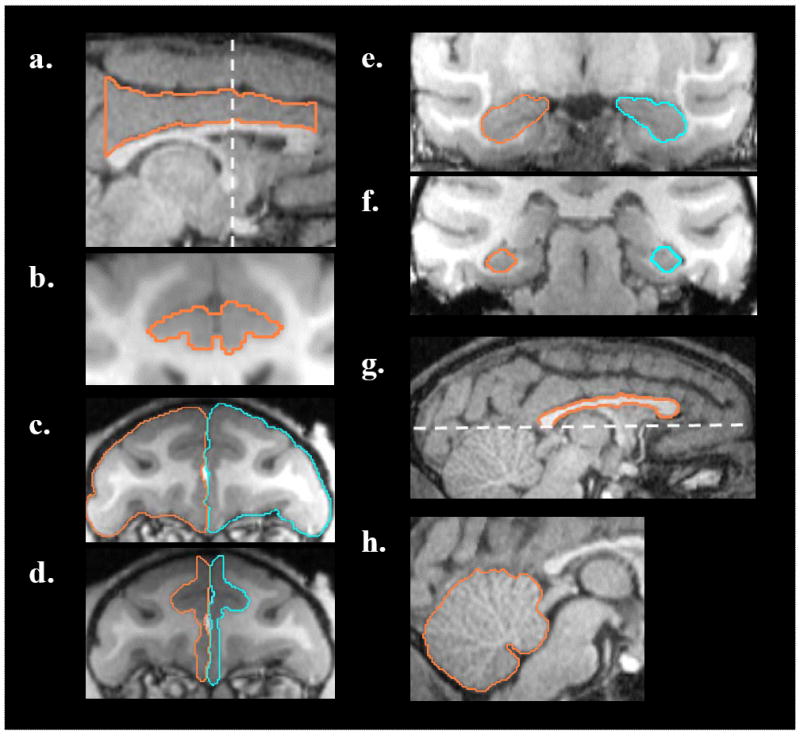
Main outcome measures: Volumetric measures of the anterior cingulate cortex, medial prefrontal cortex, hippocampus, corpus callosum, and cerebellar vermis were compared between mother-reared (n = 15) and peer-reared animals (n = 13).
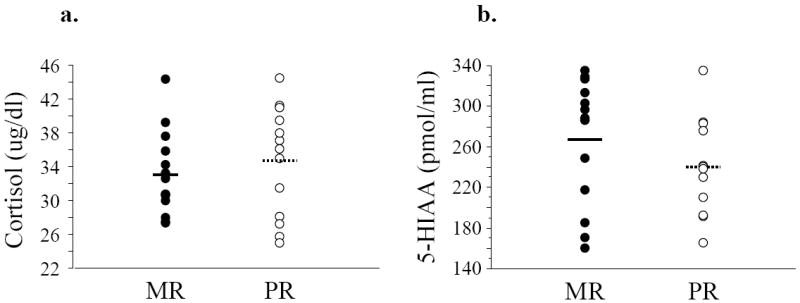
Results: Compared with mother-reared monkeys, we found an enlarged vermis, dorsomedial prefrontal cortex, and dorsal anterior cingulate cortex in peer-reared monkeys without any apparent differences in the corpus callosum and hippocampus.
Conclusions: Peer-rearing during infancy induces enlargement in stress-sensitive brain regions. These changes may be a structural phenotype for increased risk of stress-related neuropsychiatric disorders in human beings.
Figures
References
-
- De Bellis MD. The psychobiology of neglect. Child Maltreat. 2005;10(2):150–172. - PubMed
-
- Teicher MH, Andersen SL, Polcari A, Anderson CM, Navalta CP, Kim DM. The neurobiological consequences of early stress and childhood maltreatment. Neurosci Biobehav Rev. 2003;27(1-2):33–44. - PubMed
-
- Cohen RA, Grieve S, Hoth KF, Paul RH, Sweet L, Tate D, Gunstad J, Stroud L, McCaffery J, Hitsman B, Niaura R, Clark CR, McFarlane A, Bryant R, Gordon E, Williams LM. Early life stress and morphometry of the adult anterior cingulate cortex and caudate nuclei. Biol Psychiatry. 2006;59(10):975–982. - PubMed
-
- Teicher MH, Dumont NL, Ito Y, Vaituzis C, Giedd JN, Andersen SL. Childhood neglect is associated with reduced corpus callosum area. Biol Psychiatry. 2004;56(2):80–85. - PubMed
-
- De Bellis MD, Keshavan MS, Shifflett H, Iyengar S, Beers SR, Hall J, Moritz G. Brain structures in pediatric maltreatment-related posttraumatic stress disorder: a sociodemographically matched study. Biol Psychiatry. 2002;52(11):1066–1078. - PubMed
Publication types
MeSH terms
Substances
Grants and funding
LinkOut - more resources
Full Text Sources
Medical