Narrative review: the emerging clinical implications of the role of aldosterone in the metabolic syndrome and resistant hypertension
- PMID: 19487712
- PMCID: PMC2824330
- DOI: 10.7326/0003-4819-150-11-200906020-00005
Narrative review: the emerging clinical implications of the role of aldosterone in the metabolic syndrome and resistant hypertension
Abstract
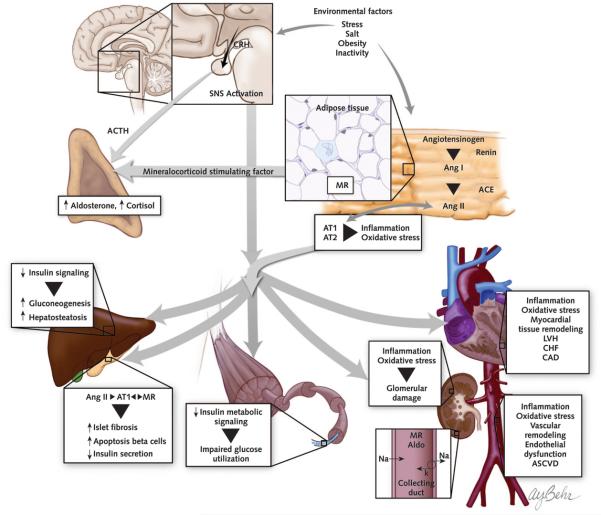
The prevalence of obesity, diabetes, hypertension, and cardiovascular and chronic kidney disease is increasing in developed countries. Obesity, insulin resistance, and hypertension commonly cluster with other risk factors for cardiovascular and chronic kidney disease to form the metabolic syndrome. Emerging evidence supports a paradigm shift in our understanding of the renin-angiotensin-aldosterone system and in aldosterone's ability to promote insulin resistance and participate in the pathogenesis of the metabolic syndrome and resistant hypertension. Recent data suggest that excess circulating aldosterone promotes the development of both disorders by impairing insulin metabolic signaling and endothelial function, which in turn leads to insulin resistance and cardiovascular and renal structural and functional abnormalities. Indeed, hyperaldosteronism is associated with impaired pancreatic beta-cell function, skeletal muscle insulin sensitivity, and elevated production of proinflammatory adipokines from adipose tissue, which results in systemic inflammation and impaired glucose tolerance. Accumulating evidence indicates that the cardiovascular and renal abnormalities associated with insulin resistance are mediated in part by aldosterone acting on the mineralocorticoid receptor. Although we have known that mineralocorticoid receptor blockade attenuates cardiovascular and renal injury, only recently have we learned that mineralocorticoid receptor blockade improves pancreatic insulin release, insulin-mediated glucose utilization, and endothelium-dependent vasorelaxation. In summary, aldosterone excess has detrimental metabolic effects that contribute to the metabolic syndrome and endothelial dysfunction, which in turn contribute to the development of resistant hypertension as well as cardiovascular disease and chronic kidney disease.
Figures

References
-
- Malik S, Wong ND, Franklin SS, Kamath TV, L'Italien GJ, Pio JR, et al. Impact of the metabolic syndrome on mortality from coronary heart disease, cardiovascular disease, and all causes in United States adults. Circulation. 2004;110:1245–50. PMID: 15326067. - PubMed
-
- Van Gaal LF, Mertens IL, De Block CE. Mechanisms linking obesity with cardiovascular disease. Nature. 2006;444:875–80. PMID: 17167476. - PubMed
-
- Sowers JR. Metabolic risk factors and renal disease. Kidney Int. 2007;71:719–20. PMID: 17429418. - PubMed
-
- Cooper SA, Whaley-Connell A, Habibi J, Wei Y, Lastra G, Manrique C, et al. Renin-angiotensin-aldosterone system and oxidative stress in cardiovascular insulin resistance. Am J Physiol Heart Circ Physiol. 2007;293:H2009–23. PMID: 17586614. - PubMed
Publication types
MeSH terms
Substances
Grants and funding
LinkOut - more resources
Full Text Sources
Medical