


Differential effects of maternal sensitivity to infant distress and nondistress on social-emotional functioning
- PMID: 19489902
- PMCID: PMC2854550
- DOI: 10.1111/j.1467-8624.2009.01296.x
Differential effects of maternal sensitivity to infant distress and nondistress on social-emotional functioning
Abstract
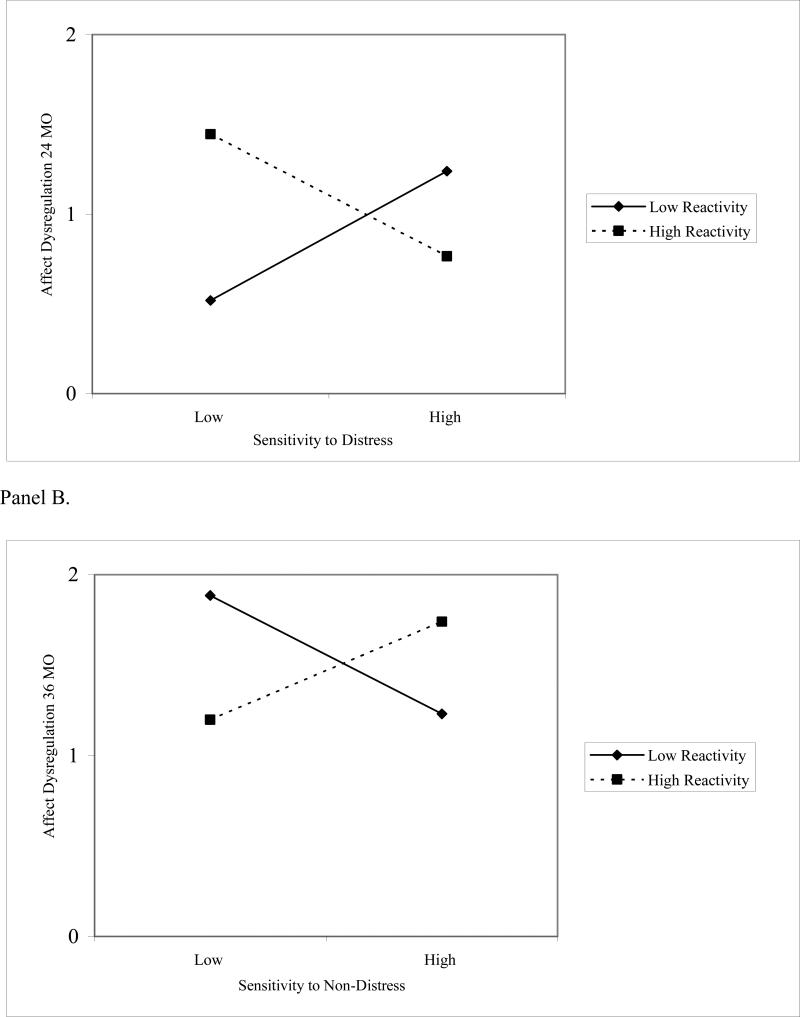
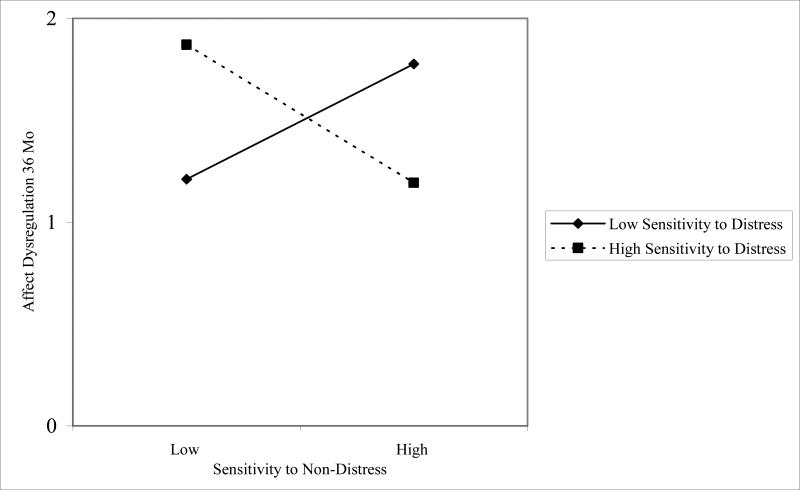
Associations between maternal sensitivity to infant distress and nondistress and infant social-emotional adjustment were examined in a subset of dyads from the NICHD Study of Early Child Care (N = 376). Mothers reported on infant temperament at 1 and 6 months postpartum, and maternal sensitivity to distress and nondistress were observed at 6 months. Child behavior problems, social competence, and affect dysregulation were measured at 24 and 36 months. Maternal sensitivity to distress but not to nondistress was related to fewer behavioral problems and higher social competence. In addition, for temperamentally reactive infants, maternal sensitivity to distress was associated with less affect dysregulation. Sensitivity to nondistress only prevented affect dysregulation if sensitivity to distress was also high.
Figures
References
-
- Achenbach TM. Manual for the Child Behavior Checklist / 2-3 and 1992 Profile. University of Vermont Department of Psychiatry; Burlington, VT: 1992.
-
- Acock AC. Working with missing values. Journal of Marriage and the Family. 2005;67:1012–1028.
-
- Aiken LS, West SG. Multiple regression: Testing and interpreting interactions. Sage; Thousand Oaks: 1991.
-
- Ainsworth M, Blehar M, Waters E, Wall S. Patterns of attachment. Erlbaum; Hillsdale, NJ: 1978.
-
- Bell SM, Ainsworth MD. Infant crying and maternal responsiveness. Child Development. 1972;43(4):1171–1190. - PubMed
Publication types
MeSH terms
Grants and funding
LinkOut - more resources
Full Text Sources
Medical
