


Could oxidative stress influence the in-vitro maturation of oocytes?
- PMID: 19490793
- PMCID: PMC3235363
- DOI: 10.1016/s1472-6483(10)60038-7
Could oxidative stress influence the in-vitro maturation of oocytes?
Abstract
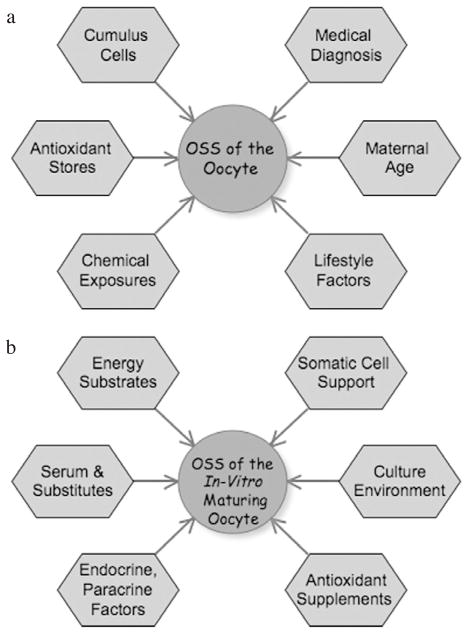
In the efforts aimed at improving the quality of in-vitro-matured human oocytes, the dynamic balance and roles of pro-/antioxidants merit further consideration. In-vitro maturation (IVM) is emerging as a popular technology at the forefront of fertility treatment and preservation. However, standard in-vitro culture conditions exert oxidative stress or an imbalance between oxidants and antioxidants. Reactive oxygen species (ROS) are oxygen-derived molecules formed as intermediary products of cellular metabolism. By acting as powerful oxidants, ROS can oxidatively modify any molecule, resulting in structural and functional alterations. ROS are neutralized by an elaborate defence system consisting of enzymatic and nonenzymatic antioxidants. This review captures the inherent and external factors that may modulate the oxidative stress status of oocytes. It discusses the suspected impacts of oxidative stress on the gamut of events associated with IVM, including prematuration arrest, meiotic progression, chromosomal segregation, cytoskeletal architecture and gene expression. In-vivo and in-vitro strategies that may overcome the potential influences of oxidative stress on oocyte IVM are presented. Future studies profiling the oxidative stress status of the oocyte may permit not only the formulation of a superior IVM medium that maintains an adequate pro-/antioxidant balance, but also the identification of predictors of oocyte quality.
Conflict of interest statement
Declaration: The authors report no financial or commercial conflicts of interest.
Figures
References
-
- Aboulghar MA, Mansour RT. Ovarian hyperstimulation syndrome: classifications and critical analysis of preventive measures. Human Reproduction Update. 2003;9:275–289. - PubMed
-
- Agarwal A, Allamaneni SS. Role of free radicals in female reproductive diseases and assisted reproduction. Reproductive BioMedicine Online. 2004;9:338–347. - PubMed
-
- Agarwal A, Gupta S, Sikka S. The role of free radicals and antioxidants in reproduction. Current Opinion in Obstetrics and Gynecology. 2006;18:325–332. - PubMed
-
- Agarwal A, Gupta S, Sharma R. Oxidative stress and its implications in female infertility – a clinician’s perspective. Reproductive BioMedicine Online. 2005;11:641–650. - PubMed
-
- Agarwal A, Saleh RA, Bedaiwy MA. Role of reactive oxygen species in the pathophysiology of human reproduction. Fertility and Sterility. 2003;79:829–843. - PubMed
Publication types
MeSH terms
Substances
Grants and funding
LinkOut - more resources
Full Text Sources
