


Parkinson phenotype in aged PINK1-deficient mice is accompanied by progressive mitochondrial dysfunction in absence of neurodegeneration
- PMID: 19492057
- PMCID: PMC2686165
- DOI: 10.1371/journal.pone.0005777
Parkinson phenotype in aged PINK1-deficient mice is accompanied by progressive mitochondrial dysfunction in absence of neurodegeneration
Abstract
Background: Parkinson's disease (PD) is an adult-onset movement disorder of largely unknown etiology. We have previously shown that loss-of-function mutations of the mitochondrial protein kinase PINK1 (PTEN induced putative kinase 1) cause the recessive PARK6 variant of PD.
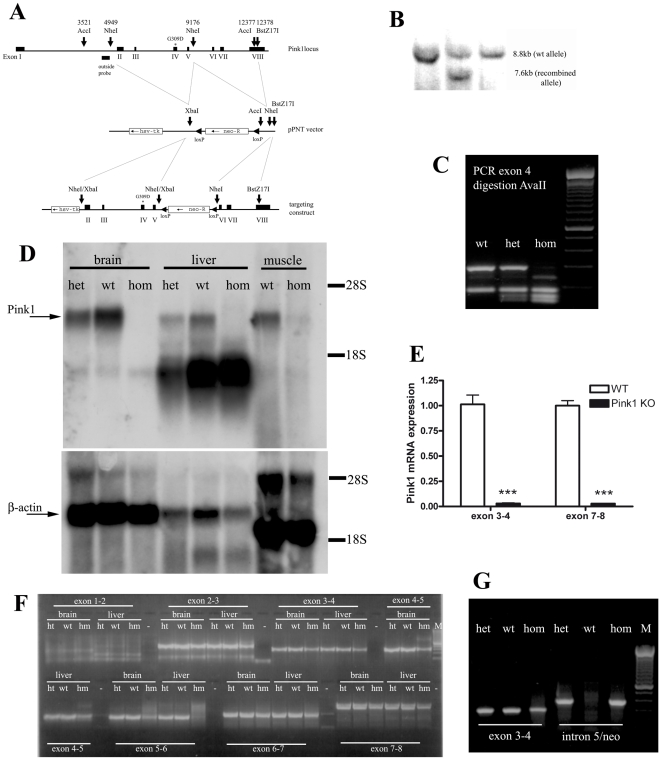
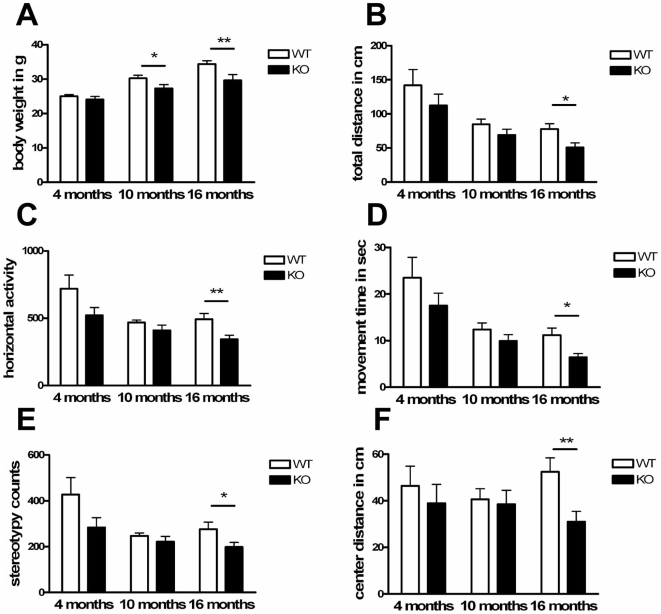
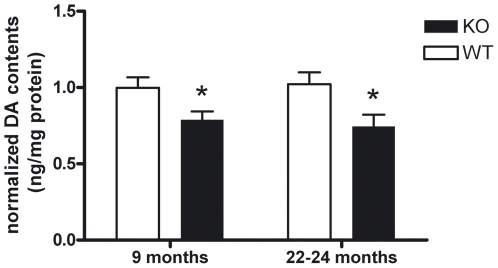
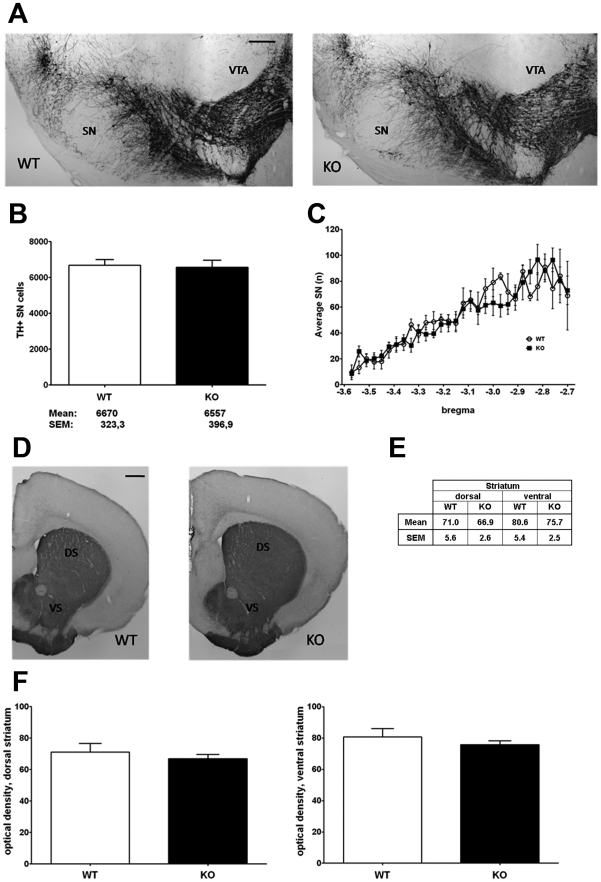
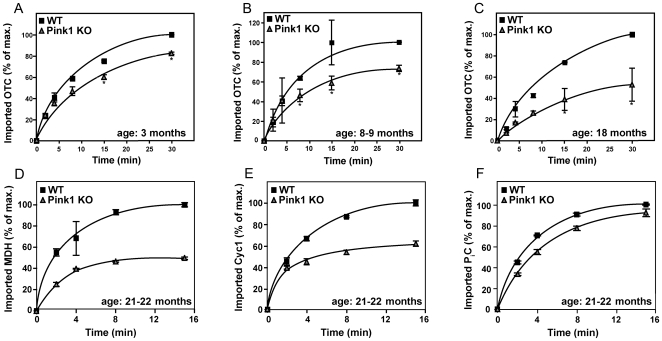
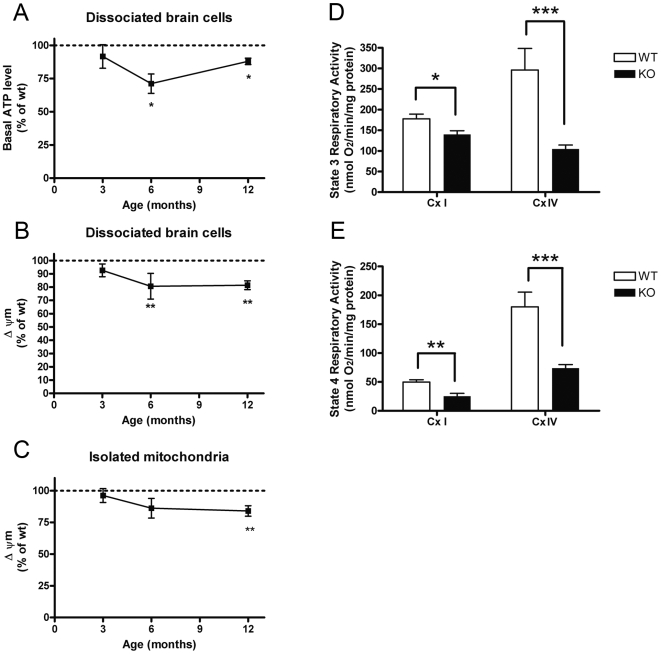
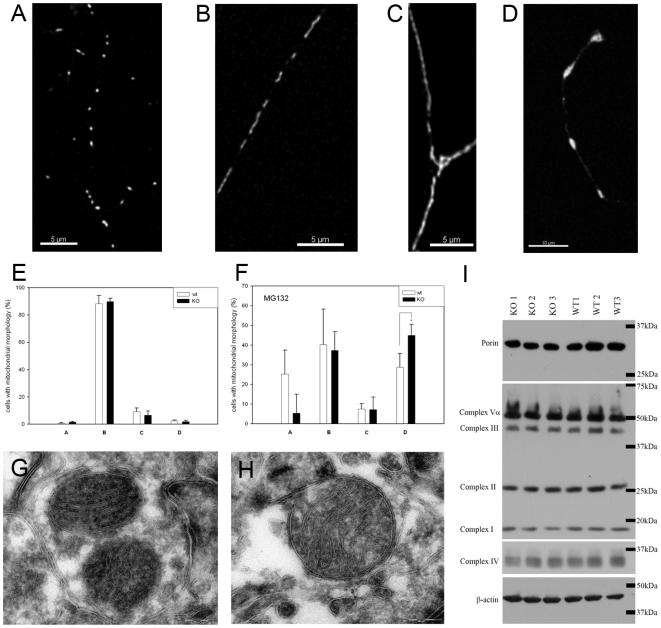
Methodology/principal findings: Now we generated a PINK1 deficient mouse and observed several novel phenotypes: A progressive reduction of weight and of locomotor activity selectively for spontaneous movements occurred at old age. As in PD, abnormal dopamine levels in the aged nigrostriatal projection accompanied the reduced movements. Possibly in line with the PARK6 syndrome but in contrast to sporadic PD, a reduced lifespan, dysfunction of brainstem and sympathetic nerves, visible aggregates of alpha-synuclein within Lewy bodies or nigrostriatal neurodegeneration were not present in aged PINK1-deficient mice. However, we demonstrate PINK1 mutant mice to exhibit a progressive reduction in mitochondrial preprotein import correlating with defects of core mitochondrial functions like ATP-generation and respiration. In contrast to the strong effect of PINK1 on mitochondrial dynamics in Drosophila melanogaster and in spite of reduced expression of fission factor Mtp18, we show reduced fission and increased aggregation of mitochondria only under stress in PINK1-deficient mouse neurons.
Conclusion: Thus, aging Pink1(-/-) mice show increasing mitochondrial dysfunction resulting in impaired neural activity similar to PD, in absence of overt neuronal death.
Conflict of interest statement
Figures
References
-
- Valente EM, Abou-Sleiman PM, Caputo V, Muqit MM, Harvey K, et al. Hereditary early-onset Parkinson's disease caused by mutations in PINK1. Science. 2004;304:1158–1160. - PubMed
-
- Bentivoglio AR, Cortelli P, Valente EM, Ialongo T, Ferraris A, et al. Phenotypic characterisation of autosomal recessive PARK6-linked parkinsonism in three unrelated Italian families. Mov Disord. 2001;16:999–1006. - PubMed
-
- Nakajima A, Kataoka K, Hong M, Sakaguchi M, Huh NH. BRPK, a novel protein kinase showing increased expression in mouse cancer cell lines with higher metastatic potential. Cancer Lett. 2003;201:195–201. - PubMed
-
- Hoepken HH, Gispert S, Morales B, Wingerter O, Del Turco D, et al. Mitochondrial dysfunction, peroxidation damage and changes in glutathione metabolism in PARK6. Neurobiol Dis. 2007;25:401–411. - PubMed
-
- Hoepken HH, Gispert S, Azizov M, Klinkenberg M, Ricciardi F, et al. Parkinson patient fibroblasts show increased alpha-synuclein expression. Experimental neurology. 2008;212:307–313. - PubMed
Publication types
MeSH terms
Substances
LinkOut - more resources
Full Text Sources
Other Literature Sources
Medical
Molecular Biology Databases
Research Materials
