


Quality of life of Australian chronically-ill adults: patient and practice characteristics matter
- PMID: 19493336
- PMCID: PMC2700088
- DOI: 10.1186/1477-7525-7-50
Quality of life of Australian chronically-ill adults: patient and practice characteristics matter
Abstract
Background: To study health-related quality of life (HRQOL) in a large sample of Australian chronically-ill patients and investigate the impact of characteristics of patients and their general practices on their HRQOL and to assess the construct validity of SF-12 in Australia.
Methods: Cross sectional study with 96 general practices and 7606 chronically-ill patients aged 18 years or more using standard SF-12 version 2. Factor analysis was used to confirm the hypothesized component structure of the SF-12 items. SF-12 physical component score (PCS-12) and mental component score (MCS-12) were derived using the standard US algorithm. Multilevel regression analysis (patients at level 1 and practices at level 2) was applied to relate PCS-12 and MCS-12 to patient and practice characteristics.
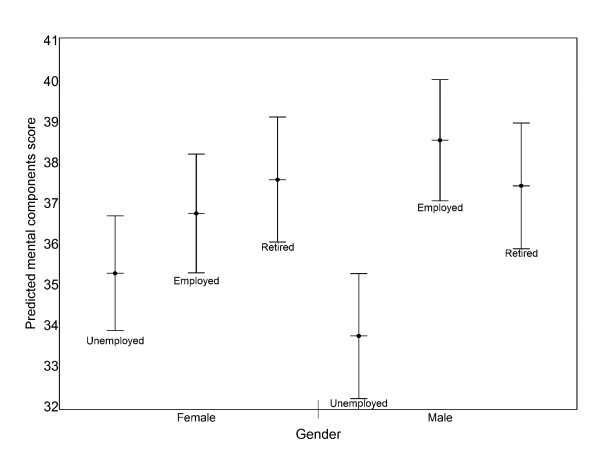
Results: There were significant associations between lower PCS-12 or MCS-12 score and poorer general health (10.8 (regression coefficient) lower for PCS-12 and 7.3 lower for MCS-12), low socio-economic status (5.1 lower PCS-12 and 2.9 lower MCS-12 for unemployed, 0.8 lower PCS-12 and 1.7 lower MCS-12 for non-owner-occupiers, 1.0 lower PCS-12 for less well-educated) and having two or more chronic conditions (up to 2.7 lower PCS-12 and up to 1.5 lower MCS-12 than those having a single disease). Younger age was associated with lower MCS-12 (2.2 and 6.0 lower than middle age and older age respectively) but higher PCS-12 (4.7 and 7.6 higher than middle age and older age respectively). Satisfaction with quality of care (regression coefficient = 1.2) and patients who were married or cohabiting (regression coefficient = 0.6) was positively associated with MCS-12. Patients born in non-English-speaking countries were more likely to have a lower MCS-12 (1.5 lower) than those born in Australia. Employment had a stronger association with the quality of life of males than that of females. Those attending smaller practices had lower PCS-12 (1.0 lower) and MCS-12 (0.6 lower) than those attending larger practices. At the patient level (level 1) 42% and 21% of the variance respectively for PCS-12 and MCS-12 were explained by the patients and practice characteristics. At the practice level (level 2), 73% and 49% of the variance respectively for PCS-12 and MCS-12 were explained by patients and practice characteristics.
Conclusion: The strong association between patient characteristics such as socio-economic status, age, and ethnicity and SF-12 physical and mental component summary scores underlines the importance of considering these factors in the management of chronically-ill patients in general practice. The SF-12 appears to be a valid measure for assessing HRQOL of Australian chronically-ill patients.
Figures
References
-
- Australian Institute of Health and Welfare . Chronic disease and associated risk factors in Australia. Canberra: AIHW; 2006. http://www.aihw.gov.au/publications/phe/cdarfa06/cdarfa06.pdf
-
- Australian Institute of Health and Welfare . Chronic diseases and associated risk factors in Australia. Canberra: AIHW; 2001.
-
- Britt H, Miller G, Knox S, Charles J, Valenti L, Pan Y, Henderson J, Bayram C, O'Halloran J, Ng A. General Practice Activity in Australia 2003–4. Canberra: Australian Institute of Health and Welfare; 2004. http://www.aihw.gov.au/publications/gep/gpaa03-04/gpaa03-04.pdf
-
- Commonwealth Department of Health and Aged Care (CDoHaA) Enhanced primary care program. 2007. http://www.health.gov.au/internet/main/publishing.nsf/Content/Enhanced+P...
-
- Harris MF, Zwar N. Care of patients with chronic disease: the challenge for general practice. MJA. 2007;187:104–107. - PubMed
Publication types
MeSH terms
LinkOut - more resources
Full Text Sources
Medical
