. 2009 Nov;50(11):5479-86.
doi: 10.1167/iovs.09-3652. Epub 2009 Jun 3.

The role of PGE2 receptor EP4 in pathologic ocular angiogenesis

Affiliations

The role of PGE2 receptor EP4 in pathologic ocular angiogenesis

Susan E Yanni et al. Invest Ophthalmol Vis Sci. 2009 Nov.

Abstract

Purpose: PGE(2) binds to PGE(2) receptors (EP(1-4)). The purpose of the present study was to investigate the role of the EP(4) receptor in angiogenic cell behaviors of retinal Müller cells and retinal microvascular endothelial cells (RMECs) and to assess the efficacy of an EP(4) antagonist in rat models of oxygen-induced retinopathy (OIR) and laser-induced choroidal neovascularization (LCNV).

Methods: Müller cells derived from COX-2-null mice were treated with increasing concentrations of the EP(4) agonist PGE(1)-OH, and wild-type Müller cells were treated with increasing concentrations of the EP(4) antagonist L-161982; VEGF production was assessed. Human RMECs (HRMECs) were treated with increasing concentrations of L-161982, and cell proliferation and tube formation were assessed. Rats subjected to OIR or LCNV were administered L-161982, and the neovascular area was measured.

Results: COX-2-null mouse Müller cells treated with increasing concentrations of PGE(1)-OH demonstrated a significant increase in VEGF production (P < or = 0.0165). Wild-type mouse Müller cells treated with increasing concentrations of L-161982 demonstrated a significant decrease in VEGF production (P < or = 0.0291). HRMECs treated with increasing concentrations of L-161982 demonstrated a significant reduction in VEGF-induced cell proliferation (P < or = 0.0033) and tube formation (P < 0.0344). L-161982 treatment significantly reduced pathologic neovascularization in OIR (P < 0.0069) and LCNV (P < or = 0.0329).

Conclusions: Preliminary investigation has demonstrated that EP(4) activation or inhibition influences the behaviors of two retinal cell types known to play roles in pathologic ocular angiogenesis. These findings suggest that the EP(4) receptor may be a valuable therapeutic target in neovascular eye disease.


Figures
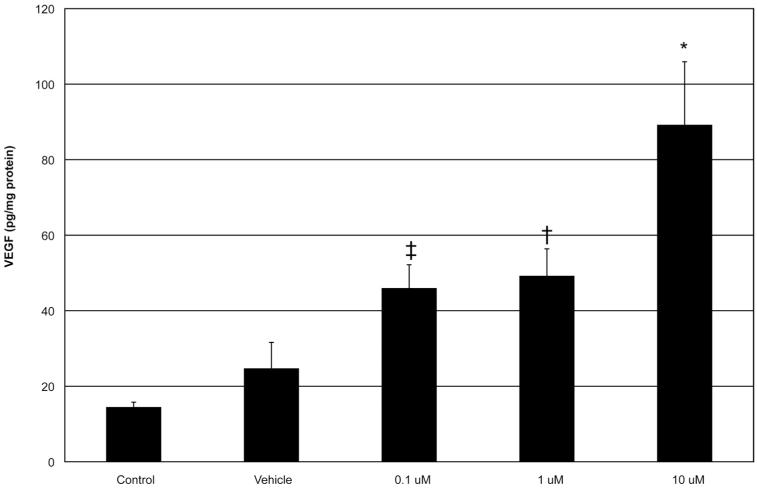
Figure 1
Figure 1
The effect of an EP4 agonist, PGE1-OH, on VEGF production in COX-2-null mouse Müller cells. PGE1-OH significantly increased VEGF production by COX-2-null cells. Each bar represents the mean ± SD. *P < 0.0001; †P ≤ 0.006; ‡P ≤ 0.0165 (Dunnett’s post hoc analysis). For each bar, n = 4.
Figure 2
Figure 2
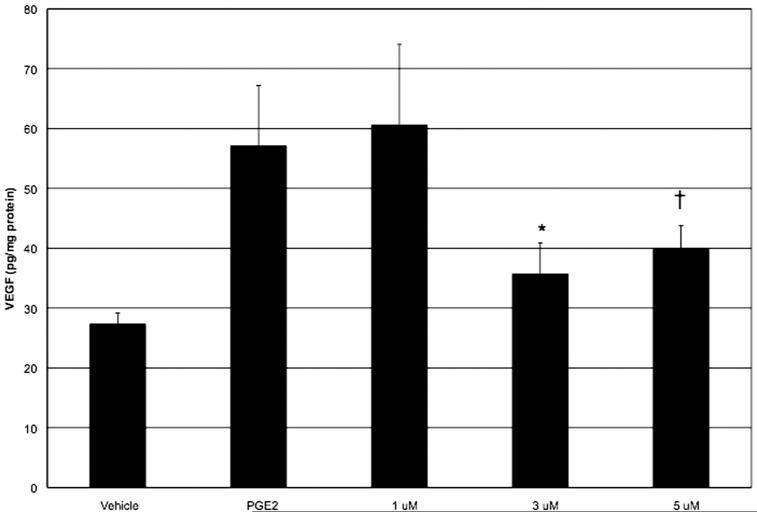
The effect of an EP4 antagonist, L-161982, on PGE2-induced VEGF production by wild-type mouse Müller cells. L-161982 pretreatment significantly decreased PGE2-induced VEGF production by wild-type mouse Müller cells. Each bar represents the mean ± SD. *P < 0.0066; †P ≤ 0.0291 (Dunnett’s post hoc analysis). For each bar, n = 4.
Figure 3
Figure 3
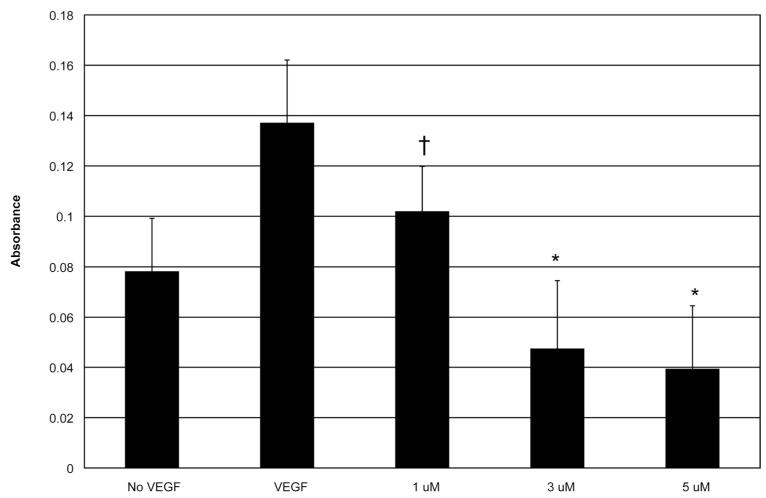
The effect of an EP4 antagonist, L-161982, on VEGF-induced HRMEC proliferation. HRMEC proliferation was stimulated with 25 ng/mL VEGF. L-161982 significantly decreased VEGF-induced cell proliferation in HRMECs. Each bar represents the mean ± SD. *P < 0.0001; †P ≤ 0.0033 (Dunnett’s post hoc analysis). For each bar, n = 11.
Figure 4
Figure 4
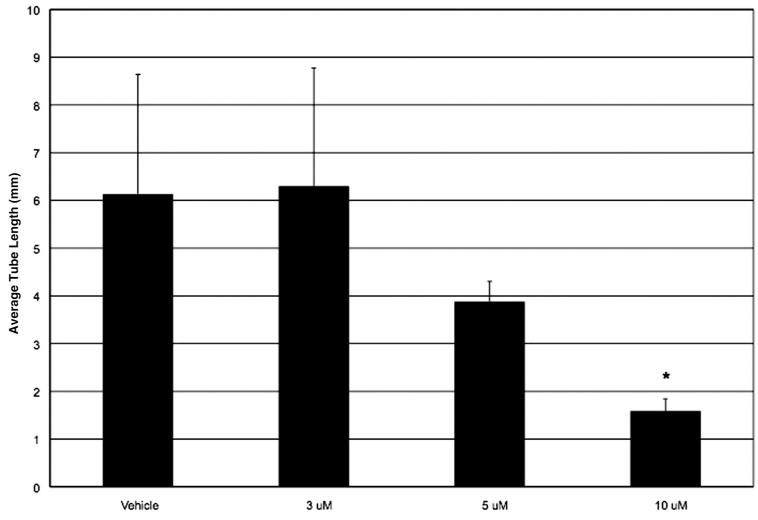
The effect of an EP4 antagonist, L-161982, on HRMEC tube formation. L-161982 significantly decreased tube formation in a dose-dependent manner. Each bar represents the mean ± SD. *P < 0.0344 (Dunnett’s post-hoc analysis). For each bar, n = 3.
Figure 5
Figure 5
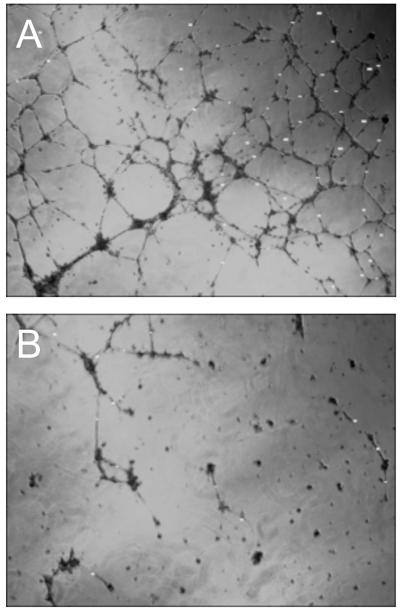
The effect of an EP4 antagonist, L-161982, on HRMEC tube formation. L-161982 (10 μM) significantly decreased tube formation, as depicted in representative photomicrographs. (A) HRMECs treated with vehicle (0.1% DMSO). (B) HRMECs treated with 10 μM L-161982.
Figure 6
Figure 6
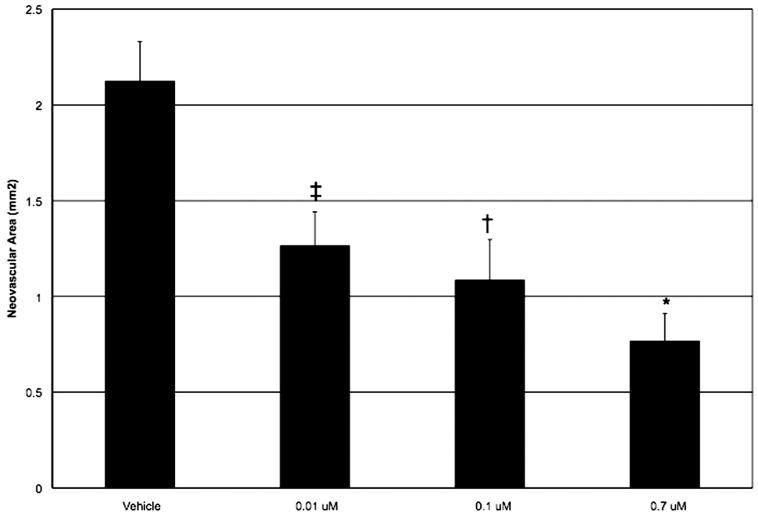
The effect of an EP4 antagonist, L-161982, on the severity of OIR in the rat. L-161982 significantly decreased the severity of OIR in a dose-dependent manner. Each bar represents the mean ± SEM. *P < 0.0001; †P ≤ 0.001; ‡P ≤ 0.0069 (Dunnett’s post-hoc analysis). For vehicle, n = 9; for 0.01 and 0.1 μM, n = 10; for 0.7 μM, n = 11.
Figure 7
Figure 7
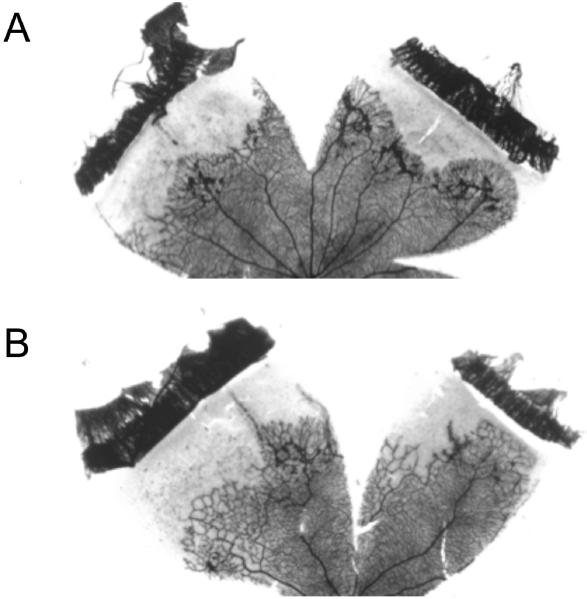
The effect of an EP4 antagonist, L-161982, on the severity of OIR in the rat, as visualized by representative ADPase-stained retinal flatmounts. L-161982 significantly decreased the severity of OIR. (A) Eye treated with vehicle (0.1% DMSO). (B) Eye treated with 0.7 μM L-161982.
Figure 8
Figure 8
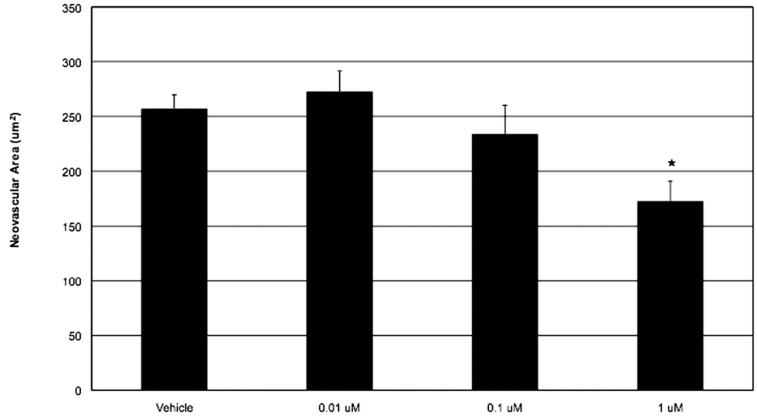
The effect of an EP4 antagonist, L-161982, on the severity of LCNV in the rat. The highest concentration of L-161982 significantly decreased the severity of LCNV. Each bar represents the mean ± SEM. *P ≤ 0.0329 (Fisher’s LSD post hoc analysis). For vehicle and 1 μM, n = 16; for 0.01 μM, n = 28; for 0.1 μM, n = 24.
Figure 9
Figure 9
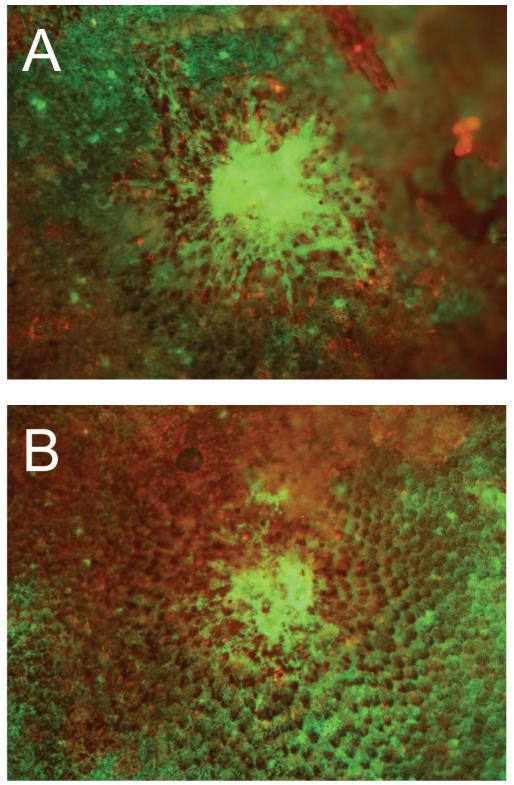
The effect of an EP4 antagonist, L-161982, on the severity of LCNV in the rat, as visualized by isolectin B4 (green)-stained and elastin (red)-stained choroid-sclera-RPE flatmounts. The highest concentration of L-161982 significantly decreased the severity of LCNV, as indicated by decreased choroidal endothelial cell infiltration around the laser-induced wound site. (A) Eye treated with vehicle (0.1% DMSO). (B) Eye treated with 1 μM L-161982.

References

    1. Li WW, Talcott KE, Zhai AW, et al. The role of therapeutic angiogenesis in tissue repair and regeneration. Adv Skin Wound Care. 2005;18:491–500. - PubMed
    1. Rahmani B, Tielsch JM, Kat J, et al. The cause-specific prevalence of visual impairment in an urban population: the Baltimore Eye Survey. Ophthalmology. 1999;103:1721–1726. - PubMed
    1. Lee P, Wang CC, Adamis AP. Ocular neovascularization: an epidemiologic review. Surv Ophthalmol. 1998;43:245–269. - PubMed
    1. Steinkuller PG, Du L, Gilbert C, et al. Childhood blindness. J AAPOS. 1999;3:26–32. - PubMed
    1. D’Amore PA. Mechanisms of retinal and choroidal angiogenesis. Invest Ophthalmol Vis Sci. 1994;35:3974–3979. - PubMed

Publication types

MeSH terms