


Genetics and molecular biology of tuberous sclerosis complex
- PMID: 19506736
- PMCID: PMC2691673
- DOI: 10.2174/138920208786241243
Genetics and molecular biology of tuberous sclerosis complex
Abstract
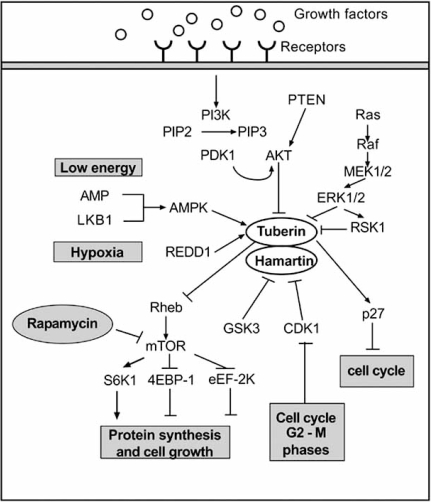
Tuberous Sclerosis Complex is a multisystem disorder exhibiting a wide range of manifestations characterized by tumour-like lesions called hamartomas in the brain, skin, eyes, heart, lungs and kidneys. Tuberous Sclerosis Complex is genetically determined with an autosomal dominant inheritance and is caused by inactivating mutations in either the TSC1 or TSC2 genes. TSC1/2 genes play a fundamental role in the regulation of phosphoinositide 3-kinase (PI3K) signalling pathway, inhibiting the mammalian target of rapamycin (mTOR) through activation of the GTPase activity of Rheb. Mutations in TSC1/2 genes impair the inhibitory function of the hamartin/tuberin complex, leading to phosphorylation of the downstream effectors of mTOR, p70 S6 kinase (S6K), ribosomal protein S6 and the elongation factor binding protein 4E-BP1, resulting in uncontrolled cell growth and tumourigenesis.Despite recent promising genetic, diagnostic, and therapeutic advances in Tuberous Sclerosis Complex, continuing research in all aspects of this complex disease will be pivotal to decrease its associated morbidity and mortality. In this review we will discuss and analyse all the important findings in the molecular pathogenesis of Tuberous Sclerosis Complex, focusing on genetics and the molecular mechanisms that define this multisystemic disorder.
Keywords: Tuberous sclerosis; genetics; germ-line mosaicism; hamartin; multifactorial disease; mutations; rapamycin.; tuberin.
Figures
References
-
- Curatolo P. London: Mac Keith Press; 2003. Tuberous Sclerosis Complex: From Basic Science to Clinical Phenotypes.
-
- Narayanan V. Tuberous sclerosis complex: Genetics to pathogenesis. Pediatr. Neurol. 2003;29:404–9. - PubMed
-
- Gomez MR, Sampson JR, Whittemore VH. Tuberous Sclerosis Complex. Oxford: Oxford University Press; 1999.
-
- Curatolo P, Verdecchia M, Bombardieri R. Tuberous sclerosis complex: a review of neurological aspects. Eur. J. Pediatr. Neurol. 2002;6:15–23. - PubMed
-
- Joinson C, O’Callaghan FJ, Osborne JP, Martyn C, Harris T, Bolton PF. Learning disability and epilepsy in an epidemiological sample of individuals with tuberous sclerosis complex. Psychol. Med. 2003;33:335–44. - PubMed
LinkOut - more resources
Full Text Sources
Medical
Miscellaneous