


Closing of venus flytrap by electrical stimulation of motor cells
- PMID: 19516982
- PMCID: PMC2634039
- DOI: 10.4161/psb.2.3.4217
Closing of venus flytrap by electrical stimulation of motor cells
Abstract
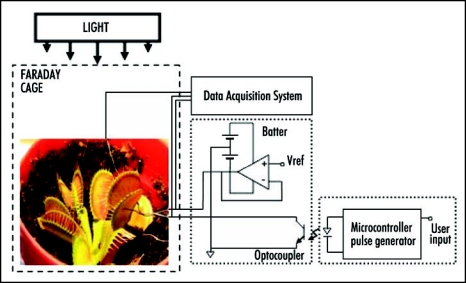
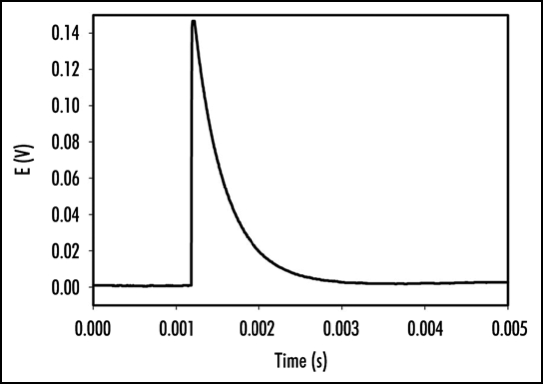
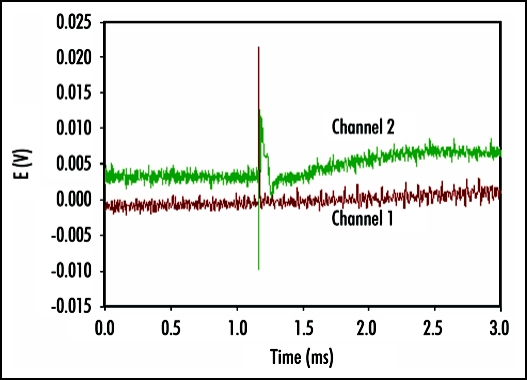
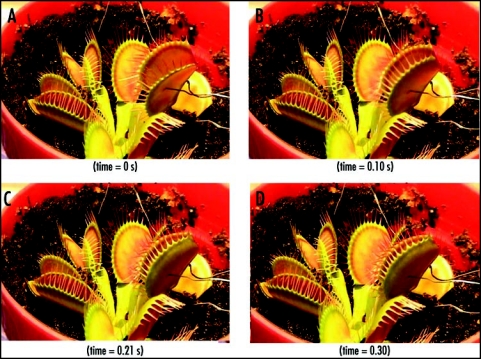
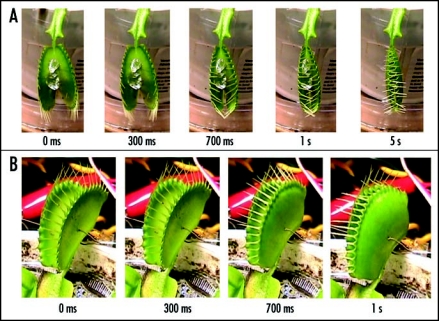
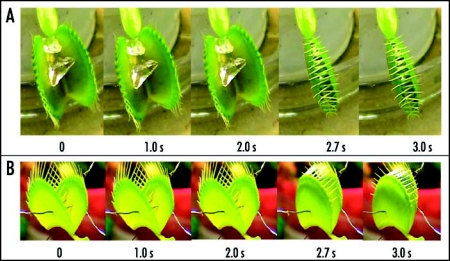
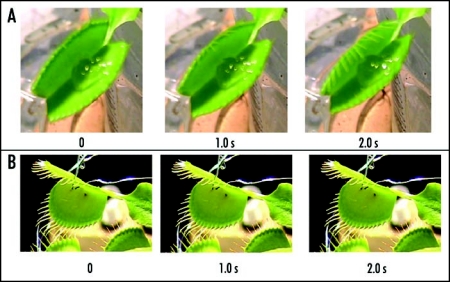
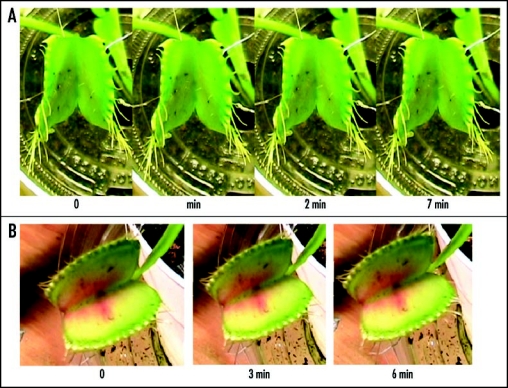
Electrical signaling and rapid closure of the carnivorous plant Dionaea muscipula Ellis (Venus flytrap) have been attracting the attention of researchers since XIX century, but the exact mechanism of Venus flytrap closure is still unknown. We found that the electrical stimulus between a midrib and a lobe closes the Venus flytrap leaf by activating motor cells without mechanical stimulation of trigger hairs. The closing time of Venus flytrap by electrical stimulation of motor cells is 0.3 s, the same as mechanically induced closing. The mean electrical charge required for the closure of the Venus flytrap leaf is 13.6 microC. Ion channel blockers such as Ba(2+), TEACl as well as uncouplers such as FCCP, 2,4-dinitrophenol and pentachlorophenol dramatically decrease the speed of the trap closing. Using an ultra-fast data acquisition system with measurements in real time, we found that the action potential in the Venus flytrap has a duration time of about 1.5 ms. Our results demonstrate that electrical stimulation can be used to study mechanisms of fast activity in motor cells of the plant kingdom.
Keywords: Venus flytrap; action potential; electrical signaling; electrophysiology; motor cells.
Figures
References
-
- Burdon-Sanderson J. Note on the electrical phenomena which accompany stimulation of the leaf of Dionaea muscipula Ellis. Phil Proc R Soc Lond. 1873;21:495–496.
-
- Darwin C. Insectivorous Plants. London: Murray; 1875.
-
- Hodick D, Sievers A. The influence of Ca2+ on the action potential in mesophyll cells of Dionaea muscipula Ellis. Protoplasma. 1989;133:83–84.
-
- Forterre Y, Skothelm JM, Dumals J, Mahadevan L. How the Venus flytrap snaps. Nature. 2005;433:421–425. - PubMed
-
- Lloyd FE. The Carnivorous Plants. New York: Ronald; 1942.
LinkOut - more resources
Full Text Sources
Other Literature Sources
