


LOST to follow-up Information in Trials (LOST-IT): a protocol on the potential impact
- PMID: 19519891
- PMCID: PMC2706244
- DOI: 10.1186/1745-6215-10-40
LOST to follow-up Information in Trials (LOST-IT): a protocol on the potential impact
Abstract
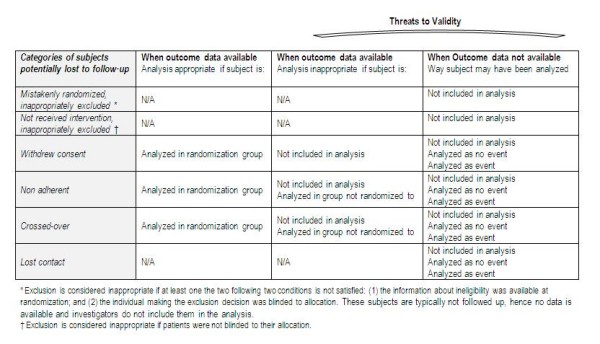
Background: Incomplete ascertainment of outcomes in randomized controlled trials (RCTs) is likely to bias final study results if reasons for unavailability of patient data are associated with the outcome of interest. The primary objective of this study is to assess the potential impact of loss to follow-up on the estimates of treatment effect. The secondary objectives are to describe, for published RCTs, (1) the reporting of loss to follow-up information, (2) the analytic methods used for handling loss to follow-up information, and (3) the extent of reported loss to follow-up.
Methods: We will conduct a systematic review of reports of RCTs recently published in five top general medical journals. Eligible RCTs will demonstrate statistically significant effect estimates with respect to primary outcomes that are patient-important and expressed as binary data. Teams of 2 reviewers will independently determine eligibility and extract relevant information from each eligible trial using standardized, pre-piloted forms. To assess the potential impact of loss to follow-up on the estimates of treatment effect we will, for varying assumptions about the outcomes of participants lost to follow-up (LTFU), calculate (1) the percentage of RCTs that lose statistical significance and (2) the mean change in effect estimate across RCTs. The different assumptions we will test are the following: (1) none of the LTFU participants had the event; (2) all LTFU participants had the event; (3) all LTFU participants in the treatment group had the event; none of those in the control group had it (worst case scenario); (4) the event incidence among LTFU participants (relative to observed participants) increased, with a higher relative increase in the intervention group; and (5) the event incidence among LTFU participants (relative to observed participants) increased in the intervention group and decreased in the control group.
Discussion: We aim to make our objectives and methods transparent. The results of this study may have important implications for both clinical trialists and users of the medical literature.
Figures
References
-
- Altman DG, Schulz KF, Moher D, Egger M, Davidoff F, Elbourne D, Gotzsche PC, Lang T, for the CG The Revised CONSORT Statement for Reporting Randomized Trials: Explanation and Elaboration. Ann Intern Med. 2001;134:663–694. - PubMed
Publication types
MeSH terms
LinkOut - more resources
Full Text Sources
