


Dendritic cells in atherosclerotic disease
- PMID: 19520615
- PMCID: PMC2821659
- DOI: 10.1016/j.clim.2009.05.006
Dendritic cells in atherosclerotic disease
Abstract
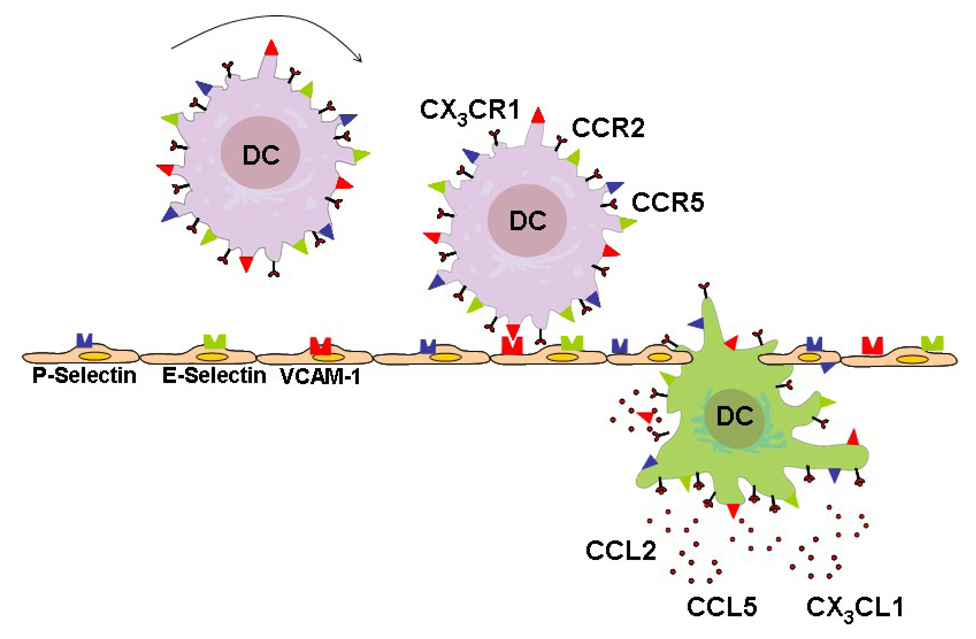
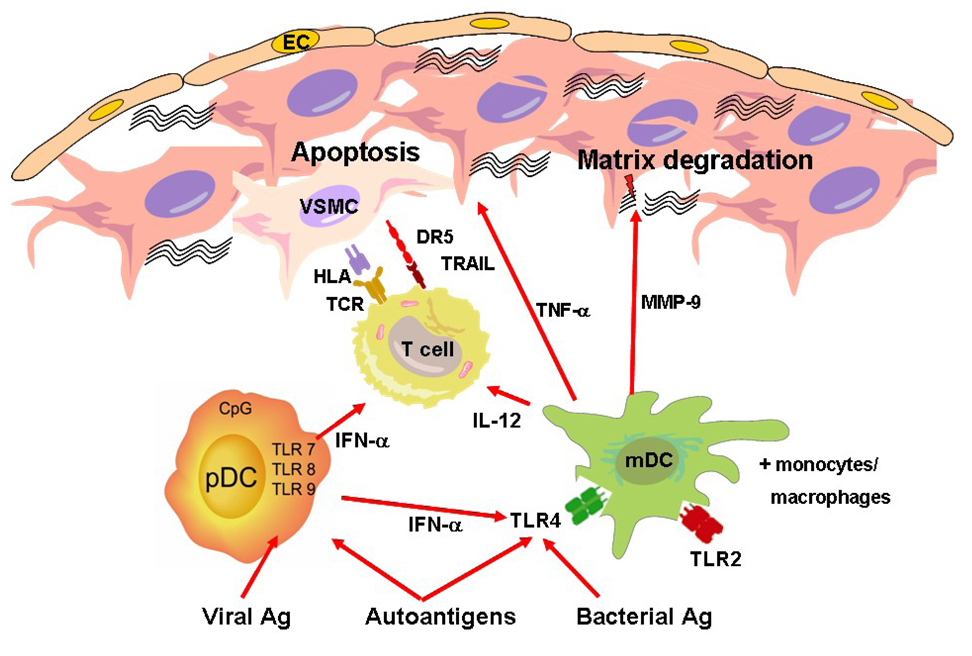
Atherosclerosis has been considered a syndrome of dysregulated lipid storage until recent evidence has emphasized the critical contribution of the immune system. Dendritic cells (DC) are positioned at the interface of the innate and adaptive immune system. Recognition of danger signals in atheromas leads to DC activation. Activated DC regulate effector T cells which can kill plaque-resident cells and damage the plaque structure. Two types of DC have been identified in atherosclerotic lesions; classical myeloid DC (mDC) which mainly recognize bacterial signatures and plasmacytoid DC (pDC) which specialize in sensing viral fragments and have the unique potential of producing large amounts of type I interferon (IFN). In human atheromas, type I IFN upregulates expression of the cytotoxic molecule TRAIL which leads to apoptosis of plaque-resident cells. This review will elucidate the role of DC in atherogenesis and particularly in plaque rupture, the underlying pathophysiologic cause of myocardial infarction.
Copyright 2009 Elsevier Inc. All rights reserved.
Figures
References
-
- Steinman RM, Hawiger D, Liu K, Bonifaz L, Bonnyay D, Mahnke K, Iyoda T, Ravetch J, Dhodapkar M, Inaba K, Nussenzweig M. Dendritic cell function in vivo during the steady state: a role in peripheral tolerance. Ann N Y Acad Sci. 2003;987:15–25. - PubMed
-
- Millonig G, Niederegger H, Rabl W, Hochleitner BW, Hoefer D, Romani N, Wick G. Network of vascular-associated dendritic cells in intima of healthy young individuals. Arterioscler Thromb Vasc Biol. 2001;21:503–508. - PubMed
-
- Bobryshev YV, Lord RS. S-100 positive cells in human arterial intima and in atherosclerotic lesions. Cardiovasc Res. 1995;29:689–696. - PubMed
Publication types
MeSH terms
Substances
Grants and funding
- R01 AR41974/AR/NIAMS NIH HHS/United States
- R01 AI044142/AI/NIAID NIH HHS/United States
- R01 EY11916/EY/NEI NIH HHS/United States
- R01 HL117913/HL/NHLBI NIH HHS/United States
- R01 AR42527/AR/NIAMS NIH HHS/United States
- R01 AI44142/AI/NIAID NIH HHS/United States
- R01 AG15043/AG/NIA NIH HHS/United States
- R01 EY011916/EY/NEI NIH HHS/United States
- R01 AG015043/AG/NIA NIH HHS/United States
- U19 AI057266/AI/NIAID NIH HHS/United States
- R01 AR042527/AR/NIAMS NIH HHS/United States
- R01 AR041974/AR/NIAMS NIH HHS/United States
- R01 AI57266/AI/NIAID NIH HHS/United States
LinkOut - more resources
Full Text Sources
Other Literature Sources
Medical
