


Development of resistance to passive therapy with a potently neutralizing humanized monoclonal antibody against West Nile virus
- PMID: 19527169
- PMCID: PMC2752978
- DOI: 10.1086/599794
Development of resistance to passive therapy with a potently neutralizing humanized monoclonal antibody against West Nile virus
Abstract
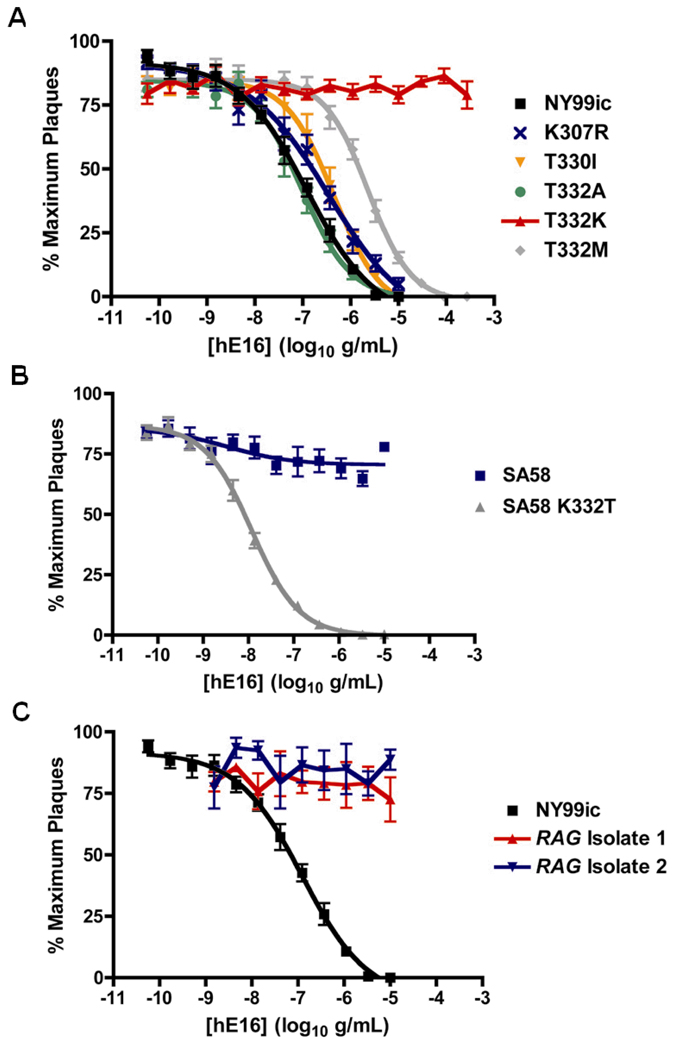
Previous studies have established the therapeutic efficacy of humanized E16 (hE16) monoclonal antibody against West Nile virus in animals. Here, we assess the potential for West Nile virus strains encoding mutations in the hE16 epitope to resist passive immunotherapy and for the selection of neutralization escape variants during hE16 treatment. Resistance to hE16 in vivo was less common than expected, because several mutations that affected neutralization in vitro did not significantly affect protection in mice. Moreover, the emergence of resistant variants after infection with fully sensitive virus occurred but was relatively rare, even in highly immunocompromised B and T cell-deficient RAG mice.
Conflict of interest statement
Potential conflicts of interest: M.S.D is a consultant for MacroGenics, Inc., which has licensed the E16 antibody from Washington University for potential clinical use. All other authors have no conflicts of interest.
Figures
References
-
- Hamdan A, Green P, Mendelson E, Kramer MR, Pitlik S, Weinberger M. Possible benefit of intravenous immunoglobulin therapy in a lung transplant recipient with West Nile virus encephalitis. Transpl Infect Dis. 2002;4:160–162. - PubMed
Publication types
MeSH terms
Substances
Grants and funding
LinkOut - more resources
Full Text Sources
Other Literature Sources
Medical
