HIV-1 RNA dimerization: It takes two to tango
- PMID: 19529749
- PMCID: PMC3056336
HIV-1 RNA dimerization: It takes two to tango
Abstract
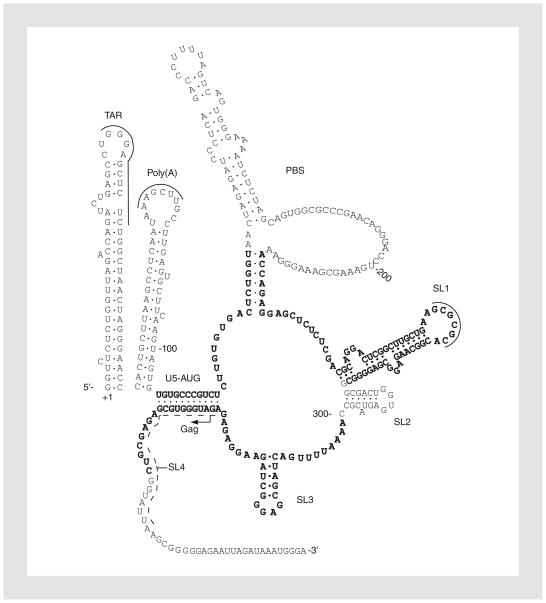
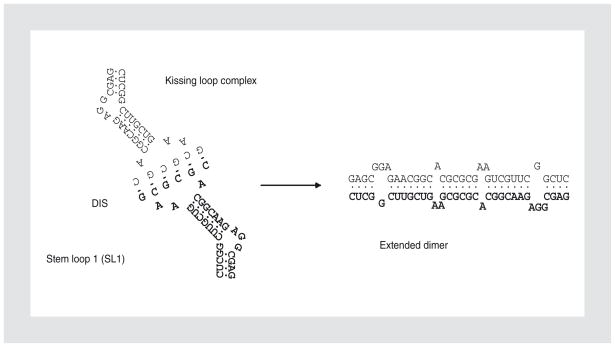
Each viral particle of HIV-1, the infectious agent of AIDS, contains two copies of the full-length viral genomic RNA. Encapsidating two copies of genomic RNA is one of the characteristics of the retrovirus family. The two RNA molecules are both positive-sense and often identical; furthermore, each RNA encodes the full complement of genetic information required for viral replication. The two strands of RNA are intricately entwined within the core of the mature infectious virus as a ribonuclear complex with the viral proteins, including nucleocapsid. Multiple steps in the biogenesis of the genomic full-length RNA are involved in achieving this location and dimeric state. The viral sequences and proteins involved in the process of RNA dimerization, both for the initial interstrand contact and subsequent steps that result in the condensed, stable conformation of the genomic RNA, are outlined in this review. In addition, the impact of the dimeric state of HIV-1 viral RNA is discussed with respect to its importance in efficient viral replication and, consequently, the potential development of antiviral strategies designed to disrupt the formation of dimeric RNA.
Figures
References
-
- Abbink T, Berkhout B. A novel long distance base-pairing interaction in HIV-1 RNA occludes the Gag start codon. J Biol Chem. 2003;278:11601–11. - PubMed
-
- Abbink T, Ooms M, Haasnoot P, Berkhout B. The HIV-1 leader RNA conformational switch regulates RNA dimerization but does not regulate mRNA translation. Biochemistry. 2005;44:9058–66. - PubMed
-
- Adamson C, Freed E. HIV-1 assembly, release, and maturation. Adv Pharmacol. 2007;55:347–87. - PubMed
-
- Andersen E, Contera S, Knudsen B, Damgaard C, Besenbacher F, Kjems J. Role of the trans-activation response element in dimerization of HIV-1 RNA. J Biol Chem. 2004;279:22243–9. - PubMed
Publication types
MeSH terms
Substances
Grants and funding
LinkOut - more resources
Full Text Sources
Other Literature Sources