


Clinicopathological characteristics of ganglioneuroma and ganglioneuroblastoma: a report from the CCG and COG
- PMID: 19530234
- PMCID: PMC2730988
- DOI: 10.1002/pbc.22106
Clinicopathological characteristics of ganglioneuroma and ganglioneuroblastoma: a report from the CCG and COG
Abstract
Background: The International Neuroblastoma Pathology Classification (INPC) was the first to clearly define prognostic subgroups in ganglioneuroma (GN) and ganglioneuroblastoma (GNB).
Procedure: Histopathology and tumor resectability of 552 GN/GNB cases from the Children's Cancer Group (CCG) and Children's Oncology Group (COG) neuroblastoma studies were reviewed. The results were analyzed along with clinical information and biological data of the cases.
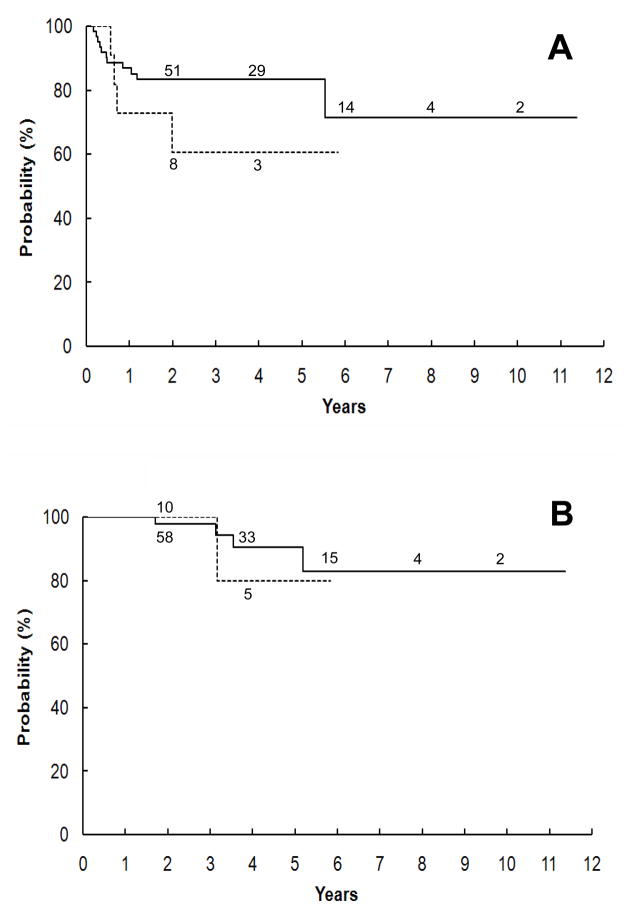
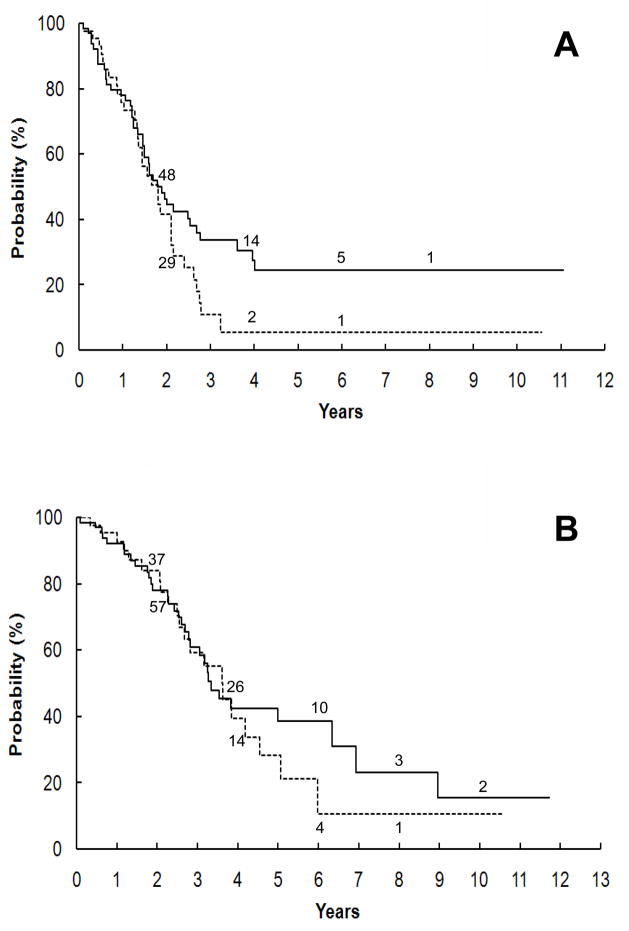
Results: According to the INPC, 300 tumors were classified into the Favorable Histology (FH) group and 252 were into the Unfavorable Histology (UH) group. Tumors in the FH group included 43 ganglioneuroma-maturing (GN-M), 198 ganglioneuroblastoma-intermixed (GNB-I), and 59 ganglioneuroblastoma-nodular, favorable subset (GNB-N-FS), and were often (91%) resected completely by single or multiple surgical procedures. Patients with the FH tumors had an excellent prognosis with no tumor-related deaths. The UH group included ganglioneuroblastoma-nodular, unfavorable subset (GNB-N-US) tumors. Patients with the UH tumors had a high incidence (53%) of distant metastasis at the time of diagnosis, and their prognosis significantly depended on clinical stage (5-year EFS: 80.1% for non-stage 4 patients; 16.7% for stage 4 patients): Complete primary tumor resection was not beneficial to those GNB-N-US patients, regardless of whether metastasis was present or not. MYCN amplification was detected in four tumors in the FH group and six tumors in the UH group. The majority (160/191, 84%) of GN-M and GNB-I tumors had a diploid pattern determined by flow cytometry.
Conclusions: Stringent application of the INPC along with clinical staging was critical for prognostic evaluation of the patients with this group of tumors.
Figures
References
-
- Beckwith JB, Martin RF. Observations on the histopathology of neuroblastomas. J Pediatr Surg. 1968;3:106–10. - PubMed
-
- Hughes M, Marsden HB, Palmer MK. Histologic patterns of neuroblastoma related to prognosis and clinical staging. Cancer. 1974;34:1706–1711. - PubMed
-
- Shimada H, Chatten J, Newton WA, et al. Histopathologic prognostic factors in neuroblastic tumors: definition of subtypes of ganglioneuroblastoma and age-linked classification of neuroblastomas. J Natl Cancer Inst. 1984;73:405–416. - PubMed
-
- Dehner LP. Classic neuroblastoma: histopathologic grading as a prognostic indicator, The Shimada System and its progenitors. Am J Pediatr Hematol Oncol. 1988;10:143–154.
-
- Joshi VV, Rao PV, Cantor AB, Altshuler G, Shuster JJ, Castleberry RP. Modified histologic grading of neuroblastomas by replacement of mitotic rate with mitosis karyorrhexis index. Cancer. 1996;77:1582–1588. - PubMed
Publication types
MeSH terms
Substances
Grants and funding
LinkOut - more resources
Full Text Sources
Miscellaneous
