


Seasonality of birth and implications for temporal studies of preterm birth
- PMID: 19535987
- PMCID: PMC3743217
- DOI: 10.1097/EDE.0b013e3181a66e96
Seasonality of birth and implications for temporal studies of preterm birth
Abstract
Background: A strength of time-series analyses is the inherent control of individual-level risk factors that do not vary temporally. However, in studies of adverse pregnancy outcomes, risk factors considered time-invariant at the individual level may vary seasonally when aggregated into a pregnancy risk set. To illustrate, we describe the seasonal patterns of birth in Atlanta and demonstrate how these patterns could lead to confounding in time-series studies of seasonally-varying exposures and preterm birth.
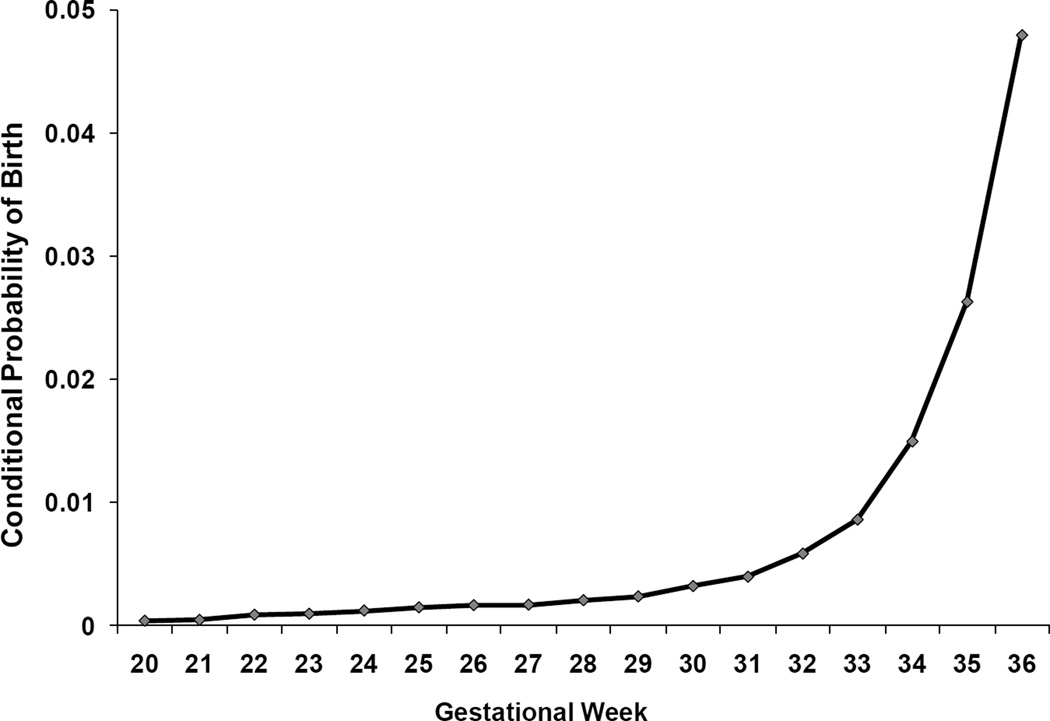
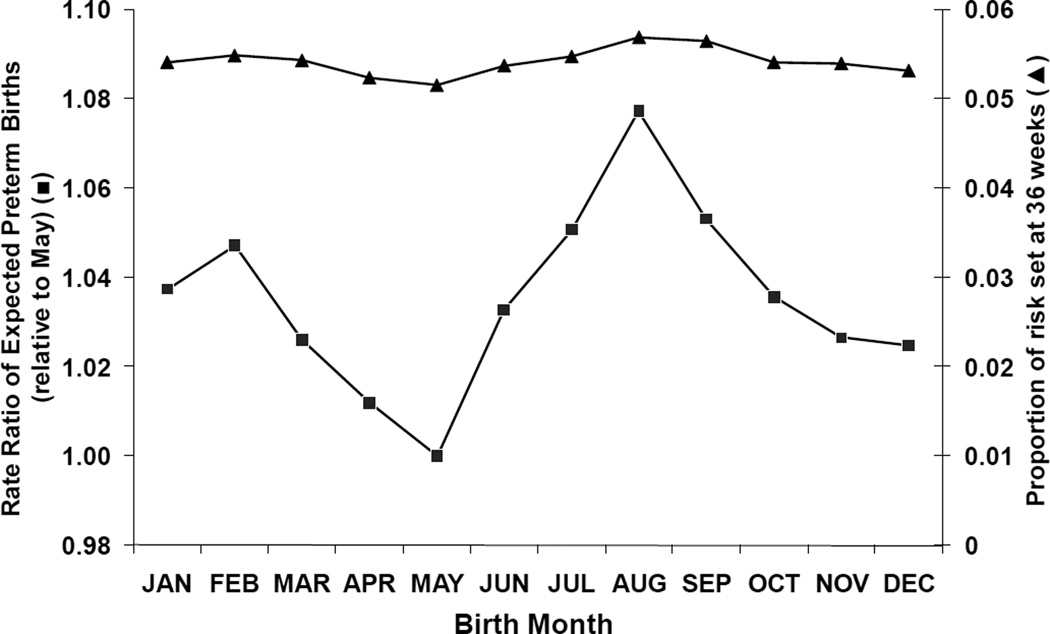
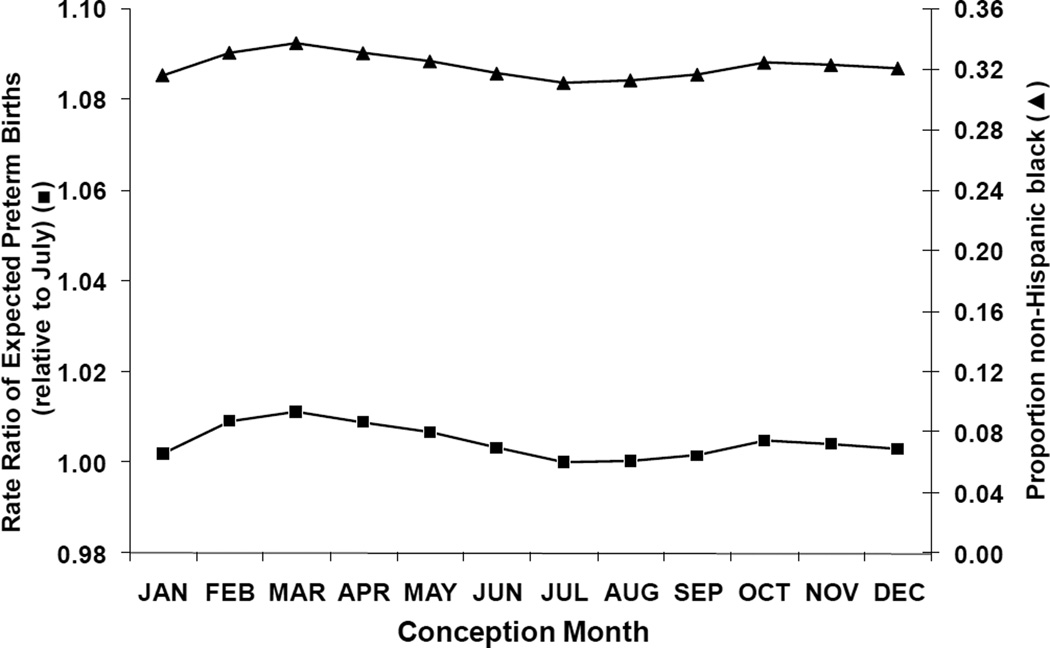
Methods: The study cohort included all births in 20-county metropolitan Atlanta delivered during the period 1994-2004 (n = 715,875). We assessed the seasonal patterns of estimated conception and birth for the full cohort and for subgroups stratified by sociodemographic factors. Based on the observed patterns, we quantified the degree of potential confounding created by (1) differences in the gestational age distribution in the risk set across calendar months and (2) differences in the sociodemographic composition of the risk set across calendar months.
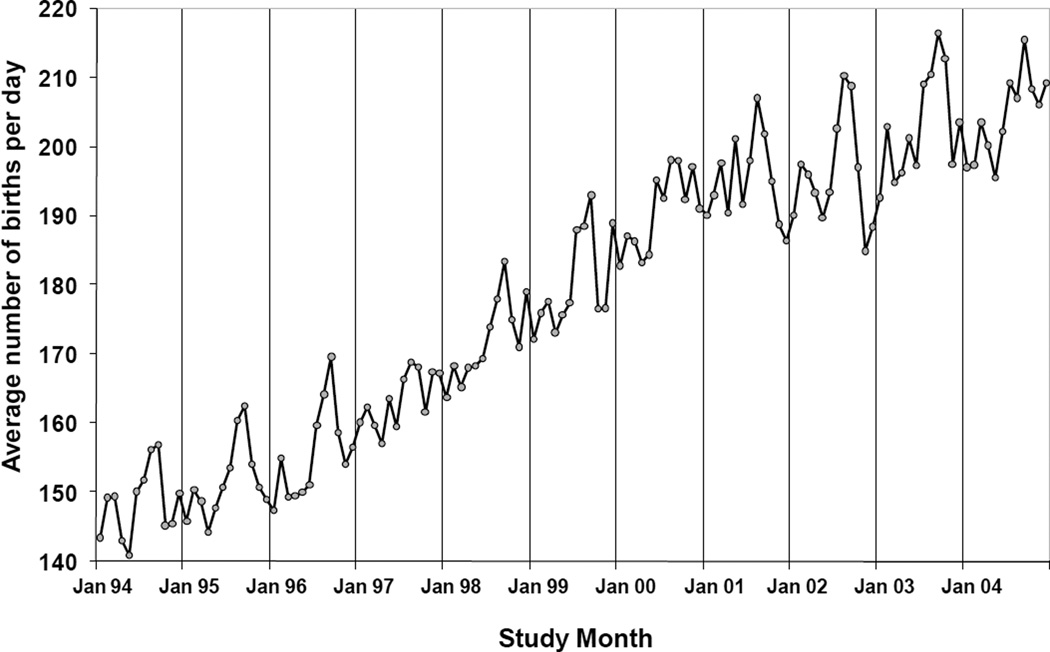
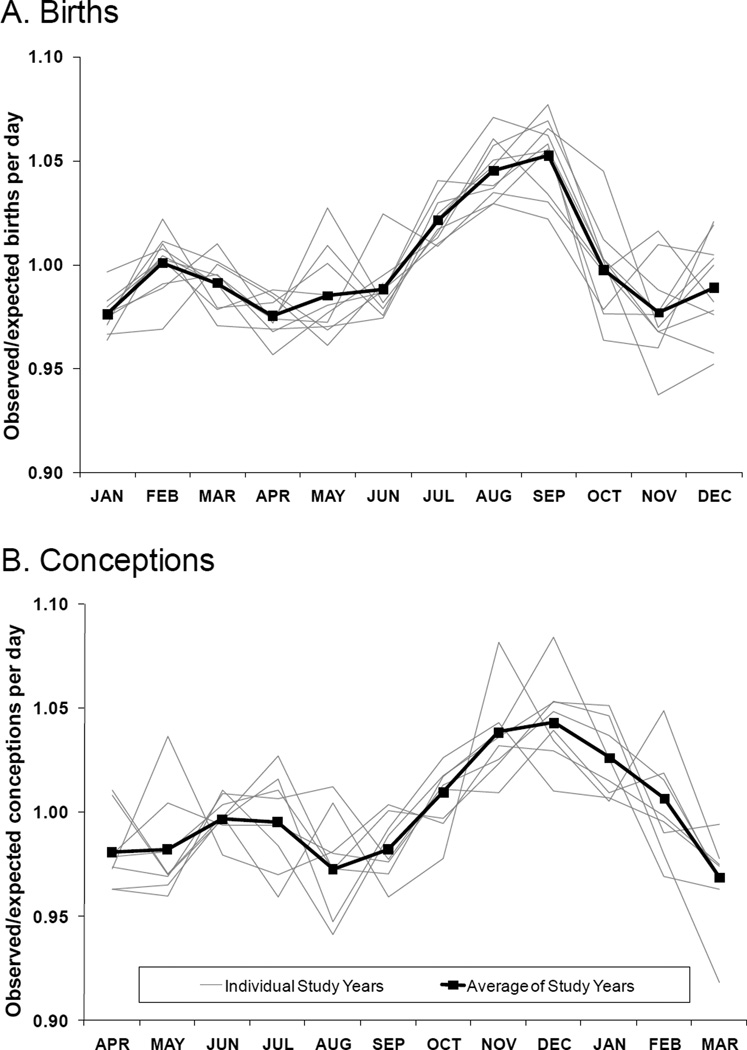
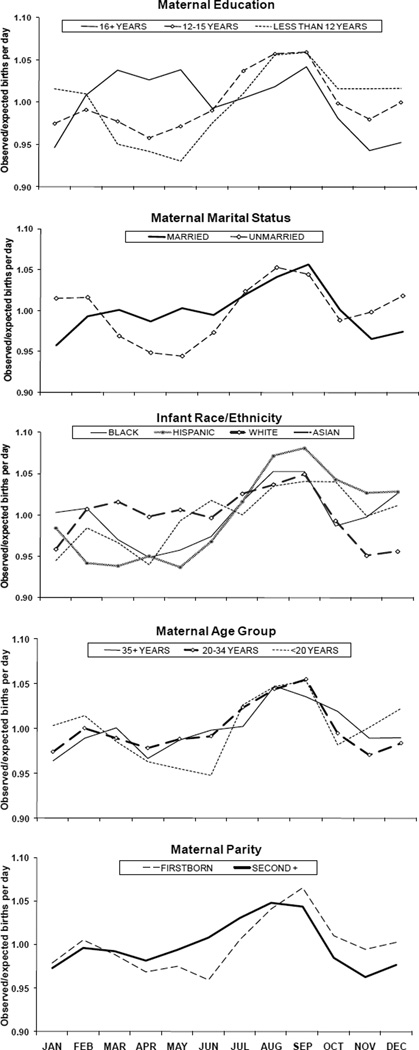
Results: The overall seasonal pattern of birth was characterized by a peak in August-September and troughs in April-May and November-January. Seasonal patterns differed among racial and ethnic groups, maternal education levels, and marital status. As a consequence of these seasonal patterns, systematic seasonal differences in the gestational age distribution and the sociodemographic composition of the risk set led to differences in expected rates of preterm birth across calendar months.
Conclusions: Time-series investigations of seasonally-varying exposures and adverse pregnancy outcomes should consider the potential for bias due to seasonal heterogeneity in the risk set.
Figures
References
-
- Becker S. Seasonal patterns of births and conception throughout the world. Adv Exp Med Biol. 1991;286:59–72. - PubMed
-
- Roenneberg T, Aschoff J. Annual rhythm of human reproduction: I. Biology, sociology, or both? J Biol Rhythms. 1990;5(3):195–216. - PubMed
-
- Lam DA, Miron JA. Global patterns of seasonal variation in human fertility. Ann N Y Acad Sci. 1994;709:9–28. - PubMed
-
- Lam DA, Miron JA. The effects of temperature on human fertility. Demography. 1996;33(3):291–305. - PubMed
-
- Seiver DA. Trend and variation in the seasonality of U.S. fertility, 1947–1976. Demography. 1985;22(1):89–100. - PubMed
Publication types
MeSH terms
Grants and funding
LinkOut - more resources
Full Text Sources
Miscellaneous
