. 2009 Jun;5(6):e1000522.
doi: 10.1371/journal.pgen.1000522. Epub 2009 Jun 19.

Disease-causing 7.4 kb cis-regulatory deletion disrupting conserved non-coding sequences and their interaction with the FOXL2 promotor: implications for mutation screening

Affiliations

Disease-causing 7.4 kb cis-regulatory deletion disrupting conserved non-coding sequences and their interaction with the FOXL2 promotor: implications for mutation screening

Barbara D'haene et al. PLoS Genet. 2009 Jun.

Abstract

To date, the contribution of disrupted potentially cis-regulatory conserved non-coding sequences (CNCs) to human disease is most likely underestimated, as no systematic screens for putative deleterious variations in CNCs have been conducted. As a model for monogenic disease we studied the involvement of genetic changes of CNCs in the cis-regulatory domain of FOXL2 in blepharophimosis syndrome (BPES). Fifty-seven molecularly unsolved BPES patients underwent high-resolution copy number screening and targeted sequencing of CNCs. Apart from three larger distant deletions, a de novo deletion as small as 7.4 kb was found at 283 kb 5' to FOXL2. The deletion appeared to be triggered by an H-DNA-induced double-stranded break (DSB). In addition, it disrupts a novel long non-coding RNA (ncRNA) PISRT1 and 8 CNCs. The regulatory potential of the deleted CNCs was substantiated by in vitro luciferase assays. Interestingly, Chromosome Conformation Capture (3C) of a 625 kb region surrounding FOXL2 in expressing cellular systems revealed physical interactions of three upstream fragments and the FOXL2 core promoter. Importantly, one of these contains the 7.4 kb deleted fragment. Overall, this study revealed the smallest distant deletion causing monogenic disease and impacts upon the concept of mutation screening in human disease and developmental disorders in particular.


Conflict of interest statement

The authors have declared that no competing interests exist.

Figures
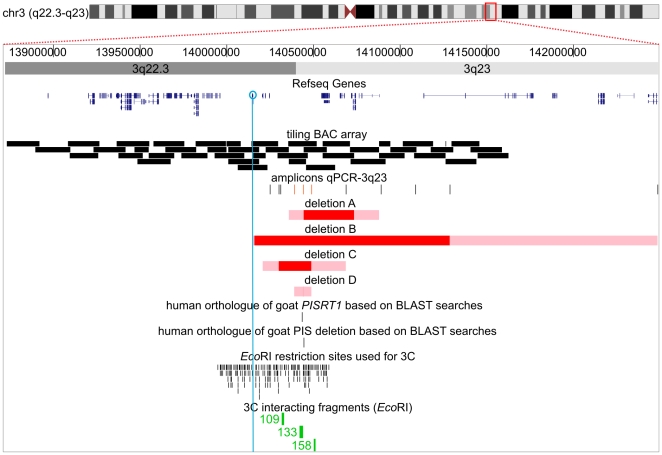
Figure 1
Figure 1. Human Genome Browser view of the FOXL2 region.
The FOXL2 region (chr3:138,720,000–143,780,300) with custom tracks showing the BACs and qPCR-3q23 amplicons used in the study. Locations and sizes of the novel deletions are indicated by horizontal bars. The red bars indicate the minimal deleted regions and the pink bars indicate the regions harbouring deletion breakpoints. Two tracks indicate the human orthologous regions of caprine PISRT1 and the caprine PIS deletion based on BLAST searches. The last two tracks at the bottom represent the EcoRI restriction sites used for 3C and the 3C fragments interacting with the fragment containing the FOXL2 promotor (in green). The figure was drawn according to the UCSC, Human Genome Browser, March 2006.
Figure 2
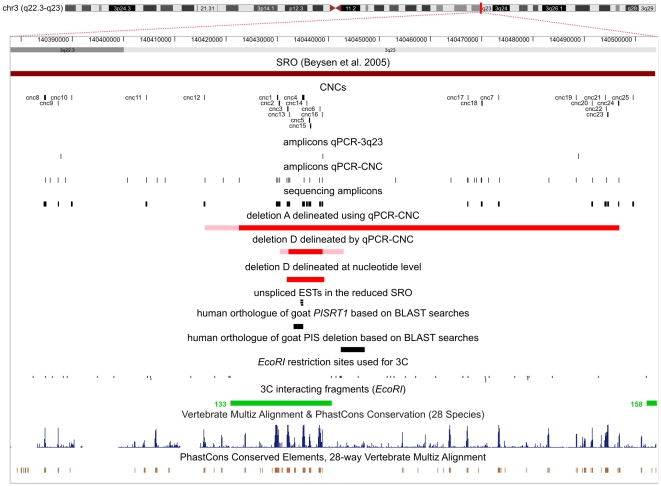
Figure 2. Human Genome Browser view of the initial and reduced SRO.
UCSC Genome Browser view of the SRO region (chr3:140,377,900–140,504,100) with: 25 CNCs mapping within the initial SRO; 3 amplicons of the qPCR-3q23 assay located in the initial SRO; 36 amplicons designed for the qPCR-CNC assay; the amplicons designed for sequencing analysis of CNCs and the two deletions delineated by qPCR-CNC (A,D). The red bars indicate the minimal deleted regions and the pink bars indicate the maximum deleted region. The next track indicates the delineation of deletion D at nucleotide level. The remaining tracks at the bottom display: unspliced ESTs in the reduced SRO; the human orthologue of caprine PISRT1 based on BLAST searches; the human orthologue of the PIS deletion based on BLAST searches; the EcoRI restriction sites used for 3C; in green the 3C fragments (133, 158) interacting with the fragment containing the FOXL2 promotor; the conservation profile of the region extracted from the UCSC genome browser (blue and brown). The figure was drawn according to the UCSC, Human Genome Browser, March 2006.
Figure 3
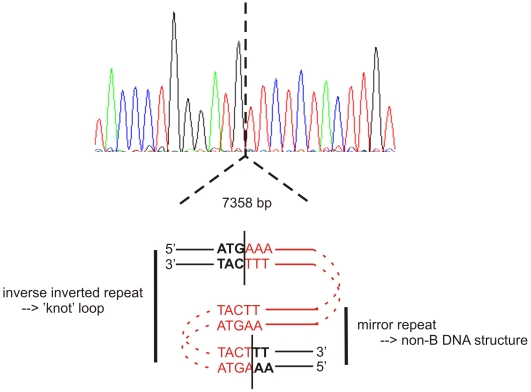
Figure 3. Characterization of 7.4 kb deletion.
Top: Sequence electropherogram of the junction fragment of deletion D. The dotted vertical line indicates the position of the junction. Bottom: Schematic representation of the proposed mechanism underlying the 7.4 kb deletion. The deleted fragment is delineated by the vertical lines and represented in red. The retained basepairs are formatted in bold. It is hypothesized that a double-stranded break (DSB) at the telomeric side triggered the deletion, followed by a DSB repair mechanism guided by the formation of a knot loop between the reverse complement of the pentanucleotide motif at the centromeric end.
Figure 4
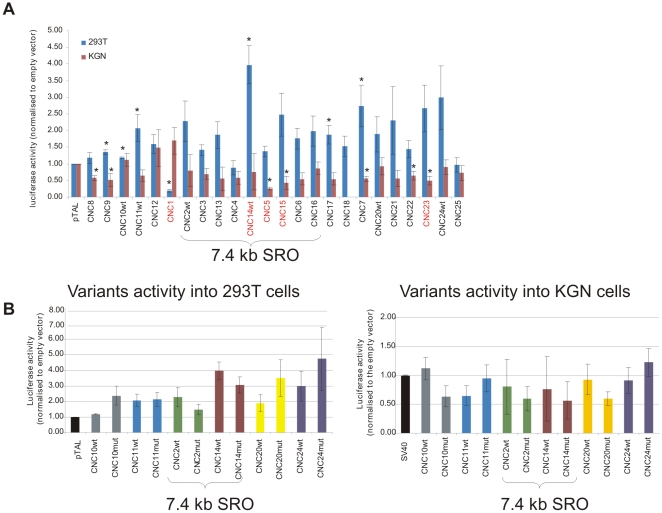
Figure 4. Regulatory activity of wild-type and variant CNCs in FOXL2 expressing and non-expressing cells.
The 25 identified CNCs and their putative pathogenic variants were cloned into a luciferase reporter vector and assayed for their regulatory role into expressing KGN and non-expressing 293T (human kidney cells) cells. (A) Bar chart showing the regulatory activity of each independent wild type CNC (CNCwt) in KGN (brown bars) and 293T (blue bars) relative to the basal activity of the empty vector (pTAL). Significant changes (one sample T-test, p value<0.05) are highlighted by an asterisk. CNCs with a >2 fold-change in activity between cell lines and a significant p value are shown in red. (B) Bar chart of wtCNCs and variant CNCs (CNCmut) regulatory activity in 293T and KGN cell lines respectively. Each CNC activity is first normalised to the basal activity of the empty vector and significant changes between wt and mut were then assessed by a two-samples T-test. No significant p values were found for any assayed construct (P value<0.05).
Figure 5
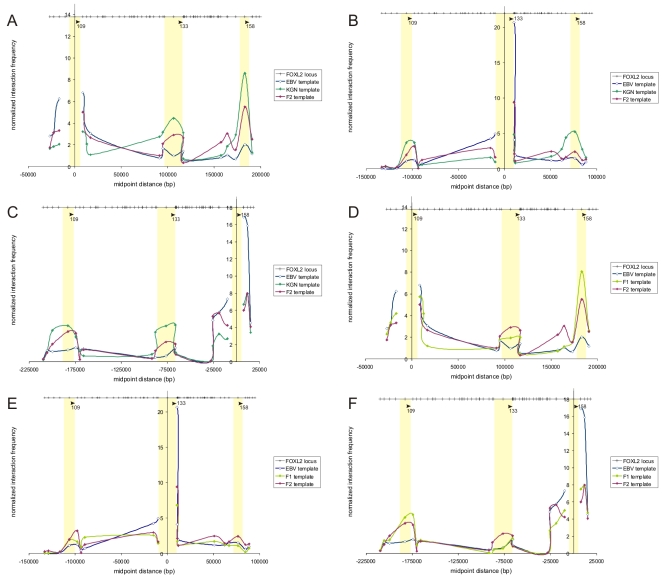
Figure 5. 3C analysis of FOXL2 region: mutual interactions between three regulatory sequences upstream of FOXL2.
(A–C) In a first step 3C analysis of the FOXL2 region demonstrated a close proximity of three evolutionarily conserved fragments 109, 133, and 158 with a fragment containing the FOXL2 core promoter in expressing cells (KGN and control fibroblasts F2) (Figure 1, Figure 2, and Figure S2). Fragment 133 contains the 7.4 kb deletion. Second, to validate mutual interactions between these three regulatory fragments, 3C was performed in non-expressing EBV and expressing KGN and F2 cells with fragments 109 (A), 133 (B) and 158 (C) as anchor fragments respectively. The X-axis shows the genomic positions relative to the respective anchor fragments 109, 133 and 158 respectively; the Y-axis indicates normalized interaction frequencies measured by semi-quantitative PCR. At the Y-axis there are no peaks in interaction frequencies because an anchor fragment cannot interact with itself. Regions of interaction are highlighted with yellow rectangles. In expressing cells, all three distant fragments mutually interact and contact the FOXL2 core promoter, assuming the intervening DNA loops out. Interaction frequencies between the FOXL2 promoter and the regulatory sequences (represented in Figure S2) are significantly lower compared to interaction frequencies observed amongst the interacting fragments themselves (A–C). (D–F) The X-axis shows the genomic positions relative to the respective anchor fragments 109, 133, and 158 respectively; the Y-axis indicates normalized interaction frequencies measured by semi-quantitative PCR. At the Y-axis there are no peaks in interaction frequencies because an anchor fragment cannot interact with itself. Regions of interaction are highlighted with yellow rectangles. Experiments with anchor primers 109, 133, and 158 respectively (D–F), revealed interaction comparable to those in EBV cells in the deleted region. Moreover, Figure 5D and 5F show that in F1 cells, restriction fragments 109 and 158 maintain their mutual interaction in spite of absence of interaction with fragment 133. This demonstrates that retained mutual interactions and interactions between fragments 109 and 158 and the FOXL2 core promoter are not sufficient for a normal cell-specific control of FOXL2 expression.

References

    1. Birney E, Stamatoyannopoulos JA, Dutta A, Guigo R, Gingeras TR, et al. Identification and analysis of functional elements in 1% of the human genome by the ENCODE pilot project. Nature. 2007;447:799–816. - PMC - PubMed
    1. Dermitzakis ET, Reymond A, Antonarakis SE. Conserved non-genic sequences - an unexpected feature of mammalian genomes. Nat Rev Genet. 2005;6:151–157. - PubMed
    1. Dermitzakis ET, Reymond A, Lyle R, Scamuffa N, Ucla C, et al. Numerous potentially functional but non-genic conserved sequences on human chromosome 21. Nature. 2002;420:578–582. - PubMed
    1. Dermitzakis ET, Reymond A, Scamuffa N, Ucla C, Kirkness E, et al. Evolutionary discrimination of mammalian conserved non-genic sequences (CNGs). Science. 2003;302:1033–1035. - PubMed
    1. Pennacchio LA, Ahituv N, Moses AM, Prabhakar S, Nobrega MA, et al. In vivo enhancer analysis of human conserved non-coding sequences. Nature. 2006;444:499–502. - PubMed

Publication types

Substances