. 2009 Jul;39(7):1754-64.
doi: 10.1002/eji.200839028.

B7-H3 is a potent inhibitor of human T-cell activation: No evidence for B7-H3 and TREML2 interaction

Affiliations

B7-H3 is a potent inhibitor of human T-cell activation: No evidence for B7-H3 and TREML2 interaction

Judith Leitner et al. Eur J Immunol. 2009 Jul.

Abstract

B7-H3 belongs to the B7 superfamily, a group of molecules that costimulate or down-modulate T-cell responses. Although it was shown that B7-H3 could inhibit T-cell responses, several studies - most of them performed in murine systems - found B7-H3 to act in a costimulatory manner. In this study, we have specifically addressed a potential functional dualism of human B7-H3 by assessing the effect of this molecule under varying experimental conditions as well as on different T-cell subsets. We show that B7-H3 does not costimulate human T cells. In the presence of strong activating signals, B7-H3 potently and consistently down-modulated human T-cell responses. This inhibitory effect was evident when analysing proliferation and cytokine production and affected naïve as well as pre-activated T cells. Furthermore, we demonstrate that B7-H3-T-cell interaction is characterised by an early suppression of IL-2 and that T-cell inhibition can be reverted by exogenous IL-2. Since the triggering receptor expressed on myeloid cells like transcript 2 (TREML2/TLT-2) has been recently described as costimulatory receptor of murine B7-H3 we have extensively analysed interaction of human B7-H3 with TREML2/TLT-2. In these experiments we found no evidence for such an interaction. Furthermore, our data do not point to a role for murine TREML2 as a receptor for murine B7-H3.


Figures

Figure 1
Figure 1. B7-H3 does not costimulate a weak signal 1
(A) Human T cells were incubated with plate-bound anti-CD3 mAb immobilized at the indicated concentrations in the presence of control-Ig (Co-Ig), ICOS-L-Ig or B7-H3-Ig (immobilized at 10 μg/ml). (B) Human T cells were co-cultured with control Bw-anti-CD3low stimulator cells and stimulator cells expressing ICOS-L and B7-H3. The thin black line indicates the mean methyl-3[H]-thymidine incorporation of the irradiated stimulator cells in absence of human T cells. T cell proliferation was determined by assessing methyl-3[H]-thymidine uptake (cpm: counts per minute) on day 4 (A) or on day 3 (B) of culture. Data show mean ± SD of triplicates from one experiment and are representative of three independent experiments.
Figure 2
Figure 2. B7-H3 inhibits human T cell activation
(A) T cells were stimulated with plate bound anti-CD3 mAb in presence of control-Ig (Co-Ig), ICOS-L-Ig or B7-H3-Ig. Presence of B7-H3 significantly inhibits T cell proliferation (p<0.001, n=9) whereas ICOS-L strongly enhanced T cell proliferation (p<0.001, n=7). (B) T cell stimulator cells expressing ICOS-L or B7-H3 and control Bw-anti-CD3high stimulator cells were incubated with T cells. Differences in T cell proliferation induced by control stimulator cells and stimulator cells expressing B7-H3 were statistically significant (p<0.001, n=14). (C) 4Ig and 2Ig B7-H3 inhibit proliferation of human T cells to a similar extent. Human T cells were incubated with plate-bound anti-CD3 mAb in presence of Co-Ig, 4Ig B7-H3-Ig or 2Ig B7-H3-Ig immobilized at the indicated concentrations. (D) T cells were stimulated with plate-bound anti-CD3 mAb in the presence of Co-Ig or B7-H3-Ig without (p<0.001, n=8) or in the presence of anti-CD28 mAb (final concentration of 5 ng/ml; p<0.01, n=8). Proliferation was measured on day 3 (B) or on day 4 (A, C, D) of culture. Data show mean ± SD of triplicates from one experiment. Number of experiments indicated for each panel separately. Two-tailed Student-t test was used to assess significances.
Figure 3
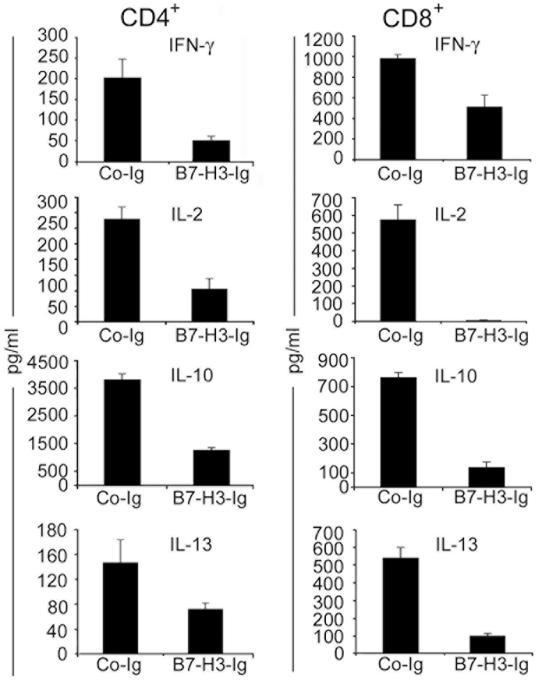
Figure 3. B7-H3 inhibits cytokine production
Human CD4+ and CD8+ T cells were stimulated with plate-bound anti-CD3 mAb in the presence of control-Ig (Co-Ig) or B7-H3-Ig. Culture supernatant was harvested after 72 hours and subjected to multiplex cytokine measurement. Data show mean ± SD of triplicates from one experiment and are representative of three independent experiments.
Figure 4
Figure 4. B7-H3 inhibits proliferation of CD4+, CD8+, naïve and pre-activated T cells
(A) CFSE-labelled T cells were co-cultured with Bw-anti-CD3high-control and Bw-anti-CD3high-B7-H3 stimulator cells for 5 days. Cell cycling was analysed by FACS using CD4- and CD8-specific antibodies. The data are representative for four independent experiments. (B) Human CD4+, CD8+ T cells, (C) CD45RA+ human T cells and (D) human umbilical cord blood T cells were incubated with plate-bound anti-CD3 mAb in absence or presence of control-Ig (Co-Ig) or B7-H3-Ig. T cell proliferation was measured on day 4. Differences in proliferation induced in the presence or absence of B7-H3-Ig were statistically significant (B) CD4+ (p<0.001, n=9), CD8+ T cells (p<0.01, n=9); (D) human umbilical cord blood T cells (p<0.001, n=9). (E) CD3/CD28 stimulated CD4+ and CD8+ cells were restimulated using plate-bound anti-CD3 mAb in presence of Co-Ig and B7-H3-Ig. Proliferation was measured after 48 hours. Data show mean ± SD of triplicates from one experiment and are representative of three independent experiments. (B, C, D) Two-tailed Student-t test was used to assess significances.
Figure 5
Figure 5. B7-H3 mediated T cell inhibition is characterized by early suppression of IL-2
Human T cells were stimulated with plate-bound anti-CD3 mAb in presence of control-Ig (Co-Ig) or B7-H3-Ig. (A) T cell proliferation was measured at the time points indicated. (B) Culture supernatant was harvested at the time points indicated and its IL-2 content was measured by a Luminex-based assay. Data show mean ± SD of triplicates from one experiment and are representative of three independent experiments. (C) IL-2 (final concentration 50 units) was added to co-culture as indicated. Inhibition (mean ± SD of three independently performed experiments) of T cell proliferation in presence of B7-H3 is shown.
Figure 6
Figure 6. Human TREML2 does not serve as a costimulatory receptor for B7-H3
(A) Fusion proteins representing human B7 family members were analysed for binding to their receptors or TREML2 (grey histograms) and control cells (open histograms). (B) Fusion proteins representing receptors for B7 family members and human TREML2 were analysed for binding to their ligands or B7-H3 (grey histograms) and control cells (open histograms). (A+B) Left panels show expression of indicated molecules. Binding experiments were repeated four times with similar outcome. (C) Non-transduced Jurkat reporter cells and Jurkat reporter cells expressing 4-1BB or TREML2 were co-cultured with T cell stimulators expressing the indicated molecules. Following 6 hours of co-culture IL-2 promotor activity was analysed in a luciferase assay. Results are representative for five independent experiments.
Figure 7
Figure 7. Mouse B7-H3-Ig does not bind to cells expressing TREML2
A fusion protein representing murine B7-H3 was analysed for binding to Bw cells expressing murine TREML2 (Bw-mTREML2, grey histograms) and control cells (Bw, open histograms). Left panel show interaction of αTREML2 antibody with cell lines as indicated. Results are representative for three independent experiments.

References

    1. Greenwald RJ, Freeman GJ, Sharpe AH. The B7 family revisited. Annu Rev Immunol. 2005;23:515–548. - PubMed
    1. Chapoval AI, Ni J, Lau JS, Wilcox RA, Flies DB, Liu D, Dong H, Sica GL, Zhu G, Tamada K, Chen L. B7-H3: a costimulatory molecule for T cell activation and IFN-gamma production. Nat Immunol. 2001;2:269–274. - PubMed
    1. Ling V, Wu PW, Spaulding V, Kieleczawa J, Luxenberg D, Carreno BM, Collins M. Duplication of primate and rodent B7-H3 immunoglobulin V- and C-like domains: divergent history of functional redundancy and exon loss. Genomics. 2003;82:365–377. - PubMed
    1. Luo L, Chapoval AI, Flies DB, Zhu G, Hirano F, Wang S, Lau JS, Dong H, Tamada K, Flies AS, Liu Y, Chen L. B7-H3 enhances tumor immunity in vivo by costimulating rapid clonal expansion of antigen-specific CD8+ cytolytic T cells. J Immunol. 2004;173:5445–5450. - PubMed
    1. Prasad DV, Nguyen T, Li Z, Yang Y, Duong J, Wang Y, Dong C. Murine B7-H3 is a negative regulator of T cells. J Immunol. 2004;173:2500–2506. - PubMed

Publication types

MeSH terms

LinkOut - more resources