


Cost-effectiveness of eszopiclone for the treatment of adults with primary chronic insomnia
- PMID: 19544759
- PMCID: PMC2690570
- DOI: 10.1093/sleep/32.6.817
Cost-effectiveness of eszopiclone for the treatment of adults with primary chronic insomnia
Abstract
Study objective: To assess the cost-effectiveness of treatment with eszopiclone for chronic primary insomnia in adults.
Methods: A model using patient-level data from a 6-month, double-blind, placebo-controlled, clinical trial (n = 824), combined with data from a claims database and published literature, was used to assess the quality-adjusted life years (QALYs) gained and costs associated with eszopiclone versus placebo in adults with primary insomnia. Quality of life data were collected during the trial via the SF-36, from which preference-based utility scores were derived using published algorithms. Medical and absenteeism costs, estimated via a retrospective analysis of a claims and absenteeism database, were assigned to patients based on the degree of severity of their insomnia, assessed via the Insomnia Severity Index collected in the clinical trial. Presenteeism costs (lost productivity while at work) were estimated from responses to the Work Limitation Questionnaire collected during the trial. Six-month gains in QALYs and costs for each treatment group were calculated to derive cost-effectiveness ratios. Uncertainty was addressed via univariate and multivariate sensitivity analyses.
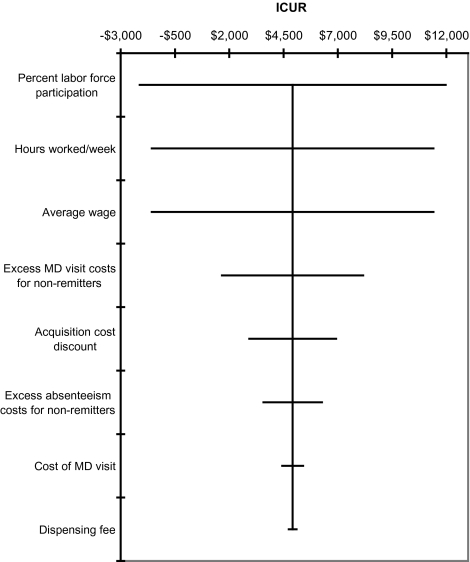
Results: Over the 6-month period, eszopiclone use resulted in a net gain of 0.0137 QALYs over placebo at an additional cost of $67, resulting in an incremental cost per QALY gained of slightly less than $5,000. When absenteeism and presenteeism costs were excluded, the cost-effectiveness ratio increased to approximately $33,000 per QALY gained, which is below the commonly used threshold of $50,000 used to define cost-effectiveness. Extensive sensitivity analyses indicate the results are generally robust.
Conclusion: Our model, based on efficacy data from a clinical trial, demonstrated eszopiclone was cost-effective for the treatment of primary insomnia in adults, especially when lost productivity costs were included.
Figures
References
-
- Hajak G. Epidemiology of severe insomnia and its consequences in Germany. Eur Arch Psychiatry Clin Neurosci. 2001;251:49–56. - PubMed
-
- Kapur VK, Redline S, Nieto FJ, Young TB, Newman AB, Henderson JA. The relationship between chronically disrupted sleep and healthcare use. Sleep. 2002;25:289–96. - PubMed
-
- Katz DA, McHorney CA. The relationship between insomnia and health-related quality of life in patients with chronic illness. J Fam Pract. 2002;51:229–35. - PubMed
-
- Kuppermann M, Lubeck DP, Mazonson PD, et al. Sleep problems and their correlates in a working population. J Gen Intern Med. 1995;10:25–32. - PubMed
-
- Leger D, Scheuermaier K, Philip P, Paillard M, Guilleminault C. SF-36: evaluation of quality of life in severe and mild insomniacs compared with good sleepers. Psychosom Med. 2001;63:49–55. - PubMed
Publication types
MeSH terms
Substances
LinkOut - more resources
Full Text Sources
Medical
