


Abnormal skin barrier in the etiopathogenesis of atopic dermatitis
- PMID: 19550302
- PMCID: PMC2852024
- DOI: 10.1097/ACI.0b013e32832e7d36
Abnormal skin barrier in the etiopathogenesis of atopic dermatitis
Abstract
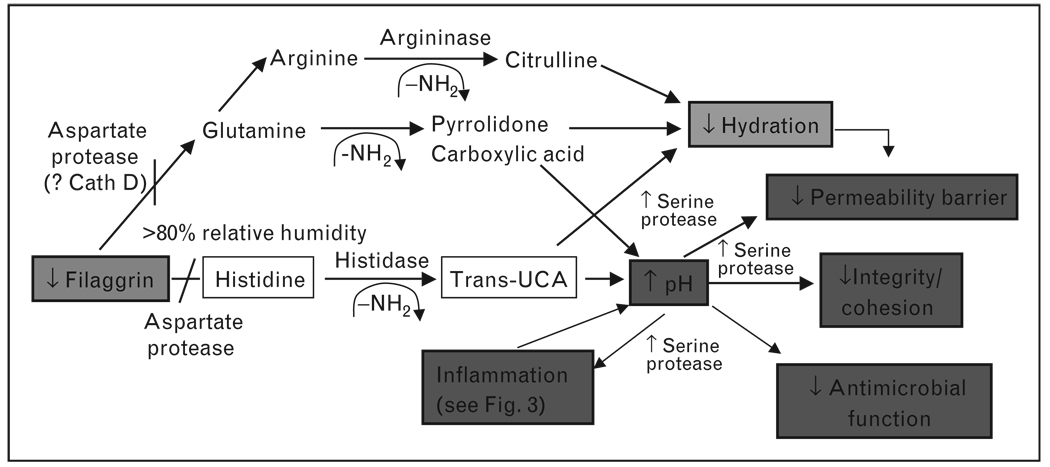
Purpose of review: Many recent studies have revealed the key roles played by Th1/Th2 cell dysregulation, IgE production, mast cell hyperactivity, and dendritic cell signaling in the pathogenesis of atopic dermatitis. Accordingly, current therapy has been largely directed towards ameliorating Th2-mediated inflammation and/or pruritus. We will review here emerging evidence that the inflammation in atopic dermatitis results from inherited and acquired insults to the barrier and the therapeutic implications of this new paradigm.
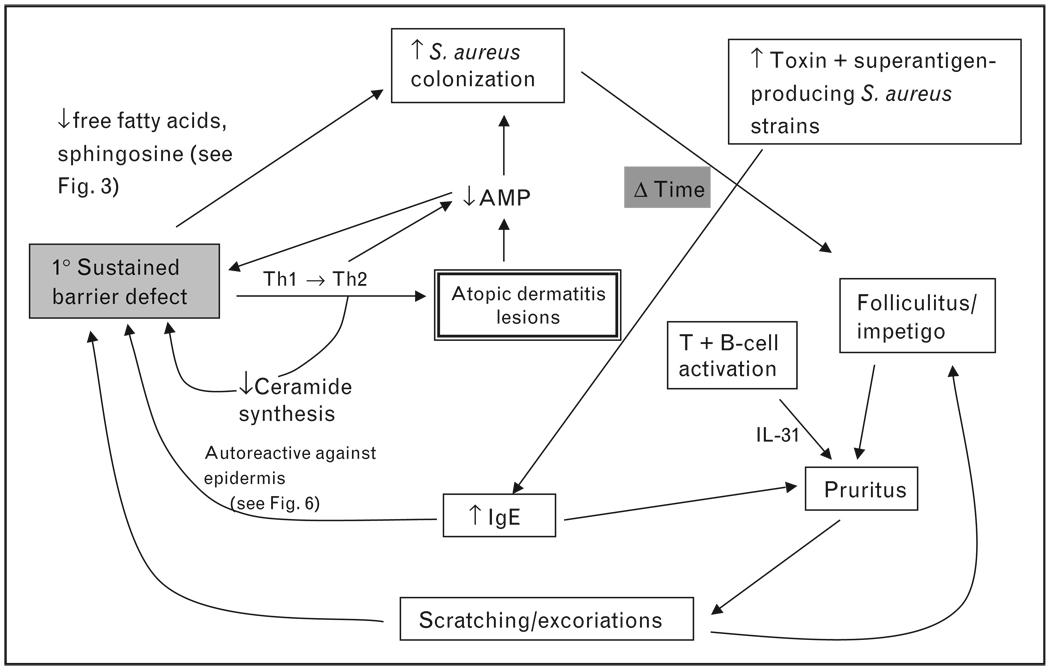
Recent findings: Recent molecular genetic studies have shown a strong association between mutations in FILAGGRIN and atopic dermatitis, particularly in Northern Europeans. But additional acquired stressors to the barrier are required to initiate inflammation. Sustained hapten access through a defective barrier stimulates a Th1 --> Th2 shift in immunophenotype, which in turn further aggravates the barrier. Secondary Staphylococcus aureus colonization not only amplifies inflammation but also further stresses the barrier in atopic dermatitis.
Summary: These results suggest a new 'outside-to-inside, back to outside' paradigm for the pathogenesis of atopic dermatitis. This new concept is providing impetus for the development of new categories of 'barrier repair' therapy.
Figures



References
-
- Sugarman JL, Fluhr JW, Fowler AJ, et al. The objective severity assessment of atopic dermatitis score: an objective measure using permeability barrier function and stratum corneum hydration with computer-assisted estimates for extent of disease. Arch Dermatol. 2003;139:1417–1422. - PubMed
-
- Seidenari S, Giusti G. Objective assessment of the skin of children affected by atopic dermatitis: a study of pH, capacitance and TEWL in eczematous and clinically uninvolved skin. Acta Derm Venereol. 1995;75:429–433. - PubMed
-
- Proksch E, Folster-Holst R, Jensen JM. Skin barrier function, epidermal proliferation and differentiation in eczema. J Dermatol Sci. 2006;43:159–169. - PubMed
-
- Chamlin SL, Kao J, Frieden IJ, et al. Ceramide-dominant barrier repair lipids alleviate childhood atopic dermatitis: changes in barrier function provide a sensitive indicator of disease activity. J Am Acad Dermatol. 2002;47:198–208. - PubMed
Publication types
MeSH terms
Substances
Grants and funding
LinkOut - more resources
Full Text Sources
Other Literature Sources
Research Materials
