. 2009 Jun 24;4(6):e6026.
doi: 10.1371/journal.pone.0006026.

Modulation of the intestinal microbiota alters colitis-associated colorectal cancer susceptibility

Affiliations

Modulation of the intestinal microbiota alters colitis-associated colorectal cancer susceptibility

Joshua M Uronis et al. PLoS One. .

Abstract

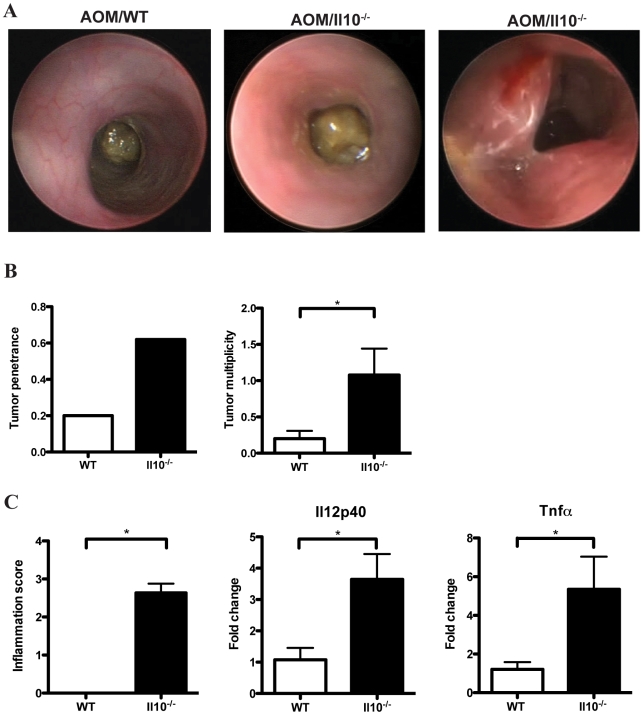
It is well established that the intestinal microbiota plays a key role in the pathogenesis of Crohn's disease (CD) and ulcerative colitis (UC) collectively referred to as inflammatory bowel disease (IBD). Epidemiological studies have provided strong evidence that IBD patients bear increased risk for the development of colorectal cancer (CRC). However, the impact of the microbiota on the development of colitis-associated cancer (CAC) remains largely unknown. In this study, we established a new model of CAC using azoxymethane (AOM)-exposed, conventionalized-Il10(-/-) mice and have explored the contribution of the host intestinal microbiota and MyD88 signaling to the development of CAC. We show that 8/13 (62%) of AOM-Il10(-/-) mice developed colon tumors compared to only 3/15 (20%) of AOM- wild-type (WT) mice. Conventionalized AOM-Il10(-/-) mice developed spontaneous colitis and colorectal carcinomas while AOM-WT mice were colitis-free and developed only rare adenomas. Importantly, tumor multiplicity directly correlated with the presence of colitis. Il10(-/-) mice mono-associated with the mildly colitogenic bacterium Bacteroides vulgatus displayed significantly reduced colitis and colorectal tumor multiplicity compared to Il10(-/-) mice. Germ-free AOM-treated Il10(-/-) mice showed normal colon histology and were devoid of tumors. Il10(-/-); Myd88(-/-) mice treated with AOM displayed reduced expression of Il12p40 and Tnfalpha mRNA and showed no signs of tumor development. We present the first direct demonstration that manipulation of the intestinal microbiota alters the development of CAC. The TLR/MyD88 pathway is essential for microbiota-induced development of CAC. Unlike findings obtained using the AOM/DSS model, we demonstrate that the severity of chronic colitis directly correlates to colorectal tumor development and that bacterial-induced inflammation drives progression from adenoma to invasive carcinoma.


Conflict of interest statement

Competing Interests: The authors have declared that no competing interests exist.

Figures

Figure 1
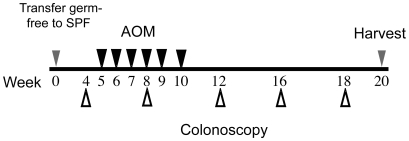
Figure 1. Experimental timeline for AOM-induced colitis-associated colon tumorigenesis and analysis.
Germ free mice were transferred to SPF conditions and allowed to acclimate for 5 weeks. Mice were given AOM injections once a week for 6 weeks (black arrowheads). Development of colitis and tumor formation was monitored by colonoscopy from weeks 4 to 18 after transfer from germ free to SPF conditions (white arrowheads). Mice were sacrificed between 18 and 20 weeks and tissues processed for histological and mRNA expression analysis.
Figure 2
Figure 2. Analysis of tumor induction and inflammation.
A. Representative examples of WT (left panel) and Il10−/− colons (middle and right panels) from AOM-treated mice 16 weeks after transfer to SPF conditions. B. Tumor penetrance and multiplicity in WT and Il10−/− mice (left and right panels) (p = 0.034). C. WT and Il10−/− colon inflammation scores, distal colon Il12p40 and Tnfα mRNA levels after 18–20 weeks under SPF conditions (p = 0.026).
Figure 3
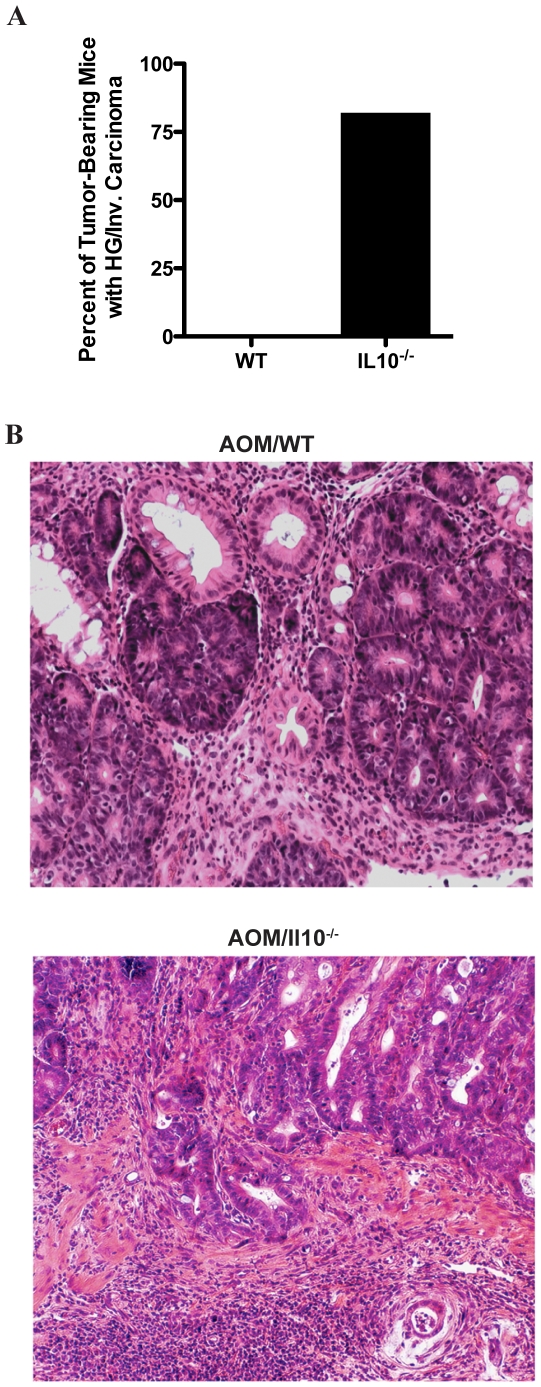
Figure 3. Il10−/− mice exhibit accelerated tumor progression.
A. Percent of tumor-bearing WT and Il10−/− mice with high-grade or invasive carcinoma (upper panel). Representative low-grade adenoma observed in WT mice (middle panel). Representative invasive carcinoma observed in Il10−/− mice (lower panel).
Figure 4
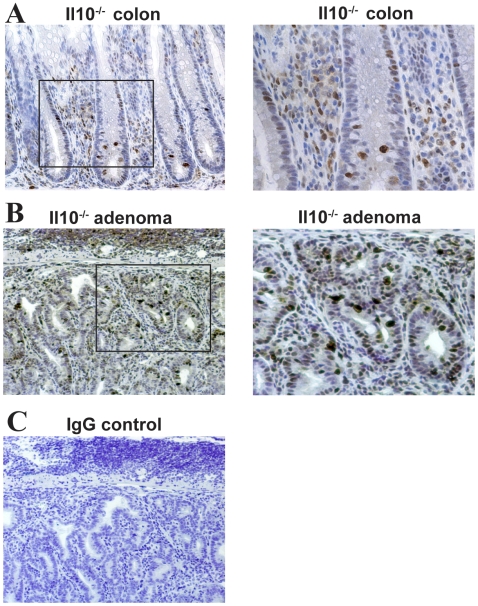
Figure 4. Il10−/− mice develop inflammation displaying active Rel A (NFkB) signaling.
A. Phosphorylated-Rel A immunostaining of normal Il10−/− colon tissue. B. Enlargement of Rel A positive immune infiltrate in A. C. Phosphorylated Rel A immunostaining in Il10−/− adenoma. D. Enlargement of adenoma in C. E. Rabbit IgG negative control.
Figure 5
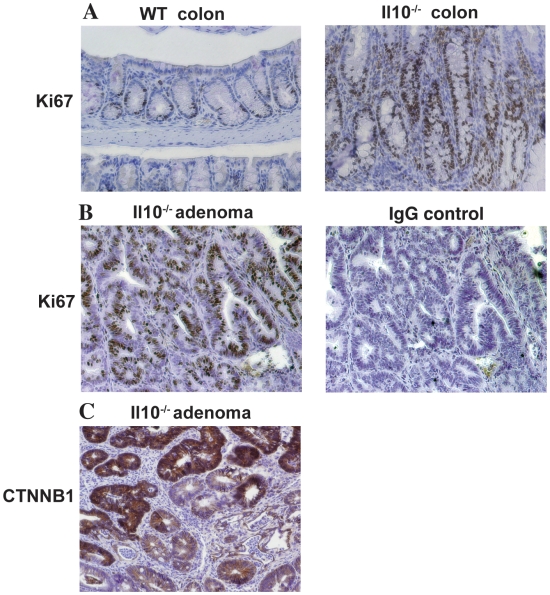
Figure 5. Il10−/− normal colon and adenomas exhibit increased cell proliferation.
A. Ki67 positive cells are restricted to crypt bases in normal WT colon. Normal colons from Il10−/− mice exhibit elongated crypts with expanded Ki67 positive staining. B. Representative adenoma from Il10−/− mouse shows increased Ki67 positive staining (left panel). Rabbit IgG negative control (right panel). C. Il10−/− adenoma shows positive CTNNB1 staining.
Figure 6
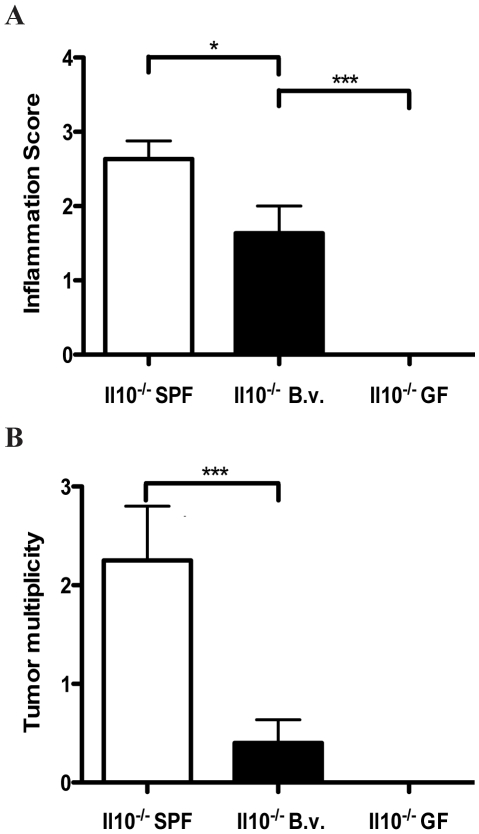
Figure 6. Modulation of microbiota-dependent colitis directly affects tumor development.
A. Comparison of inflammation scores for Il10−/− mice under SPF, B. vulgatus mono-associated and germ free conditions. B. Tumor multiplicity in Il10−/− mice under SPF, B. vulgatus mono-associated and germ free conditions.
Figure 7
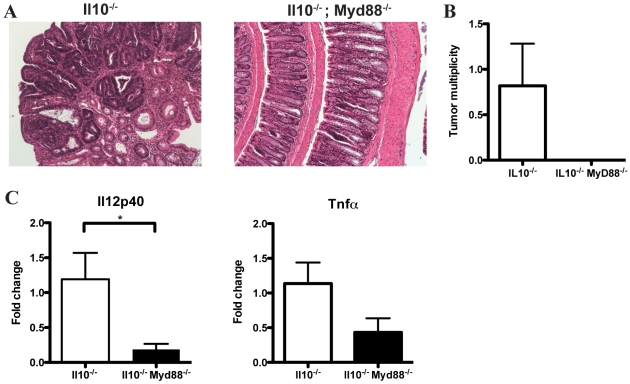
Figure 7. Il10−/−; Myd88−/− mice show decreased tumor multiplicity and expression of Il12p40 and Tnfα mRNA.
A. Representative histology observed in Il10−/− and Il10−/−; Myd88−/− mice treated with AOM. B. Tumor multiplicity in Il10−/− and Il10−/−; Myd88−/− mice treated with AOM. C. Relative expression of Il12p40 and Tnfα mRNA in the distal colons of Il10−/− and Il10−/−; Myd88−/− mice.

References

    1. Medzhitov R. Origin and physiological roles of inflammation. Nature. 2008;454:428–435. - PubMed
    1. Mantovani A. Cancer: inflammation by remote control. Nature. 2005;435:752–753. - PubMed
    1. Mantovani A, Allavena P, Sica A, Balkwill F. Cancer-related inflammation. Nature. 2008;454:436–444. - PubMed
    1. Condeelis J, Pollard JW. Macrophages: obligate partners for tumor cell migration, invasion, and metastasis. Cell. 2006;124:263–266. - PubMed
    1. Eaden JA, Abrams KR, Mayberry JF. The risk of colorectal cancer in ulcerative colitis: a meta-analysis. Gut. 2001;48:526–535. - PMC - PubMed

Publication types