What is the optimal therapy for patients with H5N1 influenza?
- PMID: 19554084
- PMCID: PMC2694988
- DOI: 10.1371/journal.pmed.1000091
What is the optimal therapy for patients with H5N1 influenza?
Abstract
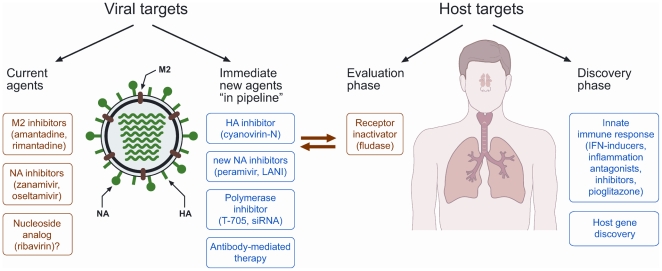
In a 2007 article in PLoS Medicine[10], Holger J. Schünemann and colleagues described a new process used by the World Health Organization for rapidly developing clinical management guidelines in emergency situations. These situations include outbreaks of emerging infectious diseases. The authors discussed how they developed such a "rapid advice" guideline for the pharmacological management of avian influenza A (H5N1) virus infection. The guideline recommends giving the antiviral drug oseltamivir at a dose of 75 mg twice daily for five days. In this Debate, Nicholas White argues that such dosing is inadequate, Robert Webster and Elena Govorkova say that combination antiviral therapy should be used, and Tim Uyeki reminds us that clinical care of patients with H5N1 entails much more than antiviral treatment. These issues may also apply to therapy of patients hospitalized with severe disease due to novel swine-origin influenza A (H1N1) virus infection.
Conflict of interest statement
NJW is the co-chairman of the World Health Organization antimalarial treatment guidelines committee. RGW reports receiving research funding from Hoffmann-La Roche and BioCryst Pharmaceuticals and receiving consulting fees from GlaxoSmithKline. EAG reports receiving research funding from Hoffmann-La Roche and BioCryst Pharmaceuticals.
Figures
References
-
- World Health Organization. Guidelines for WHO guidelines. EIP/GPE/EQC/2003.1. 2003 Available: http://www.gradeworkinggroup.org/publications/. Accessed 12 May 2009.
-
- BBC News. Flu pandemic “gravest risk to UK”. 2008 August 8 Available: http://news.bbc.co.uk/1/hi/uk_politics/7548593.stm. Accessed 12 May 2009.
-
- Abdel-Ghafar AN, Chotpitayasunondh T, Gao Z, Hayden FG, et al. Writing Committee of the Second World Health Organization Consultation on Clinical Aspects of Human Infection with Avian Influenza A (H5N1) Virus. Update on avian influenza A (H5N1) virus infection in humans. N Engl J Med. 2008;358:261–273. - PubMed
-
- Crusat M, de Jong MD. Neuraminidase inhibitors and their role in avian and pandemic influenza. Antivir Ther. 2007;12:593–602. - PubMed
Publication types
MeSH terms
Substances
Grants and funding
LinkOut - more resources
Full Text Sources
Medical