


Free radical polymers with tunable and selective bio- and chemical degradability
- PMID: 19555103
- PMCID: PMC2753401
- DOI: 10.1021/ja903245p
Free radical polymers with tunable and selective bio- and chemical degradability
Erratum in
- J Am Chem Soc. 2010 Nov 24;132(46):16725
Abstract
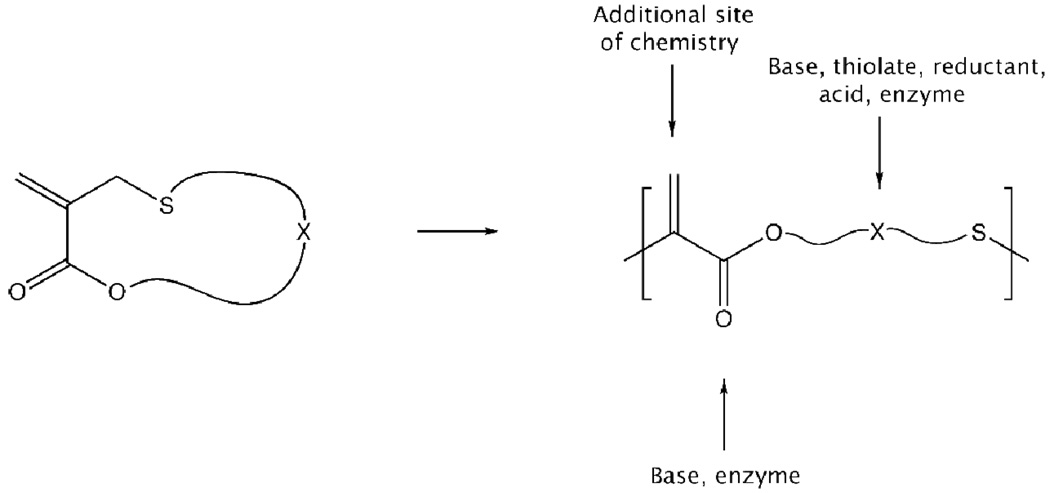
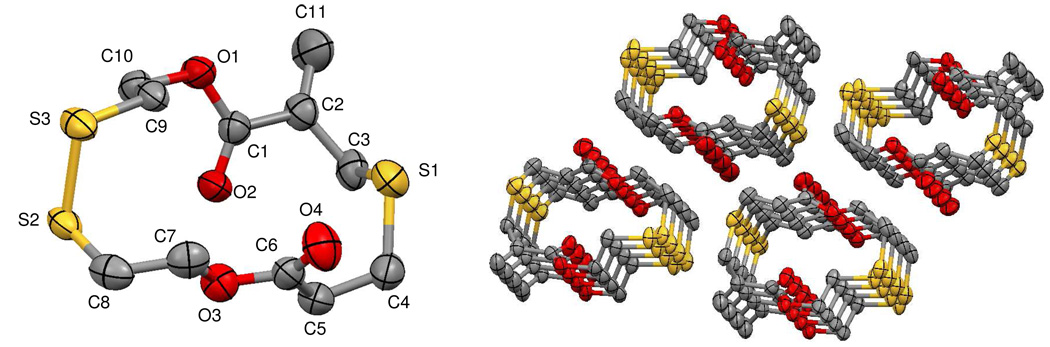
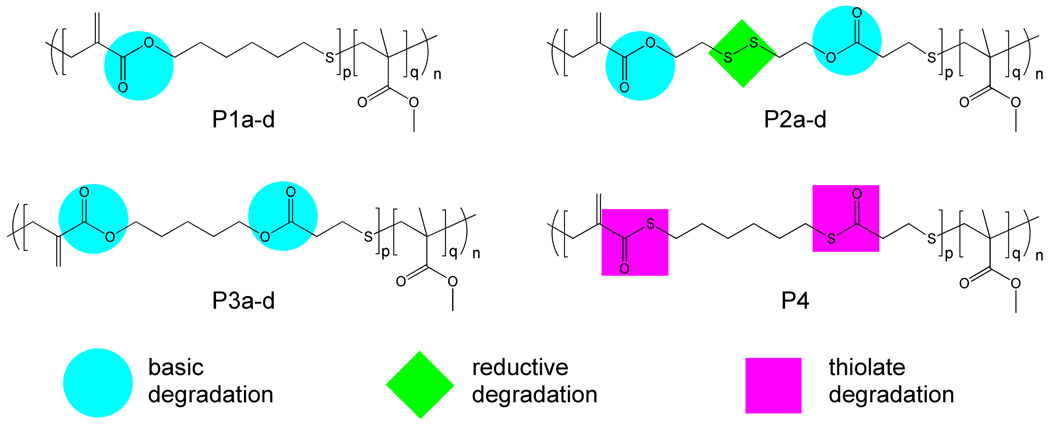
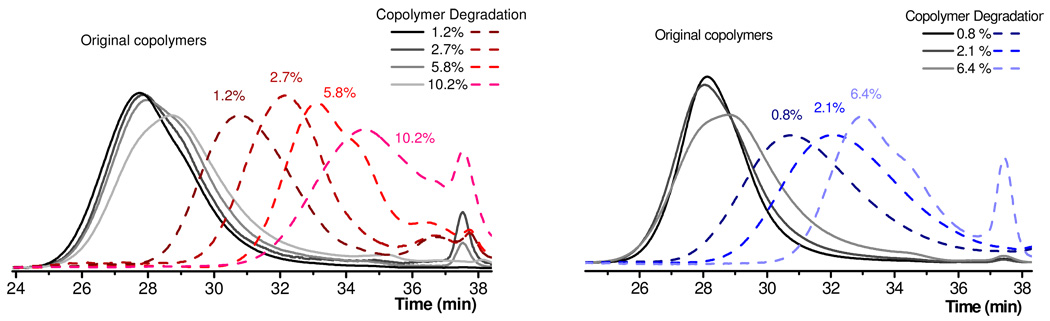
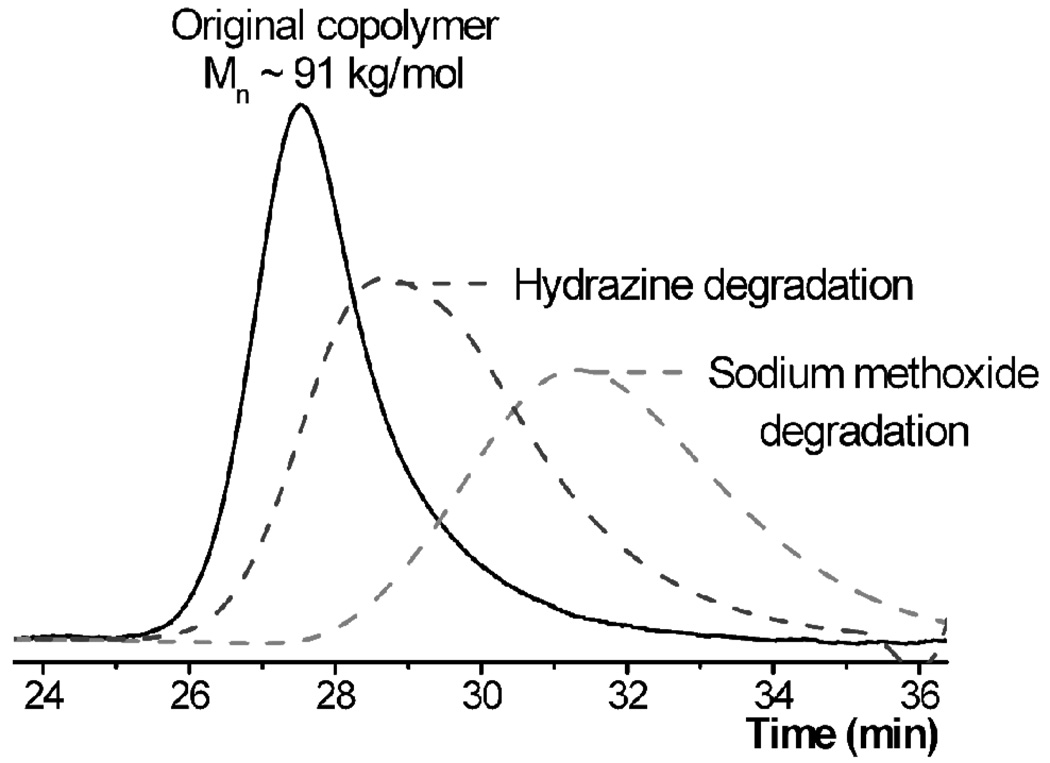
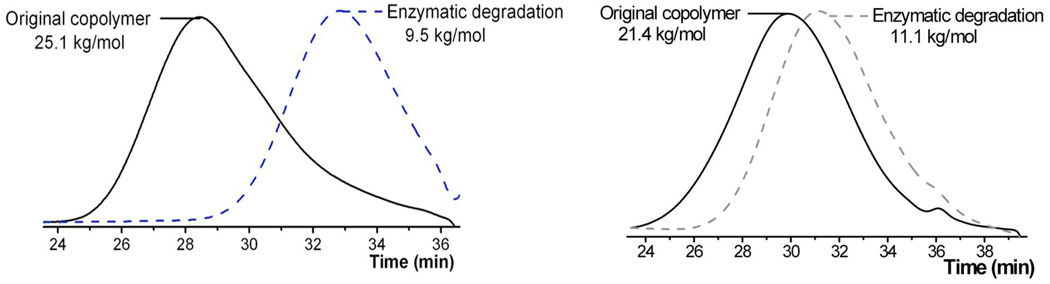
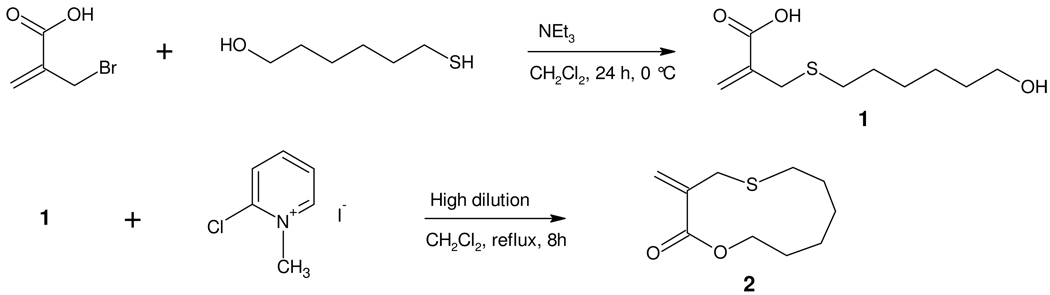
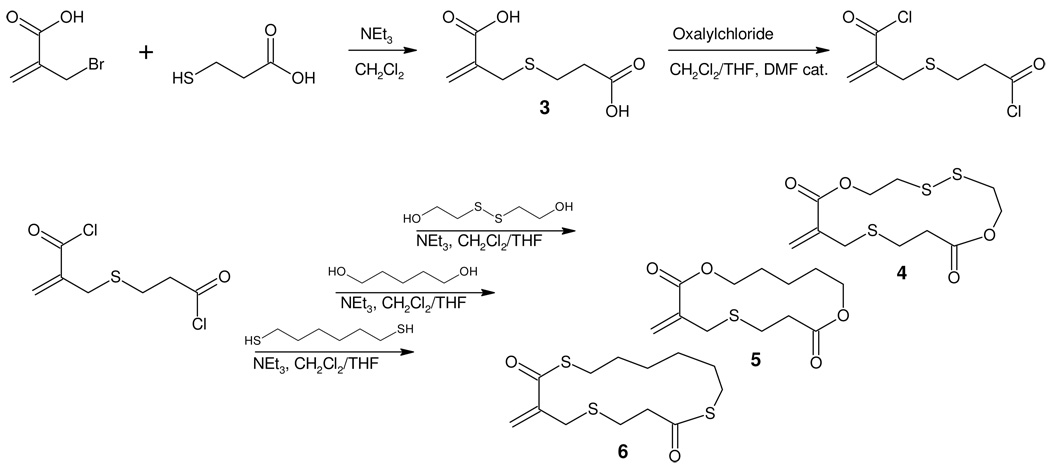
A versatile synthetic strategy has been developed which enables the facile incorporation of cleavable functional groups, i.e., esters, thioesters, and disulfides, into the carbon-carbon backbone of vinyl-based polymers. Through the synthesis of novel cyclic monomers, RAFT-mediated radical ring-opening copolymerizations with traditional vinyl monomers such as methyl methacrylate, N,N-dimethylaminoethyl methacrylate, and 2-hydroxyethyl methacrylate lead to the introduction of controlled degradability into these widely used vinyl copolymer systems. An additional benefit of this strategy is the inherent versatility available through the incorporation of cyclic monomers containing diverse functional groups such as esters, thioesters, disulfides, and silyl ether units that allow degradation under basic/acidic, reductive, or enzymatic conditions. By integrating multiple, orthogonal cyclic monomers into linear copolymer backbones, well-defined systems with programmable degradation profiles are obtained which allows for tunable, selective, and stepwise degradation of the vinyl polymer backbones.
Figures


References
-
- Ma J, Cheng C, Wooley KL. Macromolecules. 2009;42:1565–1573.
-
- Themistou E, Kanari A, Patrickios CS. J. Polym. Sci. Part A: Polym. Chem. 2007;45:5811–5823.
- Skey J, O’Reilly RK. J. Polym. Sci. Part A: Polym. Chem. 2008;46:3690–3702.
- Goh YK, Whittaker AK, Monteiro MJ. J. Polym. Sci. Part A: Polym. Chem. 2007;45:4150–4153.
-
- Moad G, Rizzardo E, Thang SH. Polymer. 2008;49:1079–1131.
-
- Matyjaszewski K, Xia J. Chem. Rev. 2001;101:2921–2990. - PubMed
-
- Hawker CJ, Bosman AW, Harth E. Chem. Rev. 2001;101:3661–3688. - PubMed
Publication types
MeSH terms
Substances
Grants and funding
LinkOut - more resources
Full Text Sources
Other Literature Sources
