


Metaplasticity of hypothalamic synapses following in vivo challenge
- PMID: 19555652
- PMCID: PMC3560287
- DOI: 10.1016/j.neuron.2009.05.027
Metaplasticity of hypothalamic synapses following in vivo challenge
Abstract
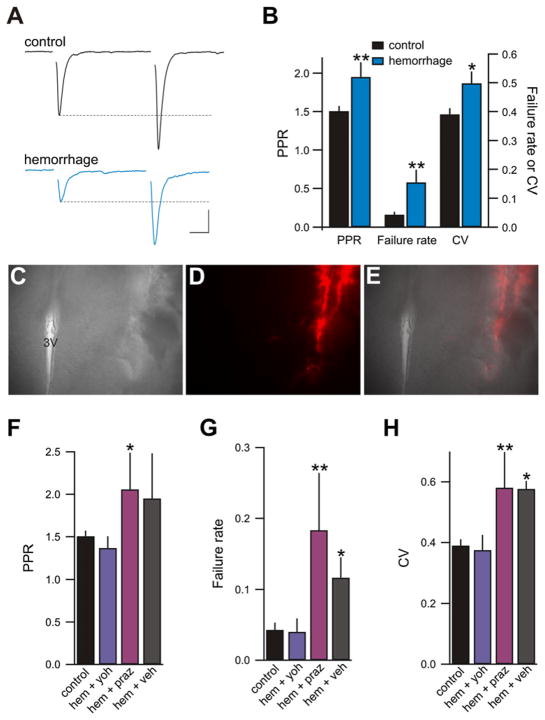
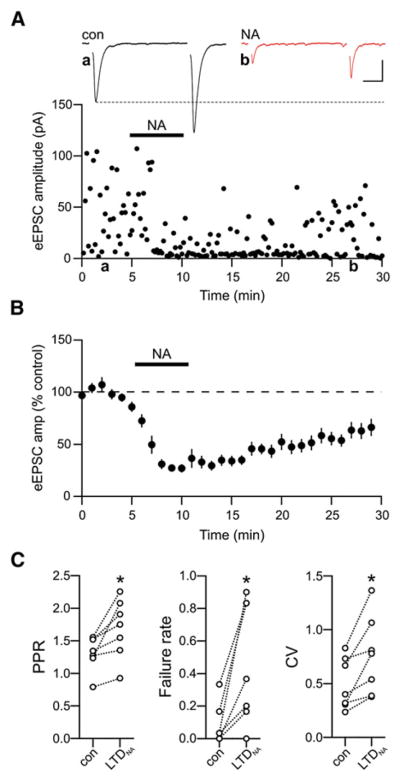
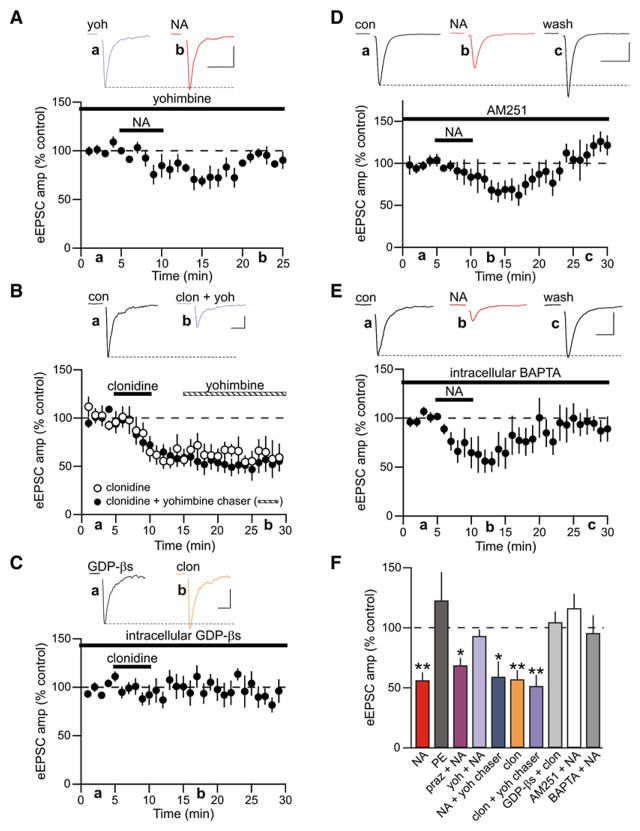
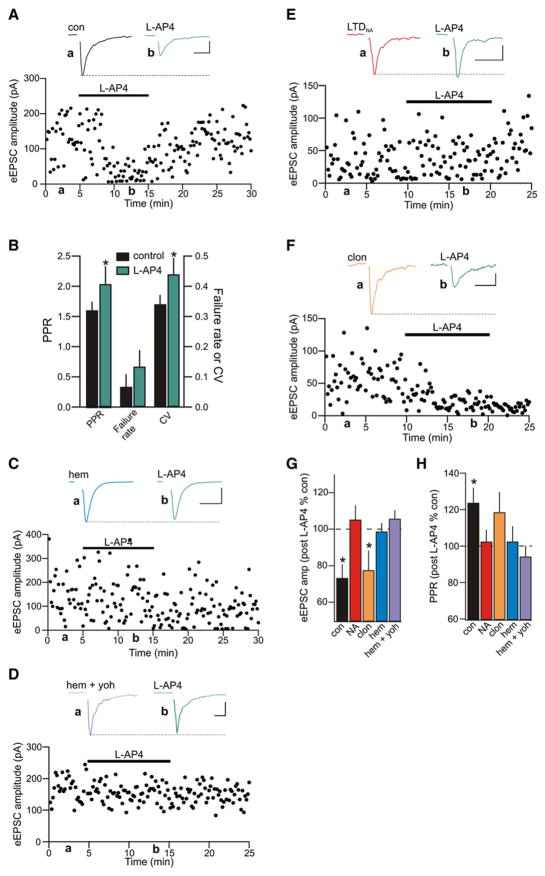
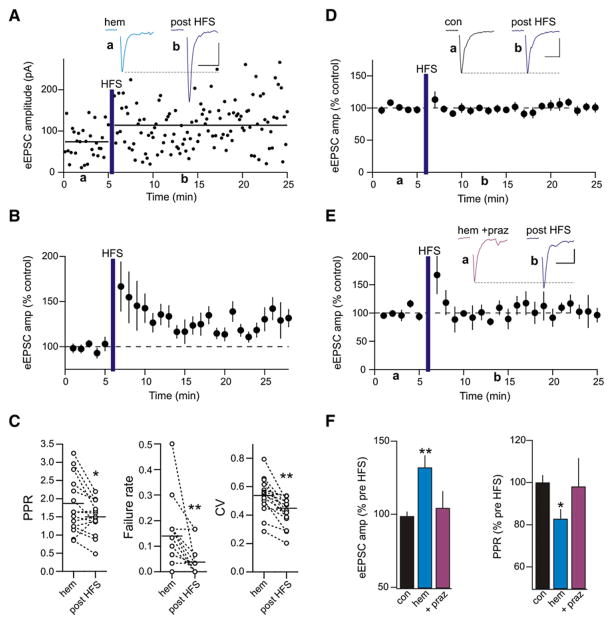
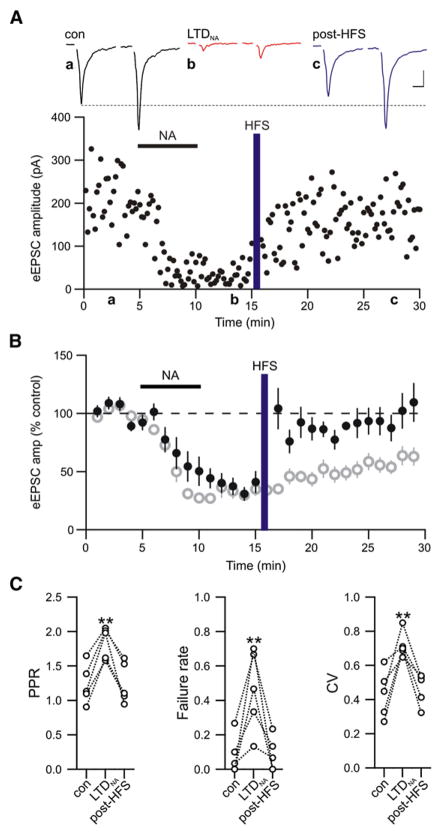
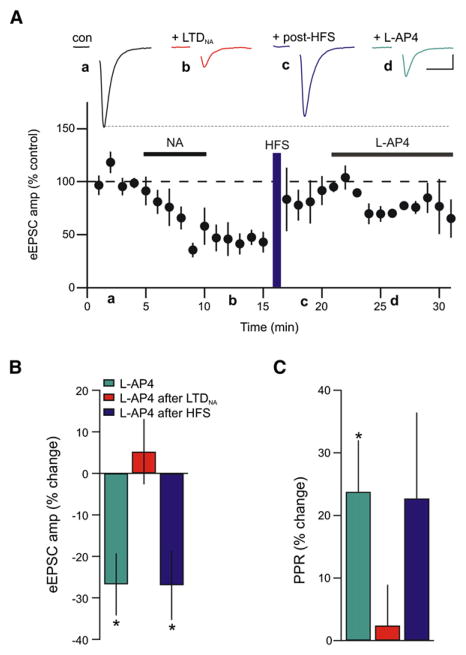
Neural networks that regulate an organism's internal environment must sense perturbations, respond appropriately, and then reset. These adaptations should be reflected as changes in the efficacy of the synapses that drive the final output of these homeostatic networks. Here we show that hemorrhage, an in vivo challenge to fluid homeostasis, induces LTD at glutamate synapses onto hypothalamic magnocellular neurosecretory cells (MNCs). LTD requires the activation of postsynaptic alpha2-adrenoceptors and the production of endocannabinoids that act in a retrograde fashion to inhibit glutamate release. In addition, both hemorrhage and noradrenaline downregulate presynaptic group III mGluRs. This loss of mGluR function allows high-frequency activity to potentiate these synapses from their depressed state. These findings demonstrate that noradrenaline controls a form of metaplasticity that may underlie the resetting of homeostatic networks following a successful response to an acute physiological challenge.
Figures
References
-
- Abraham WC. Metaplasticity: tuning synapses and networks for plasticity. Nat Rev Neurosci. 2008;9:387–399. - PubMed
-
- Blevins JE, Stanley BG, Reidelberger RD. DMSO as a vehicle for central injections: tests with feeding elicited by norepinephrine injected into the paraventricular nucleus. Pharmacol Biochem Behav. 2002;71:277–282. - PubMed
-
- Boudaba C, Di S, Tasker JG. Presynaptic noradrenergic regulation of glutamate inputs to hypothalamic magnocellular neurones. J Neuroendocrinol. 2003;15:803–810. - PubMed
Publication types
MeSH terms
Substances
Grants and funding
LinkOut - more resources
Full Text Sources
Other Literature Sources
