


On the origin of serum CD26 and its altered concentration in cancer patients
- PMID: 19557413
- PMCID: PMC11031058
- DOI: 10.1007/s00262-009-0728-1
On the origin of serum CD26 and its altered concentration in cancer patients
Abstract
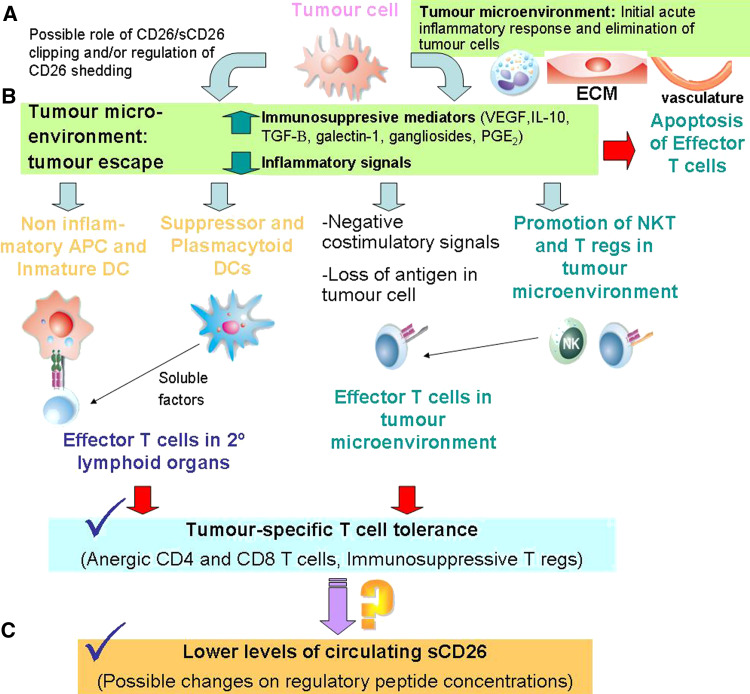
Dipeptidyl peptidase IV (DPP-IV), assigned to the CD26 cluster, is expressed on epithelial cells and lymphocytes and is a multifunctional or pleiotropic protein. Its peptidase activity causes degradation of many biologically active peptides, e.g. some incretins secreted by the enteroendocrine system. DPP-IV has, therefore, become a novel therapeutic target for inhibitors that extend endogenously produced insulin half-life in diabetics, and several reviews have appeared in recent months concerning the clinical significance of CD26/DPP-IV. Biological fluids contain relatively high levels of soluble CD26 (sCD26). The physiological role of sCD26 and its relation, if any, to CD26 functions, remain poorly understood because whether the process for CD26 secretion and/or shedding from cell membranes is regulated or not is not known. Liver epithelium and lymphocytes are often cited as the most likely source of sCD26. It is important to establish which tissue or organ is the protein source as well as the circumstances that can provoke an abnormal presence/absence or altered levels in many diseases including cancer, so that sCD26 can be validated as a clinical marker or a therapeutic target. For example, we have previously reported low levels of sCD26 in the blood of colorectal cancer patients, which indicated the potential usefulness of the protein as a biomarker for this cancer in early diagnosis, monitoring and prognosis. Through this review, we envisage a role for sCD26 and the alteration of normal peptidase capacity (in clipping enteroendocrine or other peptides) in the complex crosstalk between the lymphoid lineage and, at least, some malignant tumours.
Figures
References
-
- Dinjens WN, et al. Distribution of adenosine deaminase complexing protein (ADCP) in human tissues. J Histochem Cytochem. 1989;37(12):1869–1875. - PubMed
-
- Fox DA, et al. Ta1, a novel 105 KD human T cell activation antigen defined by a monoclonal antibody. J Immunol. 1984;133(3):1250–1256. - PubMed
-
- Hegen M, et al. The T cell triggering molecule Tp103 is associated with dipeptidyl aminopeptidase IV activity. J Immunol. 1990;144(8):2908–2914. - PubMed
Publication types
MeSH terms
Substances
LinkOut - more resources
Full Text Sources
Other Literature Sources
Molecular Biology Databases
Miscellaneous
