


New curcumin analogues exhibit enhanced growth-suppressive activity and inhibit AKT and signal transducer and activator of transcription 3 phosphorylation in breast and prostate cancer cells
- PMID: 19558577
- PMCID: PMC11158315
- DOI: 10.1111/j.1349-7006.2009.01220.x
New curcumin analogues exhibit enhanced growth-suppressive activity and inhibit AKT and signal transducer and activator of transcription 3 phosphorylation in breast and prostate cancer cells
Abstract
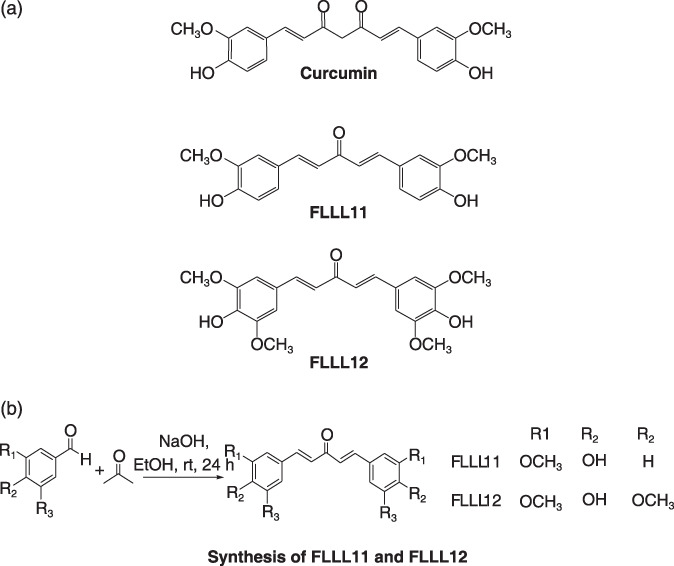
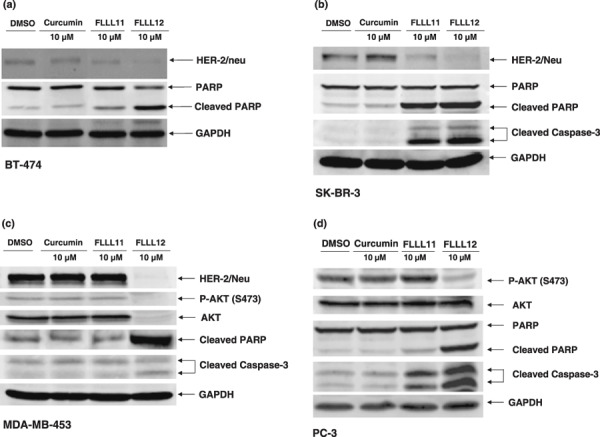
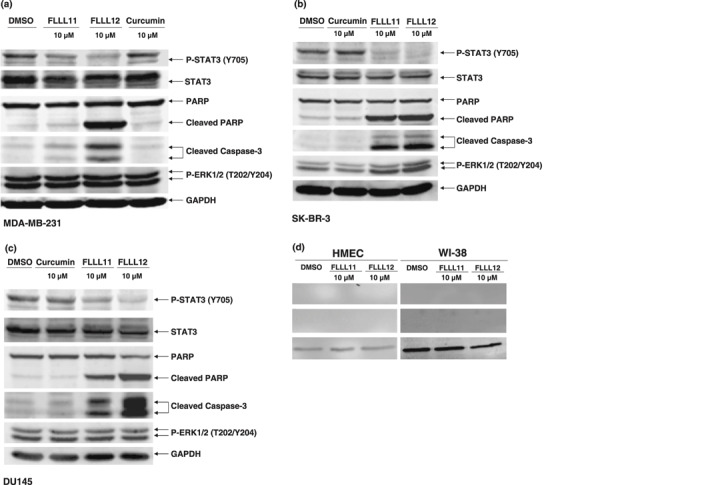
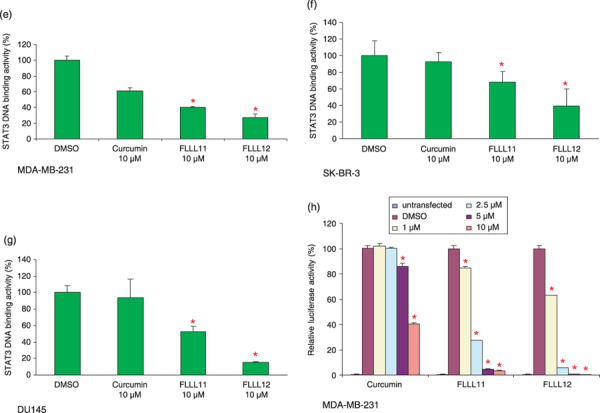
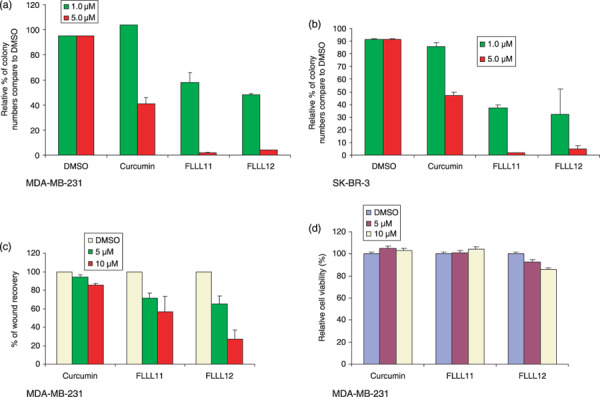
Curcumin, the active component of turmeric, has been shown to protect against carcinogenesis and prevent tumor development in cancer. To enhance its potency, we tested the efficacy of synthetic curcumin analogues, known as FLLL11 and FLLL12, in cancer cells. We examined the impact of FLLL11 and FLLL12 on cell viability in eight different breast and prostate cancer cell lines. FLLL11 and FLLL12 (IC(50) values 0.3-5.7 and 0.3-3.8 micromol/L, respectively) were substantially more potent than curcumin (IC(50) values between 14.4-50 micromol/L). FLLL11 and FLLL12 were also found to inhibit AKT phosphorylation and downregulate the expression of HER2/neu. In addition, we demonstrate for the first time that FLLL11 and FLLL12 inhibit phosphorylation of signal transducer and activator of transcription (STAT) 3, an oncogene frequently found to be persistently active in many cancer types. The inhibition of STAT3 signaling was confirmed by the inhibition of STAT3 DNA binding and STAT3 transcriptional activity. Furthermore, FLLL11 and FLLL12 were more effective than curcumin in inhibiting cell migration and colony formation in soft agar as well as inducing apoptosis in cancer cells. These results indicate that FLLL11 and FLLL12 exhibit more potent activities than curcumin on the inhibition of STAT3, AKT, and HER-2/neu, as well as inhibit cancer cell growth and migration, and may thus have translational potential as chemopreventive or therapeutic agents for breast and prostate cancers.
Figures
References
-
- Ni Z, Lou W, Leman E, Gao A. Inhibition of constitutively activated Stat3 signaling pathway suppresses growth of prostate cancer cells. Cancer Res 2000; 60: 1225–8. - PubMed
-
- Davies M, Koul D, Dhesi H et al . Regulation of Akt/PKB activity, cellular growth, and apoptosis in prostate carcinoma cells by MMAC/PTEN. Cancer Res 1999; 59: 2551–6. - PubMed
-
- Mora LB, Buettner R, Seigne J et al . Constitutive activation of Stat3 in human prostate tumors and cell lines: direct inhibition of Stat3 signaling induces apoptosis of prostate cancer cells. Cancer Res 2002; 62: 6659–66. - PubMed
-
- Barton BE, Karras JG, Murphy TF, Barton A, Huang HF. Signal transducer and activator of transcription 3 (STAT3) activation in prostate cancer: Direct STAT3 inhibition induces apoptosis in prostate cancer lines. Mol Cancer Ther 2004; 3: 11–20. - PubMed
-
- Slamon D, Godolphin W, Jones L et al . Studies of the HER‐2/neu proto‐oncogene in human breast and ovarian cancer. Science 1989; 244: 707–12. - PubMed
Publication types
MeSH terms
Substances
LinkOut - more resources
Full Text Sources
Other Literature Sources
Medical
Research Materials
Miscellaneous
