Quality improvement in postoperative pain management: results from the QUIPS project
- PMID: 19561807
- PMCID: PMC2689629
- DOI: 10.3238/arztebl.2008.0865
Quality improvement in postoperative pain management: results from the QUIPS project
Abstract
Introduction: Acute postoperative pain management is still far from satisfactory despite the availability of high-quality guidelines and advanced pain management techniques.
Methods: An outcome-oriented project called QUIPS (Quality Improvement in Postoperative Pain Management) was developed, consisting of standardized data acquisition and an analysis of quality and process indicators.
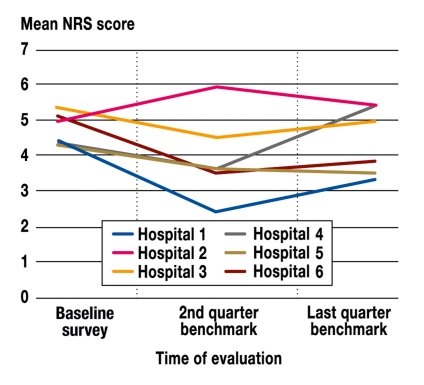
Results: After validation of the questionnaire, a total of 12 389 data sets were collected from 30 departments in six participating hospitals. Improved outcomes (reduction in pain intensity) were observed in four of the six hospitals. The most painful operations, in the patients' judgment, were traumatological and orthopedic procedures, as well as laparoscopic appendectomy. Traditional process indicators, such as routine pain documentation, were only poorly correlated with outcomes.
Discussion: QUIPS shows that outcomes in postoperative pain management can be measured and compared in routine clinical practice. This may lead to improved care. QUIPS reveals which operations are the most painful. Quality improvement initiatives should use as few resources as possible, measure the quality of the outcomes, and provide rapid feedback. Structural and process parameters should be continuously reevaluated to determine their suitability as indicators of quality.
Keywords: QUIPS; benchmarking; postoperative pain; postoperative phase; quality management.
Figures
References
-
- Stamer U, Mpasios N, Stuber F, Laubenthal H, Maier C. Post-operative Schmerztherapie in Deutschland. Anaesthesist. 2002;51:248–257. - PubMed
-
- Apfelbaum JL, Chen C, Mehta SS, Gan TJ. Postoperative pain experience: results from a national survey suggest postoperative pain continues to be undermanaged. Anesth Analg. 2003;97:534–540. - PubMed
-
- Dahl JL, Gordon D, Ward S, Skemp M, Wochos S, Schurr M. Institutionalizing pain management: the Post-Operative Pain Management Quality Improvement Project. J Pain. 2003;4:361–371. - PubMed
-
- Gordon DB, Dahl JL, Miaskowski C, et al. American pain society recommendations for improving the quality of acute and cancer pain management: American Pain Society Quality of Care Task Force. Arch Intern Med. 2005;165:1574–1580. - PubMed
-
- Bardiau FM, Taviaux NF, Albert A, Boogaerts JG, Stadler M. An intervention study to enhance postoperative pain management. Anesth Analg. 2003;96:179–185. - PubMed
LinkOut - more resources
Full Text Sources
Medical