


Role of membrane potential in the regulation of cell proliferation and differentiation
- PMID: 19562527
- PMCID: PMC10467564
- DOI: 10.1007/s12015-009-9080-2
Role of membrane potential in the regulation of cell proliferation and differentiation
Abstract
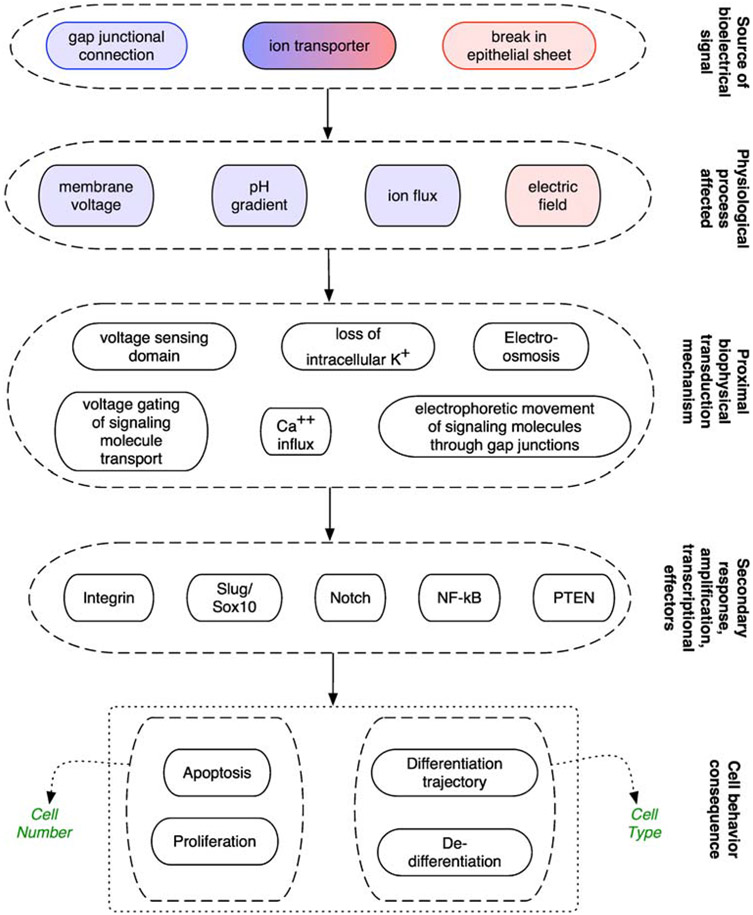
Biophysical signaling, an integral regulator of long-term cell behavior in both excitable and non-excitable cell types, offers enormous potential for modulation of important cell functions. Of particular interest to current regenerative medicine efforts, we review several examples that support the functional role of transmembrane potential (V(mem)) in the regulation of proliferation and differentiation. Interestingly, distinct V(mem) controls are found in many cancer cell and precursor cell systems, which are known for their proliferative and differentiation capacities, respectively. Collectively, the data demonstrate that bioelectric properties can serve as markers for cell characterization and can control cell mitotic activity, cell cycle progression, and differentiation. The ability to control cell functions by modulating bioelectric properties such as V(mem) would be an invaluable tool for directing stem cell behavior toward therapeutic goals. Biophysical properties of stem cells have only recently begun to be studied and are thus in need of further characterization. Understanding the molecular and mechanistic basis of biophysical regulation will point the way toward novel ways to rationally direct cell functions, allowing us to capitalize upon the potential of biophysical signaling for regenerative medicine and tissue engineering.
Figures
References
-
- Robinson KR, & Messerli MA (1996). Electric embryos: the embryonic epithelium as a generator of developmental information. In McCaig CD (Ed.), Nerve growth and guidance (pp. 131–150). London: Portland.
-
- Jaffe LF, & Nuccitelli R (1977). Electrical controls of development. Annual Review of Biophysics and Bioengineering, 6, 445–476. - PubMed
-
- Lund E (1947). Bioelectric fields and growth. Austin: University of Texas Press.
-
- Borgens RB (1982). What is the role of naturally produced electric current in vertebrate regeneration and healing. International Review of Cytology, 76, 245–298. - PubMed
-
- Borgens RB, Vanable JW Jr., & Jaffe LF (1977). Bioelectricity and regeneration. I. Initiation of frog limb regeneration by minute currents. Journal of Experimental Zoology, 200, 403–416. - PubMed
Publication types
MeSH terms
Grants and funding
LinkOut - more resources
Full Text Sources
Other Literature Sources
