


Chronic fatigue syndrome after infectious mononucleosis in adolescents
- PMID: 19564299
- PMCID: PMC2756827
- DOI: 10.1542/peds.2008-1879
Chronic fatigue syndrome after infectious mononucleosis in adolescents
Abstract
Objective: The goal was to characterize prospectively the course and outcome of chronic fatigue syndrome in adolescents during a 2-year period after infectious mononucleosis.
Methods: A total of 301 adolescents (12-18 years of age) with infectious mononucleosis were identified and screened for nonrecovery 6 months after infectious mononucleosis by using a telephone screening interview. Nonrecovered adolescents underwent a medical evaluation, with follow-up screening 12 and 24 months after infectious mononucleosis. After blind review, final diagnoses of chronic fatigue syndrome at 6, 12, and 24 months were made by using established pediatric criteria.
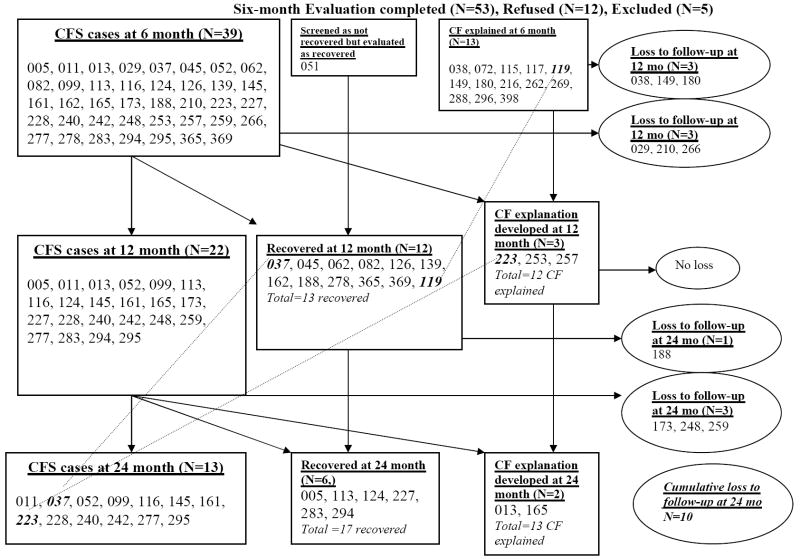
Results: Six, 12, and 24 months after infectious mononucleosis, 13%, 7%, and 4% of adolescents, respectively, met the criteria for chronic fatigue syndrome. Most individuals recovered with time; only 2 adolescents with chronic fatigue syndrome at 24 months seemed to have recovered or had an explanation for chronic fatigue at 12 months but then were reclassified as having chronic fatigue syndrome at 24 months. All 13 adolescents with chronic fatigue syndrome 24 months after infectious mononucleosis were female and, on average, they reported greater fatigue severity at 12 months. Reported use of steroid therapy during the acute phase of infectious mononucleosis did not increase the risk of developing chronic fatigue syndrome.
Conclusions: Infectious mononucleosis may be a risk factor for chronic fatigue syndrome in adolescents. Female gender and greater fatigue severity, but not reported steroid use during the acute illness, were associated with the development of chronic fatigue syndrome in adolescents. Additional research is needed to determine other predictors of persistent fatigue after infectious mononucleosis.
Conflict of interest statement
There are no conflicts of interest to report.
Figures
References
-
- Fukuda K, Straus SE, Hickie I, Sharpe MC, Dobbins JG, Komaroff A. The Chronic Fatigue Syndrome: A comprehensive approach to its definition and study. Ann Intern Med. 1994;121:953–959. - PubMed
-
- Marshall GS, Gesser RM, Yamanish K, Starr SE. Chronic fatigue in children: Clinical features, Epstein-Barr virus and human herpes virus 6 serology and long term follow-up. Pediatr Infect Dis J. 1991;10:287–290. - PubMed
-
- Richards J, Turk J, White S. Children and adolescents with chronic fatigue syndrome in non-specialist settings: Beliefs, functional impairment and psychiatric disturbance. Eur Child Adolesc Psychiatry. 2005;14:310–318. - PubMed
-
- Sankey A, Hill CM, Brown J, Quinn L, Fletcher A. A follow-up study of chronic fatigue syndrome in children and adolescents: Symptom persistence and school absenteeism. Clin Child Psychol Psychiatry. 2006;11:126–138. - PubMed
-
- ter Wolbeek M, van Doornen LJ, Kavelaars A, Heijnen CJ. Severe fatigue in adolescents: A common phenomenon? Pediatrics. 2006;117(6):e1078–86. - PubMed
Publication types
MeSH terms
Grants and funding
LinkOut - more resources
Full Text Sources
Medical
Miscellaneous
