Comparative Study
. 2009 Aug;54(2):365-71.
doi: 10.1161/HYPERTENSIONAHA.108.125468. Epub 2009 Jun 29.

Prevention of pulmonary hypertension by Angiotensin-converting enzyme 2 gene transfer

Affiliations
Comparative Study

Prevention of pulmonary hypertension by Angiotensin-converting enzyme 2 gene transfer

Yoriko Yamazato et al. Hypertension. 2009 Aug.

Abstract

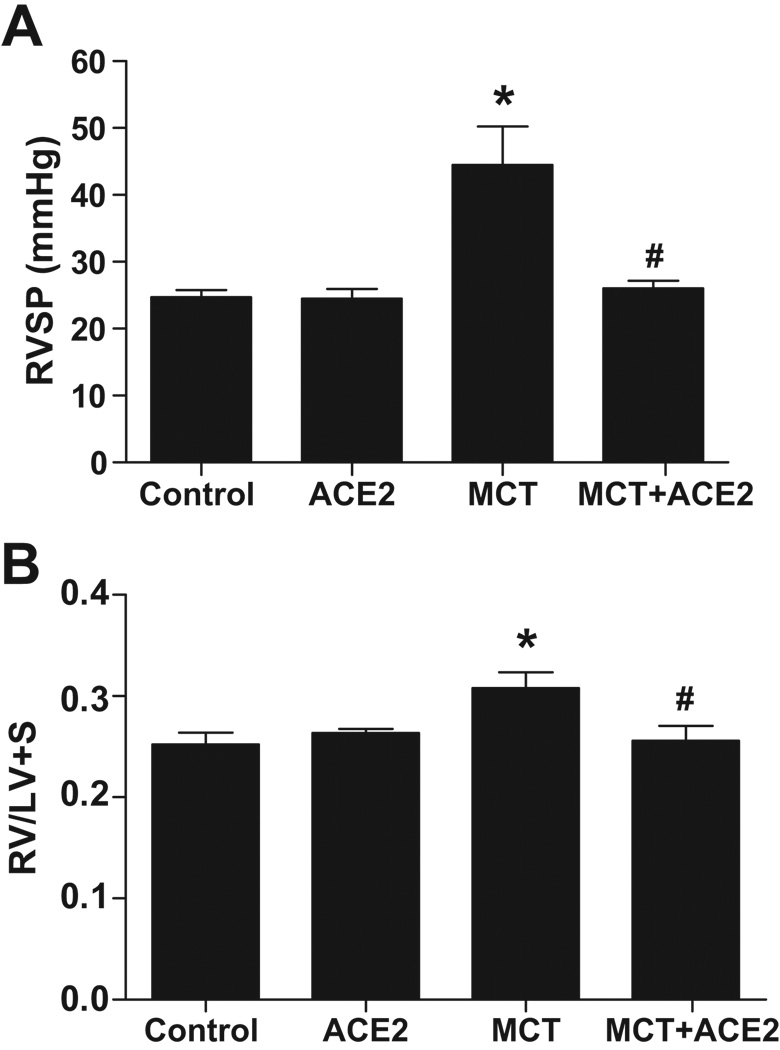
In spite of recent advancements in the treatment of pulmonary hypertension, successful control has yet to be accomplished. The abundant presence of angiotensin-converting enzyme 2 (ACE2) in the lungs and its impressive effect in the prevention of acute lung injury led us to test the hypothesis that pulmonary overexpression of this enzyme could produce beneficial outcomes against pulmonary hypertension. Monocrotaline (MCT) treatment of mice for 8 weeks resulted in significant increases in right ventricular systolic pressure, right ventricle:left ventricle plus septal weight ratio, and muscularization of pulmonary vessels. Administration of a lentiviral vector containing ACE2, 7 days before MCT treatment prevented the increases in right ventricular systolic pressure (control: 25+/-1 mm Hg; MCT: 44+/-5 mm Hg; MCT+ACE2: 26+/-1 mm Hg; n=6; P<0.05) and right ventricle:left ventricle plus septal weight ratio (control: 0.25+/-0.01; MCT: 0.31+/-0.01; MCT+ACE2: 0.26+/-0.01; n=8; P<0.05). A significant attenuation in muscularization of pulmonary vessels induced by MCT was also observed in animals overexpressing ACE2. These beneficial effects were associated with an increase in the angiotensin II type 2 receptor:angiotensin II type 1 receptor mRNA ratio. Also, pulmonary hypertension-induced increases in proinflammatory cytokines were significantly attenuated by lentiviral vector-containing ACE2 treatment. Furthermore, ACE2 gene transfer in mice after 6 weeks of MCT treatment resulted in a significant reversal of right ventricular systolic pressure. These observations demonstrate that ACE2 overexpression prevents and reverses right ventricular systolic pressure and associated pathophysiology in MCT-induced pulmonary hypertension by a mechanism involving a shift from the vasoconstrictive, proliferative, and fibrotic axes to the vasoprotective axis of the renin-angiotensin system and inhibition of proinflammatory cytokines.


Figures
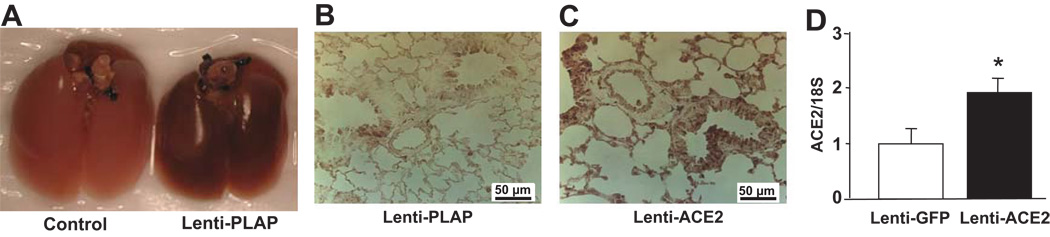
Figure 1
Figure 1
a: Transduction of lungs with lenti-PLAP Mice were injected with 3×10⁶ TU of lenti-PLAP intratracheally as described in the Methods section. Seven days following viral administration, lungs were removed, inflated, fixed and subjected to PLAP staining. The dark staining in the right pair of lungs showed in Figure 1A indicates the expression of PLAP, demonstrating the effectiveness of the transduction of lungs with lenti-PLAP. Figure 1b and c: Transduction of the lung with lenti-ACE2 Mice were injected with 3×10⁶ TU of lenti-PLAP (c) or lenti-ACE2 (d). Seven days following transduction, lungs were inflated, fixed and subjected to ACE2 immunoreactivity as described in the Methods section. ACE2 immunoreactivity was significantly higher in lenti-ACE2-treated lungs compared to control lenti-PLAP-treated lungs. Figure 1d: ACE2 mRNA in lungs treated with lenti-ACE2 Seven days following lenti-ACE2 or lenti-GFP gene transfer, as described before, total mRNA was isolated and subjected to real-time PCR to quantify ACE2 mRNA levels. Data are represented as mean ± SEM (n=4). * p<0.05 vs. Lenti-GFP.
Figure 2
Figure 2. Effects of lenti-ACE2 on the prevention of MCT-induced PH
Mice were injected with 3×10⁶ TU of lenti-ACE2. Animals were subjected to weekly saline (control) or MCT treatment seven days following gene transfer for 8 weeks. Effects on (a) RVSP and (b) RV hypertrophy: RVSP and RV hypertrophy were measured as described in the Methods. Data are represented as mean ± SEM. * p<0.05 vs. control group, # p<0.05 vs MCT group (n=6–8).
Figure 3
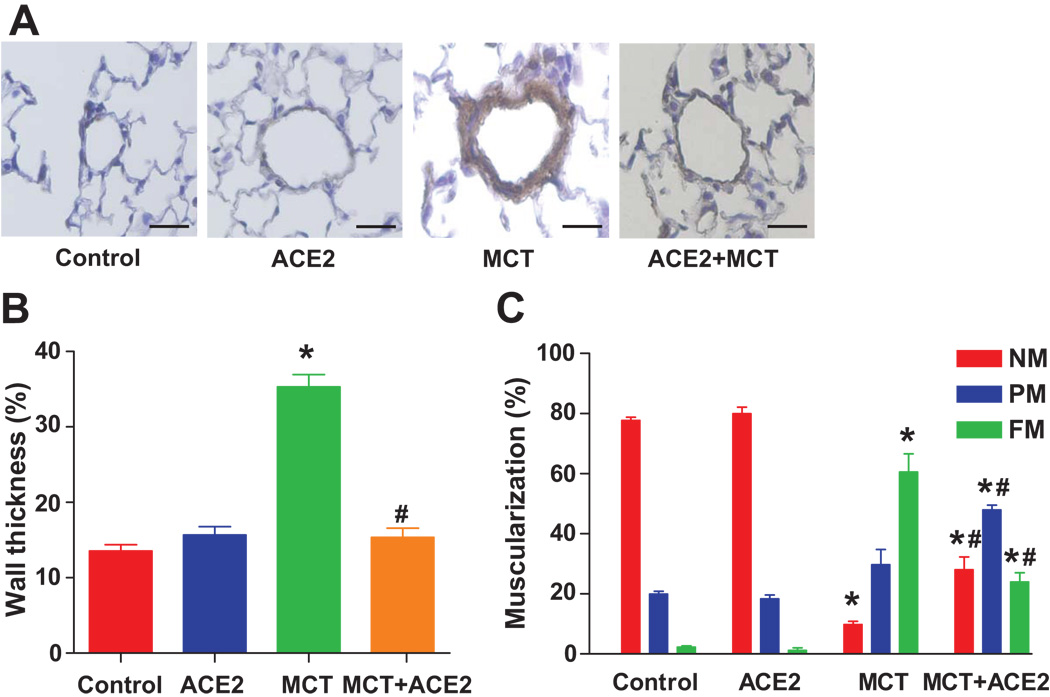
Figure 3. Effects of lenti-ACE2 on preventing vessel wall thickness and vessel muscularization induced by MCT
(a) Representative microphotographs of pulmonary vessels (scale bar=50 µm). (b) Quantification of wall thickness as described in the Methods section. Data are expressed as mean ± SEM, * p<0.05 vs. control group, # p<0.05 vs MCT group (n=4–5). (c) Quantification of vessel muscularization: degree of muscularization of vessels was carried out as described in the Methods section. Data are expressed as mean ± SEM, * p<0.05 vs. control group, # p<0.05 vs MCT group (n=4–5). NM: nonmuscularized vessels; PM: partially muscularized vessels; FM: fully muscularized vessels.
Figure 4
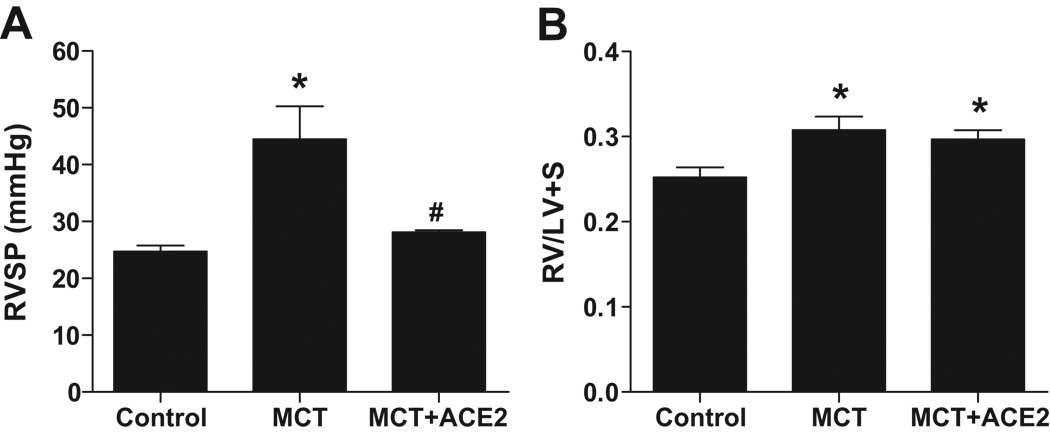
Figure 4. Effects of Lenti-ACE2 on reversal of MCT-induced increases in (a) RVSP and (b) RV hypertrophy
Experimental protocol is described in the Methods section. Data are represented as mean ± SEM, * p<0.05 vs. control group, # p<0.05 vs MCT group (n=6–8). Injection of lenti-ACE2 alone did not induce any significant change in RVSP and RV hypertrophy.
Figure 5
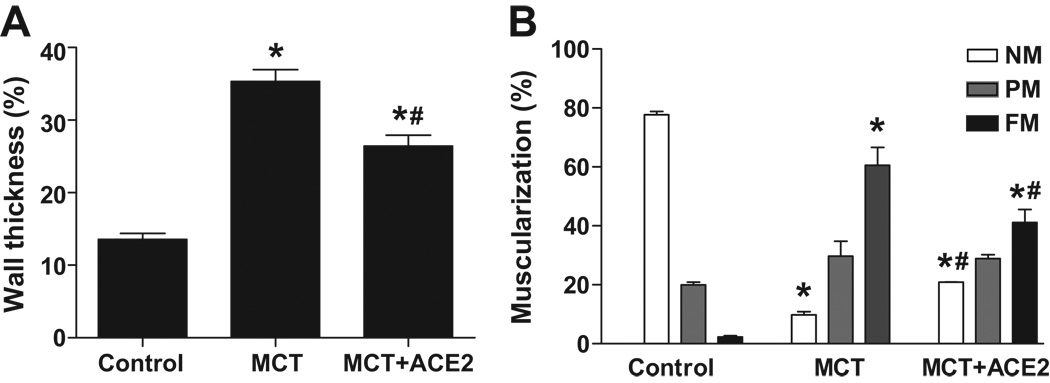
Figure 5. Effects of lenti-ACE2 on reversing vessel wall thickness and muscularization in MCT-treated mice
Six weeks following MCT treatment, animals were subjected to lenti-ACE2 gene transfer. This was followed by an additional 2 weeks of MCT treatment. (a) Quantification of wall thickness of vessels from control, MCT, and ACE2+MCT groups. Data are expressed as mean ± SEM, * p<0.05 vs. control group, # p<0.05 vs MCT group (n=4–5). (b) Quantification of vessel muscularization. Injection of lenti-ACE2 alone did not induce any significant changes in vessel wall thickness and muscularization. Data are represented as mean ± SEM, * p<0.05 vs. control group, # p<0.05 vs MCT group (n=4–5). NM: nonmuscularized vessels; PM: partially muscularized vessels; FM: fully muscularized vessels.
Figure 6
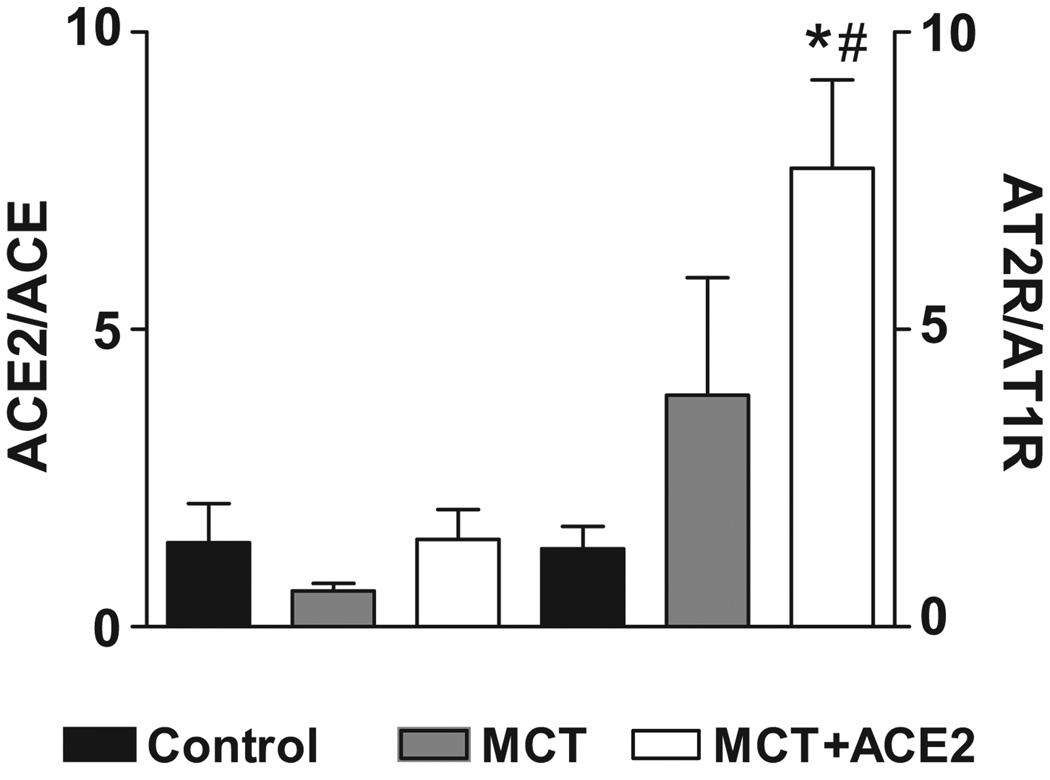
Figure 6. Effects of lenti-ACE2 on ratios of ACE2/ACE, AT2 receptor/AT1 receptor mRNAs in the lungs of MCT-treated mice
(a) Mice were injected with lenti-ACE2 and treated with MCT as described in the prevention protocol of legend to Figure 3. Total RNA was isolated and subjected to real-time RT-PCR as described in the Methods section to quantify mRNA levels of ACE, ACE2, AT1-and AT2 receptors. Data are presented as ratios and are the mean of three experiments. * p<0.05 vs. control group, # p<0.05 vs MCT group. (b) Sections of lungs from control, MCT and MCT+ lenti-ACE2 mice from reversal protocol were fixed and incubated with anti-Ang II antibody. This was followed by incubation with FITC-labeled second antibody as described in the Methods.
Figure 7
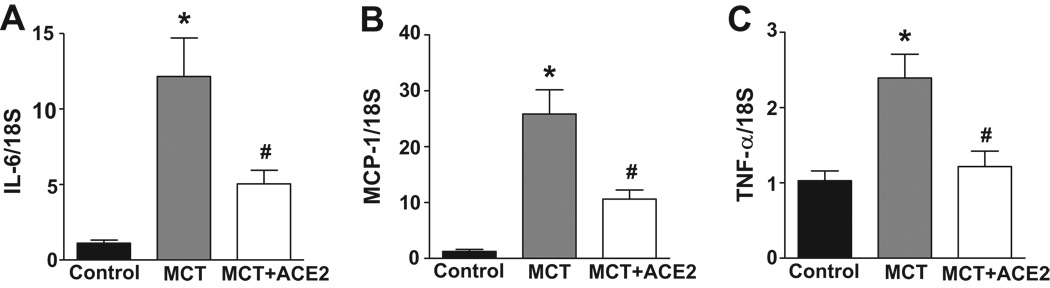
Figure 7. Effects of lenti-ACE2 on mRNA levels of IL-6, MCP-1, and TNF-α
Total RNA samples from the experiment in the legend to Figure 7a were analyzed for IL-6, MCP-1, and TNF-α as described in the Methods. Data are presented as relative expression using control as one. Data are mean ± SEM, *p<0.05 vs control group, # p<0.05 vs MCT group. ACE2 overexpression prevents an increased expression of these pro-inflammatory cytokines in MCT-treated mice.

References

    1. Coggins MP, Bloch KD. Nitric oxide in the pulmonary vasculature. Arterioscler Thromb Vasc Biol. 2007;27:1877–1885. - PubMed
    1. Stenmark KR, Fagan KA, Frid MG. Hypoxia-induced pulmonary vascular remodeling: cellular and molecular mechanisms. Circ Res. 2006;99:675–691. - PubMed
    1. Studdy PR, Lapworth R, Bird R. Angiotensin-converting enzyme and its clinical significance-a review. J Clin Pathol. 1983;36:938–947. - PMC - PubMed
    1. Marshall RP. The pulmonary renin-angiotensin system. Curr Pharm Des. 2003;9:715–722. - PubMed
    1. Dezsö B, Nielsen AH, Poulsen K. Identification of renin in resident alveolar macrophages and monocytes: HPLC and immunohistochemical study. J Cell Sci. 1988;91:155–159. - PubMed

Publication types

MeSH terms