


Central vasopressin V1a receptors modulate neural processing in mothers facing intruder threat to pups
- PMID: 19573540
- PMCID: PMC2784100
- DOI: 10.1016/j.neuropharm.2009.06.023
Central vasopressin V1a receptors modulate neural processing in mothers facing intruder threat to pups
Erratum in
- Neuropharmacology. 2010 Sep;59(3):218
Abstract
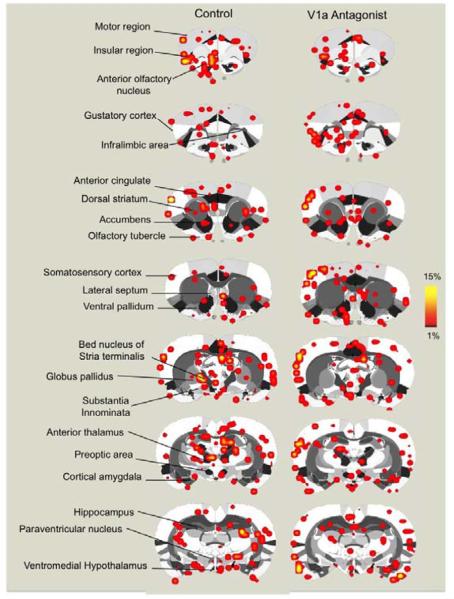
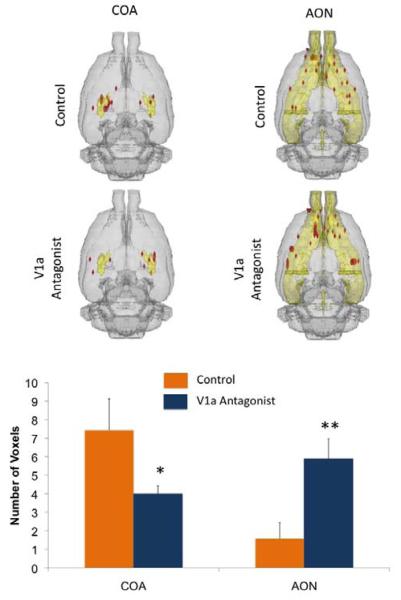
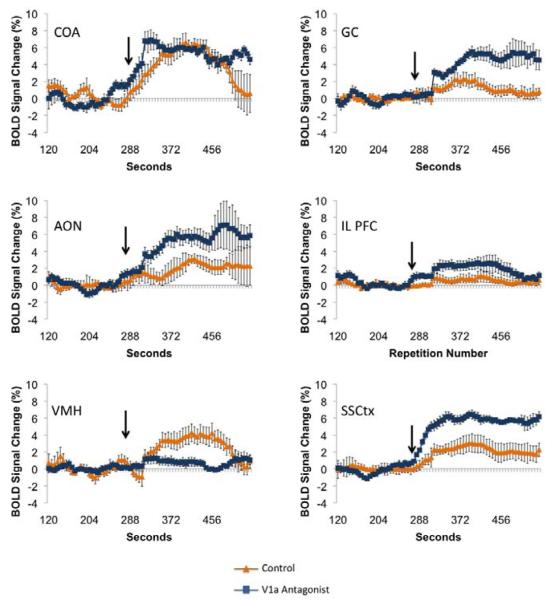
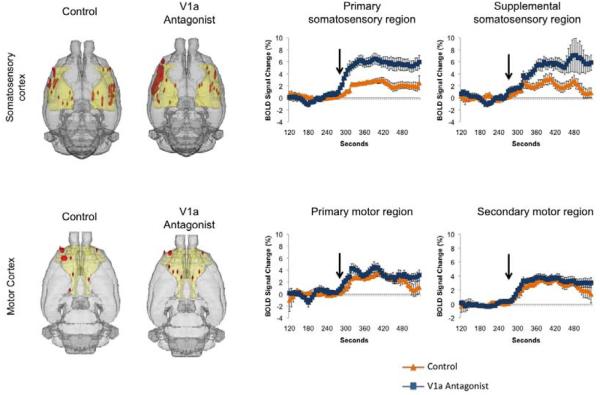
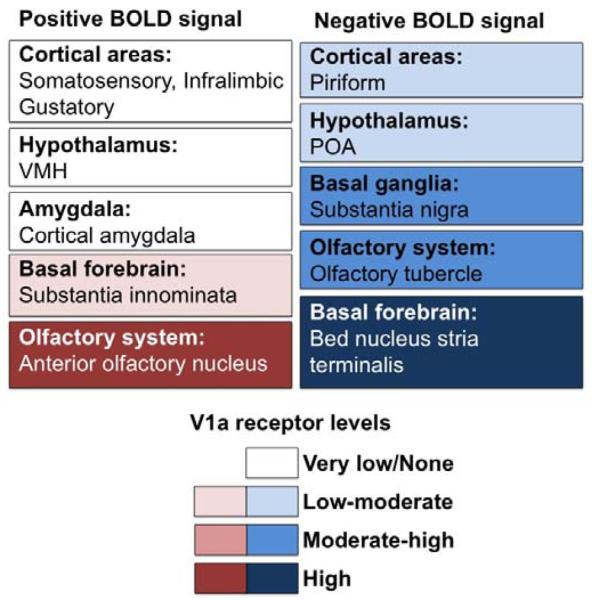
Vasopressin V1a receptors in the rat brain have been studied for their role in modulating aggression and anxiety. In the current study blood-oxygen-level-dependent (BOLD) functional MRI was used to test whether V1a receptors modulate neural processing in the maternal brain when dams are exposed to a male intruder. Primiparous females were given an intracerebroventricular (ICV) injection of vehicle or V1a receptor antagonist ([beta-Mercapto-beta,beta-cyclopentamethylenepropionyl(1), O-me-Tyr(2),Arg(8)]-Vasopressin, [corrected] 125 ng/10 microL) 90-120 min before imaging. During fMRI, awake dams were presented with a male intruder threat to pups using a specialized chamber that contained separate compartments for pups and a male intruder. Our results indicate that the number of activated voxels was reduced in the cortical amygdala with V1a receptor blockade, while an increase was observed in the anterior olfactory nucleus and other areas. Dams treated with V1a antagonist showed significantly greater BOLD responses in the anterior olfactory nucleus, infralimbic prefrontal cortex, gustatory cortex, somatosensory cortex, and substantia innominata when presented with a novel male intruder. BOLD responses were reduced in the cortical amygdala and ventromedial hypothalamus. The V1a receptor sensitive areas play roles in the processing of smell, taste and touch and emotional reactivity. Thus one interpretation of the present fMRI data is that vasopressin, acting through V1a receptors, may modulate sensory processing and perhaps coordinate this effect with changes in visceromotor activity during the initial stages of maternal aggressive motivation and/or anxiogenic responses.
Figures
References
-
- Albers HE, Hennessey AC, Whitman DC. Vasopressin and the Regulation of Hamster Social Behavior. Annals of the New York Academy of Sciences. 1992;652:227–242. - PubMed
-
- Blanchard DC, Takahashi SN. No change in intermale aggression after amygdala lesions which reduce freezing. Physiology & Behavior. 1988;42:613–616. - PubMed
-
- Bridges RS, Mann PE. Prolactin-brain interactions in the induction of maternal behavior in rat. Psychoneuroendocrinology. 1994;19:611–622. - PubMed
Publication types
MeSH terms
Substances
Grants and funding
LinkOut - more resources
Full Text Sources
