


Assessing reproductive status/stages in mice
- PMID: 19575469
- PMCID: PMC2755182
- DOI: 10.1002/0471142301.nsa04is48
Assessing reproductive status/stages in mice
Abstract
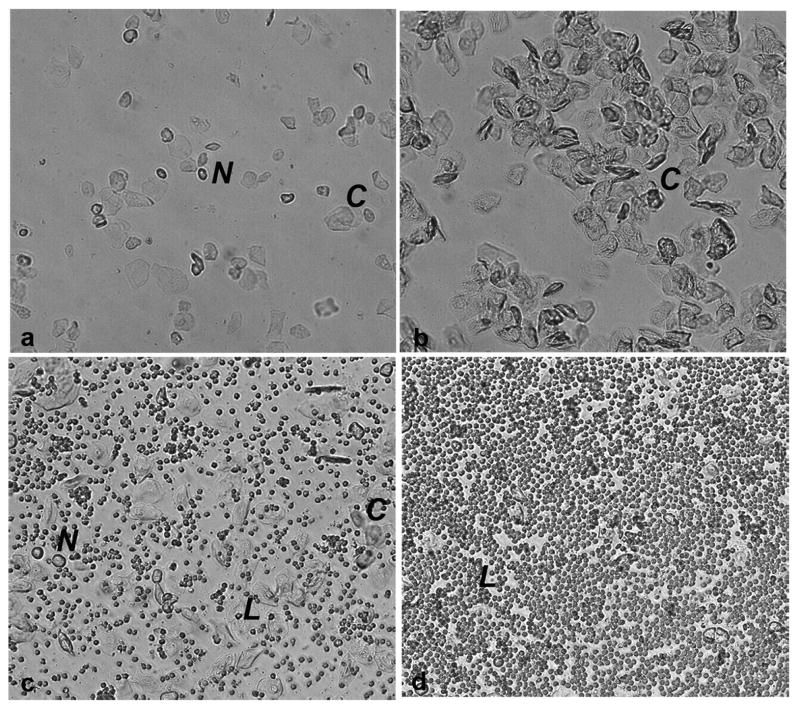
The short reproductive cycle length observed in rodents, called the estrous cycle, makes them an ideal animal model for investigation of changes that occur during the reproductive cycle. Most of the data in the literature about the estrous cycle is obtained from rats because they are easily manipulated and they exhibit a clear and well-defined estrous cycle. However, the increased number of experiments using knockout mice requires identification of their estrous cycle as well, since (in)fertility issues may arise. In mice, like rats, the identification of the stage of estrous cycle is based on the proportion of cell types observed in the vaginal secretion. The aim of this unit is to provide guidelines for quickly and accurately determining estrous cycle phases in mice.
Copyright 2009 by John Wiley & Sons, Inc.
Figures
References
-
- Caligioni CS, Franci CR. Oxytocin secretion induced by osmotic stimulation in rats during the estrous cycle and after ovariectomy and hormone replacement therapy. Life Sci. 2002;71:2821–2831. - PubMed
-
- Freeman ME. The neuroendocrine control of the ovarian cycle in the rat. In: Knobil E, Neill JD, editors. Physiology of Reproduction. Raven; New York: 1994. pp. 613–658.
-
- Long JA, Evans HM. The estrous cycle in the rat and its associated phenomena. Memories of University of California. 1922;6:1–148.
-
- Marcondes FK, Bianchi FJ, Tanno AP. Determination of the estrous cycle phases of rats: some helpful considerations. Braz J Biol. 2002;62:609–614. - PubMed
-
- Nelson JF, Felicio LS, Randall PK, Sims C, Finch CE. A longitudinal study of estrous cyclicity in aging C57BL/6J mice: I. cycle frequency, length and vaginal cytology. Biol Reprod. 1982;27:327–339. - PubMed
MeSH terms
Grants and funding
LinkOut - more resources
Full Text Sources
Other Literature Sources
