


The DosR regulon of M. tuberculosis and antibacterial tolerance
- PMID: 19577518
- PMCID: PMC2718728
- DOI: 10.1016/j.tube.2009.06.001
The DosR regulon of M. tuberculosis and antibacterial tolerance
Abstract
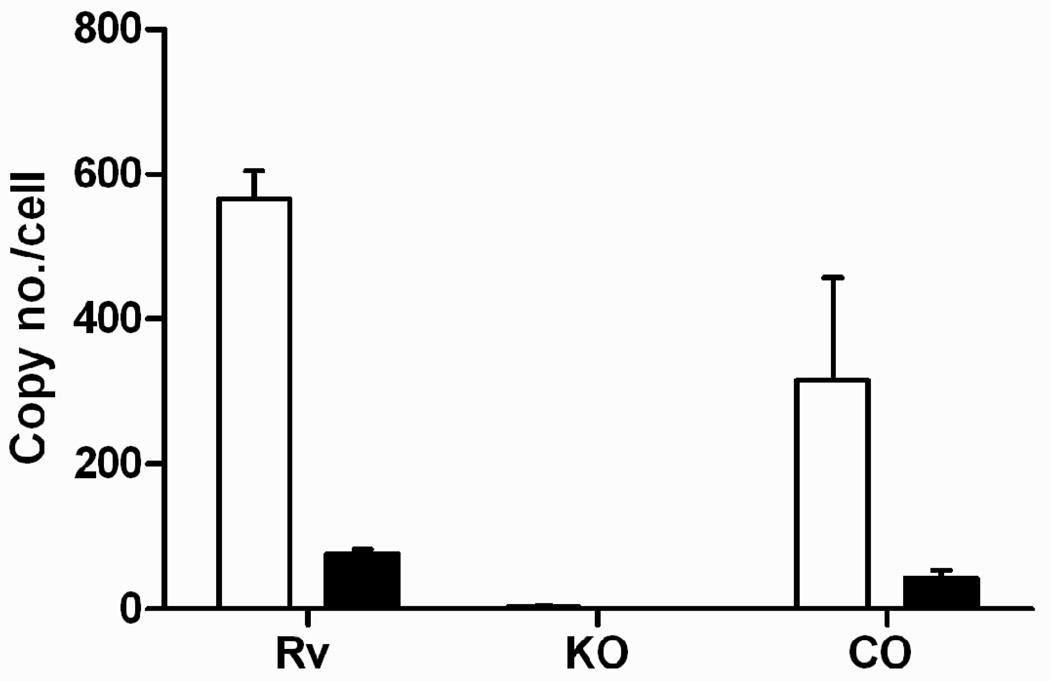
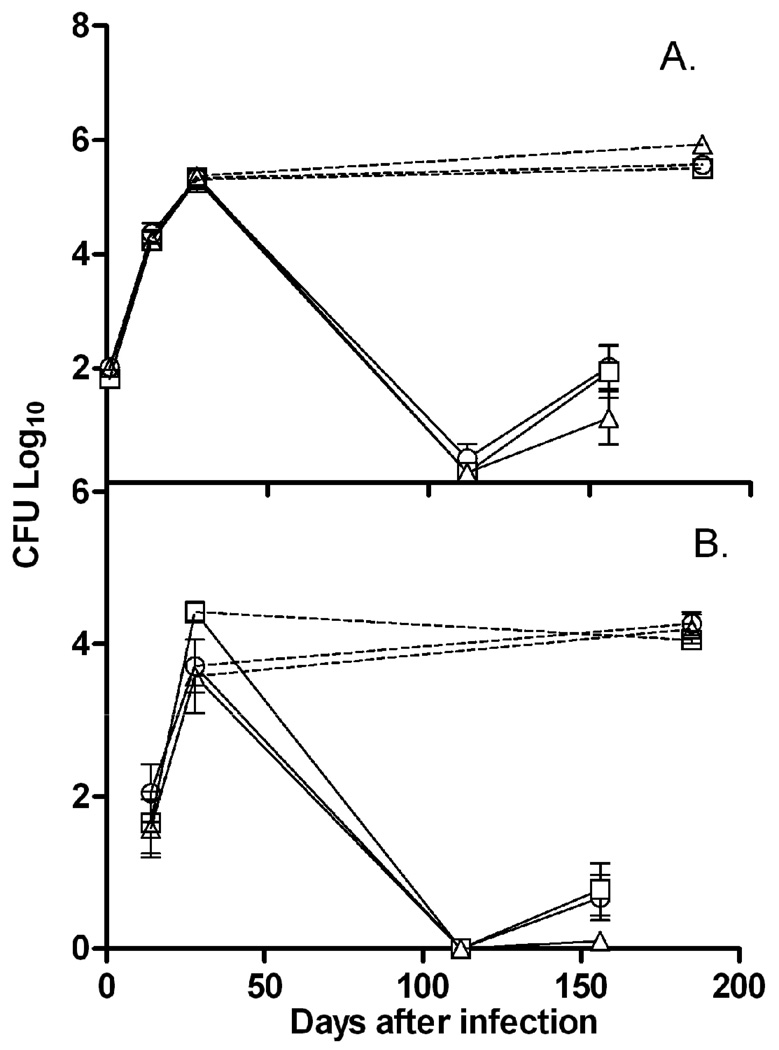
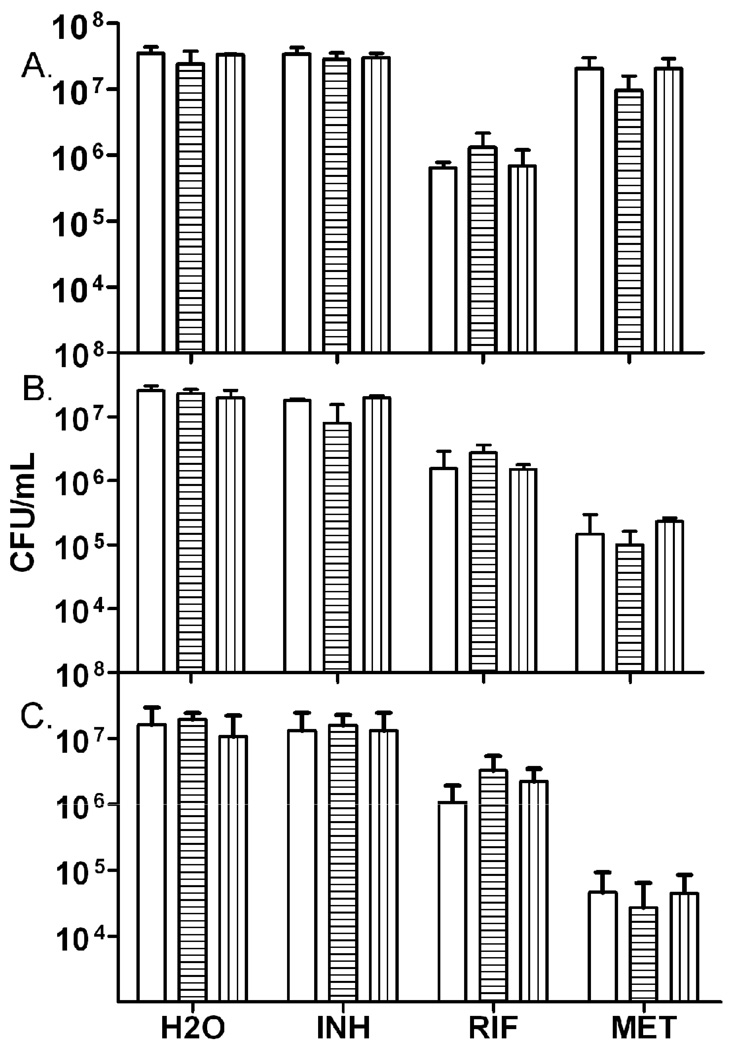
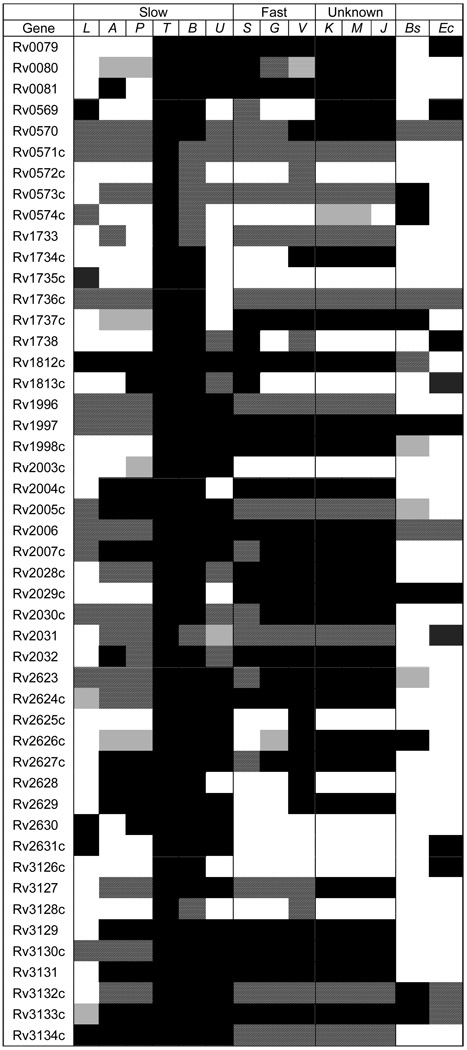
Adaptation of Mycobacterium tuberculosis to an anaerobic dormant state that is tolerant to several antibacterials is mediated largely by a set of highly expressed genes controlled by DosR. A DosR mutant was constructed to investigate whether the DosR regulon is involved in antibacterial tolerance. We demonstrate that induction of the regulon is not required for drug tolerance either in vivo during a mouse infection or in vitro during anaerobic dormancy. Thus, drug tolerance observed in these models is due to other mechanisms such as the bacilli simply being in a non-replicating or low metabolic state. Our data also demonstrate that the DosR regulon is not essential for virulence during chronic murine infection. However, decreased lung pathology was observed in the DosR mutant. We also show that the DosR regulon genes are more highly conserved in environmental mycobacteria, than in pathogenic mycobacteria lacking a latent phase or environmental reservoir. It is possible that the DosR regulon could contribute to drug tolerance in human infections; however, it is not the only mechanism and not the primary mechanism for tolerance during a mouse infection. These data suggest that the regulon evolved not for pathogenesis or drug tolerance but for adaptation to anaerobic conditions in the environment and has been adapted by M. tuberculosis for survival during latent infection.
Figures
References
-
- Dye C, et al. Consensus statement. Global burden of tuberculosis: estimated incidence, prevalence, and mortality by country. WHO Global Surveillance and Monitoring Project. Jama. 1999. pp. 677–686. - PubMed
-
- Wallis RS, Palaci M, Eisenach K. Persistence, not resistance, is the cause of loss of isoniazid effect. J Infect Dis. 2007;195(12):1870–1871. author reply 1872-3. - PubMed
-
- Mitchison DA, et al. Isoniazid activity is terminated by bacterial persistence. J Infect Dis. 2007;195(12):1871–1872. author reply 1872-3. - PubMed
-
- Gomez JE, McKinney JD. M. tuberculosis persistence, latency, and drug tolerance. Tuberculosis (Edinb) 2004;84(1–2):29–44. - PubMed
MeSH terms
Substances
Grants and funding
LinkOut - more resources
Full Text Sources
Medical
