


VASCULAR INFLAMMATION AND ATHEROGENESIS ARE ACTIVATED VIA RECEPTORS FOR PAMPs AND SUPPRESSED BY REGULATORY T CELLS
- PMID: 19578482
- PMCID: PMC2632857
- DOI: 10.1016/j.ddstr.2008.11.003
VASCULAR INFLAMMATION AND ATHEROGENESIS ARE ACTIVATED VIA RECEPTORS FOR PAMPs AND SUPPRESSED BY REGULATORY T CELLS
Abstract
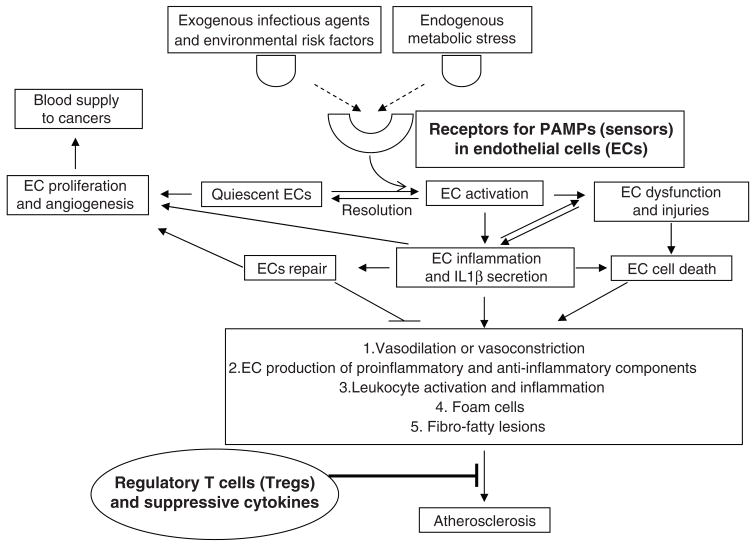
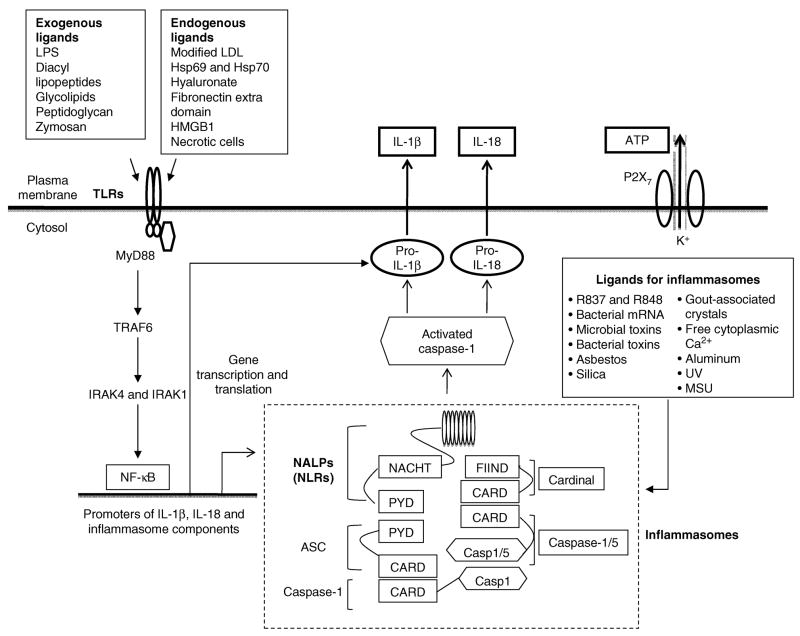
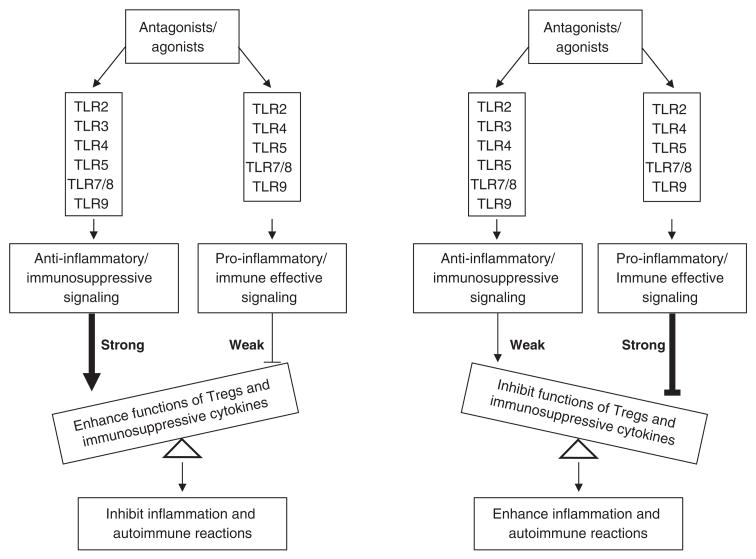
Despite significant advances in identifying the risk factors and elucidating atherosclerotic pathology, atherosclerosis remains the leading cause of morbidity and mortality in industrialized society. These risk factors independently or synergistically lead to chronic vascular inflammation, which is an essential requirement for the progression of atherosclerosis in patients. However, the mechanisms underlying the pathogenic link between the risk factors and atherosclerotic inflammation remain poorly defined. Significant progress has been made in two major areas, which are determination of the roles of the receptors for pathogen-associated molecular patterns (PAMPs) in initiation of vascular inflammation and atherosclerosis, and characterization of the roles of regulatory T cells in suppression of vascular inflammation and atherosclerosis. In this review, we focus on three related issues: (1) examining the recent progress in endothelial cell pathology, inflammation and their roles in atherosclerosis; (2) analyzing the roles of the receptors for pathogen-associated molecular patterns (PAMPs) in initiation of vascular inflammation and atherosclerosis; and (3) analyzing the advances in our understanding of suppression of vascular inflammation and atherosclerosis by regulatory T cells. Continuous improvement of our understanding of the risk factors involved in initiation and promotion of artherogenesis, will lead to the development of novel therapeutics for ischemic stroke and cardiovascular diseases.
Figures
References
-
- Zhou X, et al. Transfer of CD4(+) T cells aggravates atherosclerosis in immunodeficient apolipoprotein E knockout mice. Circulation. 2000;102(24):2919–2922. - PubMed
-
- Ross R. Atherosclerosis. In: Wyngaarden J, Smith LH, Bennett JC, editors. Cecil Textbook of Medicine. W.B. Saunders Company; 1992. pp. 293–298.
-
- Tobias PS, Curtiss LK. Toll-like receptors in atherosclerosis. Biochem Soc Trans. 2007;35(Pt 6):1453–1455. - PubMed
-
- Wang H, et al. Hyperhomocysteinemia accelerates atherosclerosis in cystathionine beta-synthase and apolipoprotein E double knock-out mice with and without dietary perturbation. Blood. 2003;101(10):3901–3907. - PubMed
Grants and funding
LinkOut - more resources
Full Text Sources