


Technical limitations in detection of gastroesophageal reflux in neonates
- PMID: 19581816
- PMCID: PMC2735880
- DOI: 10.1097/MPG.0b013e318195d7b3
Technical limitations in detection of gastroesophageal reflux in neonates
Erratum in
- J Pediatr Gastroenterol Nutr. 2009 Sep;49(3):378
Abstract
Objective: Characterize the incidence and possible etiologies of acid reflux events detected by pH and not identified by multiple intraluminal impedance (MII) monitoring.
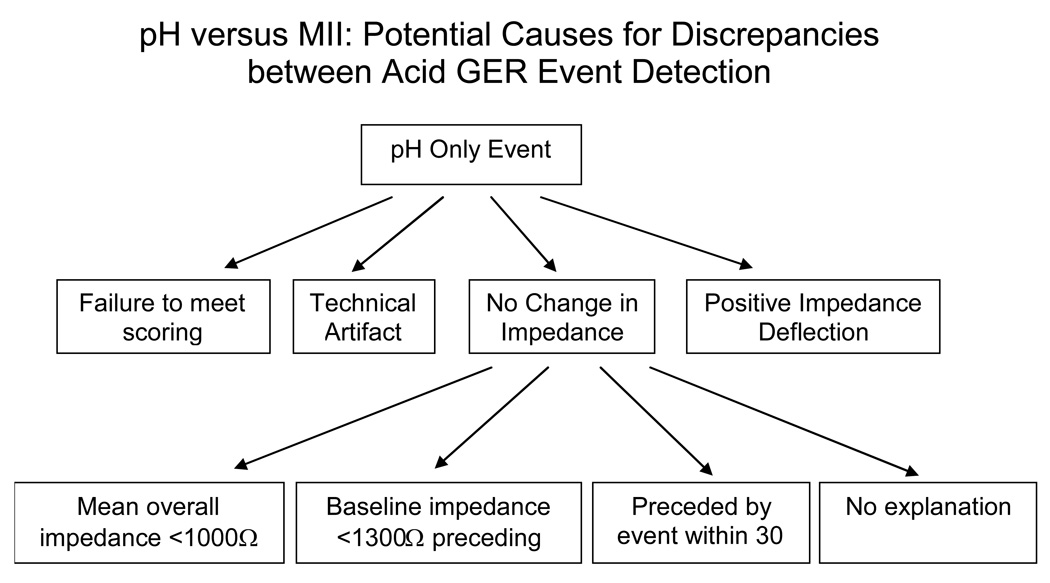
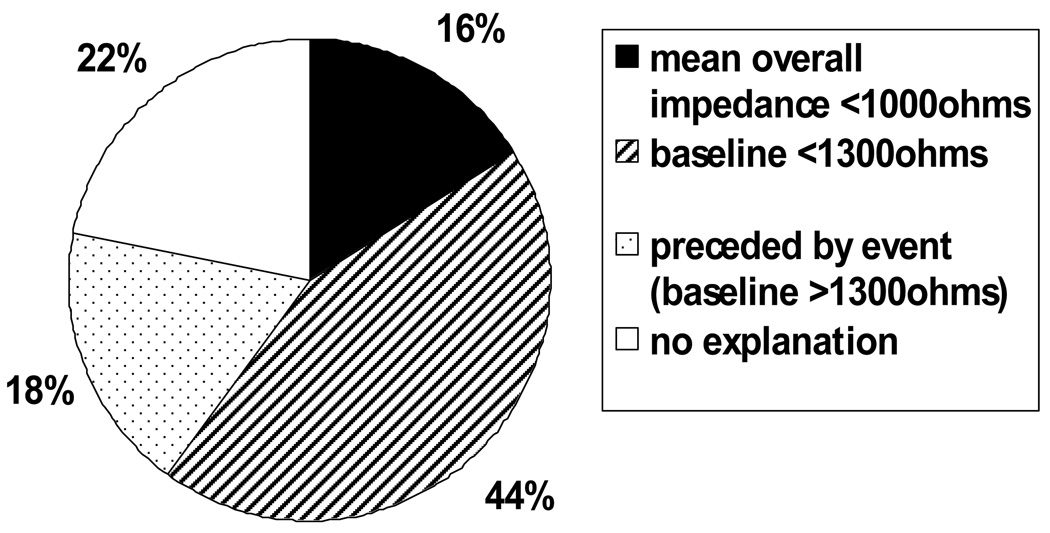
Materials and methods: Acid reflux events detected by pH but not identified by MII (pH-only) were documented in 80 preterm and 39 term infants. Reasons for failure of MII to detect these events were classified as failure to meet MII scoring criteria, presence of an air bolus, technical artifact, and no change in impedance. Events with no change in impedance were stratified to low impedance throughout the study (possible esophageal inflammation), transient decrease in pre-event impedance (presence of refluxate), occurrence <30 seconds of a preceding event, and no explanation.
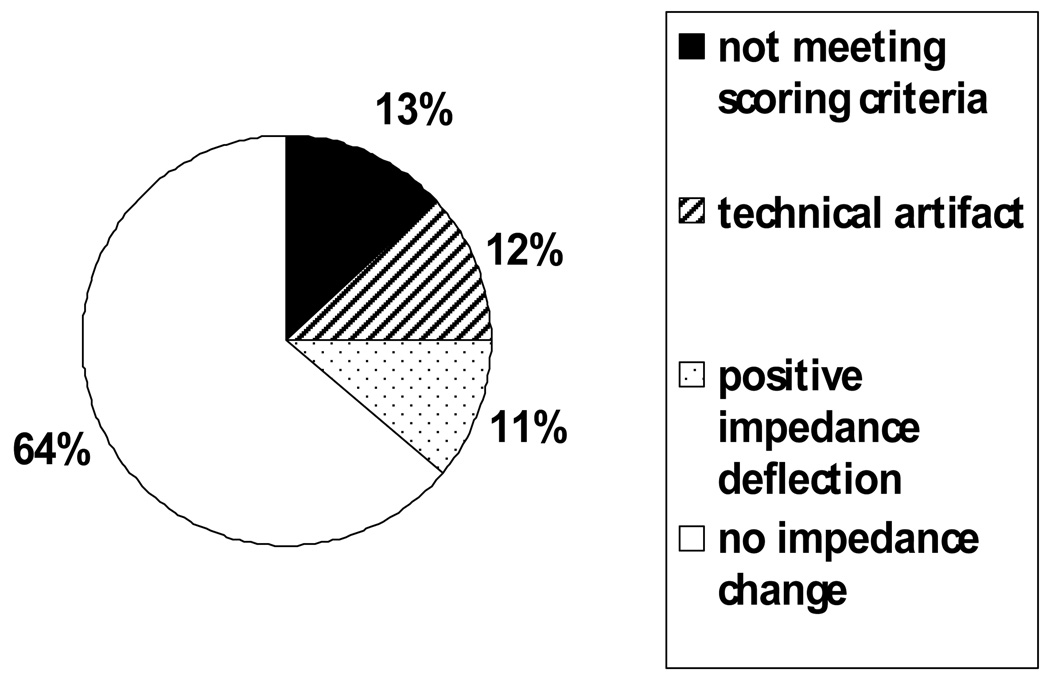
Results: A total of 2572 events were detected by pH, with 59% of events not identified by MII. A higher incidence of pH-only events occurred in preterm versus term infants (54 +/- 27% versus 42 +/- 23%, P = .025, respectively). Thirteen percent of pH-only events were missed due to MII scoring criteria, 12% due to technical artifact, 11% due to an air bolus, and 64% had no change in impedance. Of the 978 events with no change in impedance, 154 were associated with low impedance throughout the study, 430 with a transient decrease in pre-event impedance, and 175 were preceded by a reflux episode within 30 seconds.
Conclusions: There was a high incidence of acid reflux events detected by pH but not identified by MII. This occurred more often in the least mature infants, and we speculate that delayed esophageal fluid clearance is the major underlying mechanism.
Figures
References
-
- Wenzl TG, Moroder C, Trachterna M, et al. Esophageal pH monitoring and impedance measurement: a comparison of two diagnostic tests for gastroesophageal reflux. JPGN. 2002;34:519–523. - PubMed
-
- Sondheimer J. Expanding the definition of reflux. JPGN. 2002;34(5):511–512. - PubMed
-
- Rudolph CD, Mazur LJ, Liptak G, et al. Guidelines for evaluation and treatment of gastroesophageal reflux in infants and children: Recommendations of the north American society for pediatric gastroenterology and nutrition. JPGN. 2001;32(2):S1–S31. - PubMed
-
- Condino AA, Sondheimer J, Pan Z, et al. Evaluation of infantile acid and nonacid gastroesophageal reflux combined pH monitoring and impedance measurement. JPGN. 2006;42:16–21. - PubMed
-
- Skopnik H, Silny J, Heiber O, et al. Gastroesophageal reflux in infants: evaluation of a new intraluminal impedance technique. JPGN. 1996;23(5):591–598. - PubMed
Publication types
MeSH terms
Grants and funding
LinkOut - more resources
Full Text Sources
Medical
