


The Multidimensional Prognostic Index (MPI), based on a comprehensive geriatric assessment predicts short- and long-term mortality in hospitalized older patients with dementia
- PMID: 19584441
- PMCID: PMC2864495
- DOI: 10.3233/JAD-2009-1139
The Multidimensional Prognostic Index (MPI), based on a comprehensive geriatric assessment predicts short- and long-term mortality in hospitalized older patients with dementia
Abstract
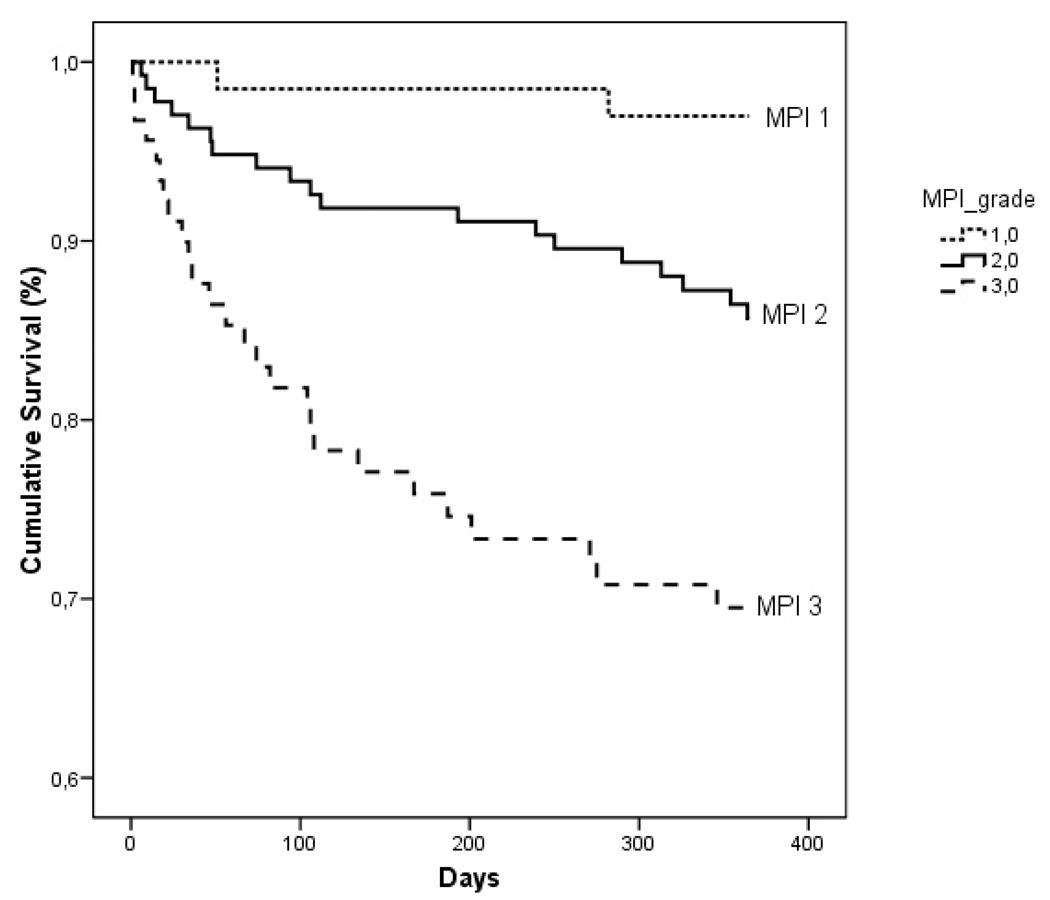
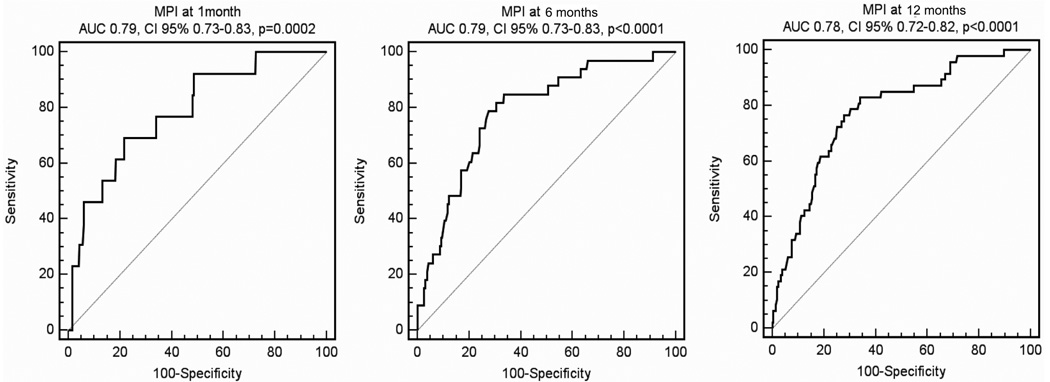
Aim of this study was to evaluate the usefulness of a Multidimensional Prognostic Index (MPI) based on a Comprehensive Geriatric Assessment (CGA) for predicting mortality risk in older patients with dementia. The present was a retrospective study with a year of follow-up that included 262 patients aged 65 years and older with a diagnosis of dementia. A standardized CGA that included information on clinical, cognitive, functional, and nutritional aspects, as well as comorbidity, medications, and social support network, was used to calculate MPI. The predictive value of the MPI for all-cause mortality over 1 month, 6 months, and 12 months of follow-up was evaluated. Higher MPI values were significantly associated with higher mortality at 1 month (MPI-1, low risk = 0%, MPI-2, moderate risk = 5.2%, MPI-3, severe risk = 13.7%; p < 0.002), 6-months (MPI-1 = 2.7%, MPI-2 = 11.2%, MPI-3 = 28.8%; p < 0.001), and 12-months (MPI-1 = 2.7%, MPI-2 = 18.2%, MPI-3 = 35.6%; p < 0.001) of follow-up. The discrimination of the MPI was also good, with areas under the ROC curves of 0.77 (sensitivity = 82.9%, specificity = 66.0%, with a cut off value > 0.16) at 12-months of follow up. In conclusion, the MPI, calculated from information collected in a standardized CGA, accurately stratified hospitalized elderly patients with dementia into groups at varying risk of short- and long-term mortality.
Figures
References
-
- World Health Organization. Neurological disorders: public health challenges. WHO. 2006. [Accessed January 14, 2008]. 3.1, 42–54, www.who.int/mental_health/neurology/neurological_disorders_report_web.pdf.
-
- Levine SK, Sachs GA, Jin L, Meltzer D. A prognostic model for 1 year mortality in older adults after hospital discharge. Am J Med. 2007;120:455–460. - PubMed
Publication types
MeSH terms
Grants and funding
LinkOut - more resources
Full Text Sources
Medical
Research Materials
