


Safety and tolerability of an antiasthma herbal Formula (ASHMI) in adult subjects with asthma: a randomized, double-blinded, placebo-controlled, dose-escalation phase I study
- PMID: 19586409
- PMCID: PMC2830609
- DOI: 10.1089/acm.2008.0543
Safety and tolerability of an antiasthma herbal Formula (ASHMI) in adult subjects with asthma: a randomized, double-blinded, placebo-controlled, dose-escalation phase I study
Abstract
Background: Complementary and alternative medicines are increasingly used for the treatment of asthma in Western countries. A novel three-herb antiasthma herbal medicine intervention (ASHMI; Sino-Lion Pharmaceutical Company; Shan Dong China) was demonstrated to be effective and safe in a murine model of asthma and in a preliminary clinical study in China.
Objective: The objective of this study was to evaluate the safety and tolerability of ASHMI in adult subjects with allergic asthma.
Design: Randomized, double-blind, placebo-controlled, dose escalation, phase I trial aimed at developing a botanical drug under the United States Food and Drug Administration Investigational New Drug title.
Interventions: Subjects received one of three doses of ASHMI or placebo: 600 mg (2 capsules); 1200 mg (4 capsules); or 1800 mg (6 capsules) twice daily for 1 week. Four (4) ASHMI and 2 placebo subjects were treated at each dose level. Subjects continued to use their conventional asthma medications for the duration of the study.
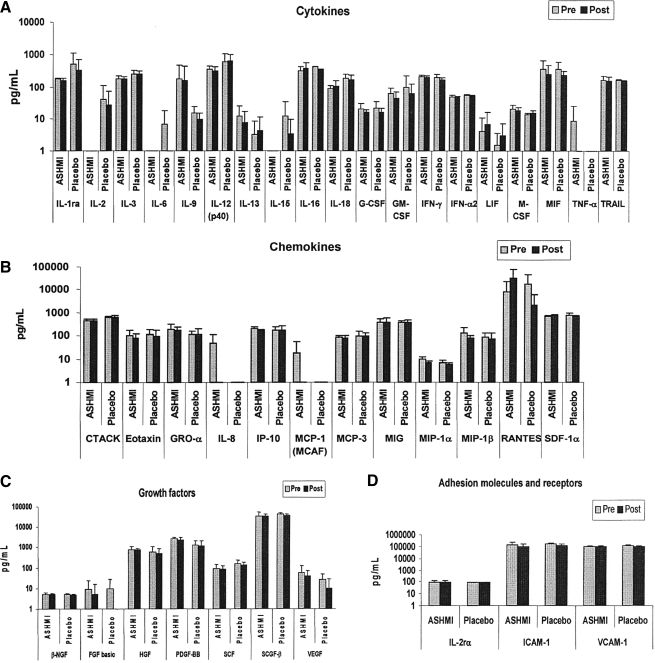
Outcome measures: Vital signs, physical examination, laboratory data, and electrocardiogram data were monitored throughout the study to assess occurrence of adverse events (AEs). Immunomodulatory studies were performed to evaluate the effect of ASHMI on cytokine, chemokine, and growth factor levels.
Results: Twenty (20) nonsmoking, allergic subjects with asthma were included in the study. Eight (8) subjects (4 ASHMI and 4 placebo) reported mild gastrointestinal symptoms. No grade 3 AEs were observed during the study period. Vital signs, electrocardiogram findings, and laboratory results obtained at pre- and post-treatment visits remained within normal range. No abnormal immunologic alterations were detected.
Conclusion: In this phase I study, ASHMI appeared to be safe and well tolerated by subjects with asthma. These findings allowed initiation of a larger phase II study to assess the efficacy of ASHMI.
Figures
References
-
- Moorman JE. Rudd RA. Johnson CA, et al. National surveillance for asthma: United States, 1980–2004. MMWR Surveill Summ. 2007;56:1–54. - PubMed
-
- National Asthma Education and Prevention Program. Expert panel report 3 (EPR-3): Guidelines for the diagnosis and management of asthma-summary report 2007. J Allergy Clin Immunol. 2007;120(suppl):S94–S138. - PubMed
-
- Apter AJ. Boston RC. George M, et al. Modifiable barriers to adherence to inhaled steroids among adults with asthma: It's not just black and white. J Allergy Clin Immunol. 2003;111:1219–1226. - PubMed
-
- George M. Freedman TG. Norfleet AL, et al. Qualitative research-enhanced understanding of patients' beliefs: Results of focus groups with low-income, urban, African American adults with asthma. J Allergy Clin Immunol. 2003;111:967–973. - PubMed
-
- Bielory L. Russin J. Zuckerman GB. Clinical efficacy, mechanisms of action, and adverse effects of complementary and alternative medicine therapies for asthma. Allergy Asthma Proc. 2004;25:283–291. - PubMed
Publication types
MeSH terms
Substances
Grants and funding
LinkOut - more resources
Full Text Sources
Other Literature Sources
Medical
