


Murine B cell response to TLR7 ligands depends on an IFN-beta feedback loop
- PMID: 19587008
- PMCID: PMC2929820
- DOI: 10.4049/jimmunol.0803899
Murine B cell response to TLR7 ligands depends on an IFN-beta feedback loop
Abstract
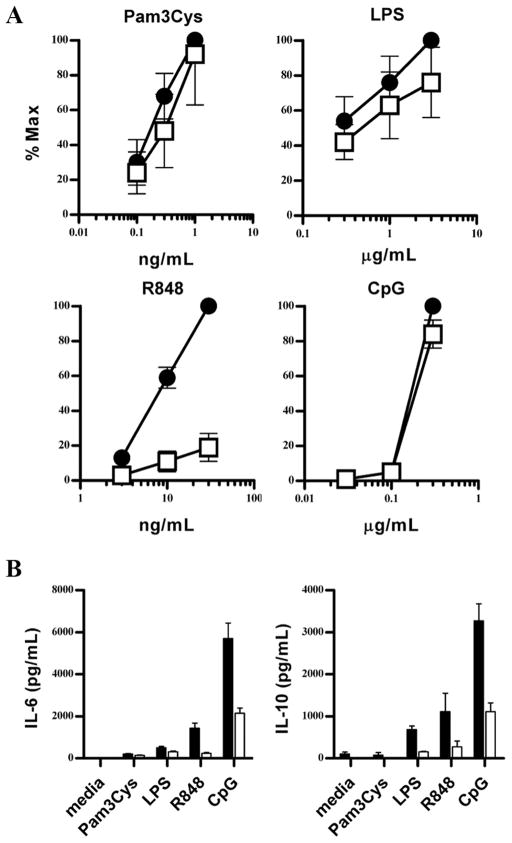
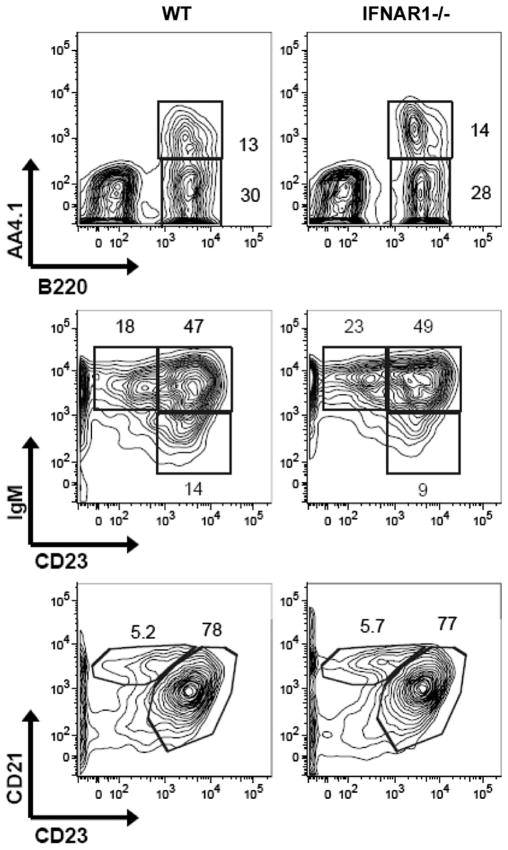
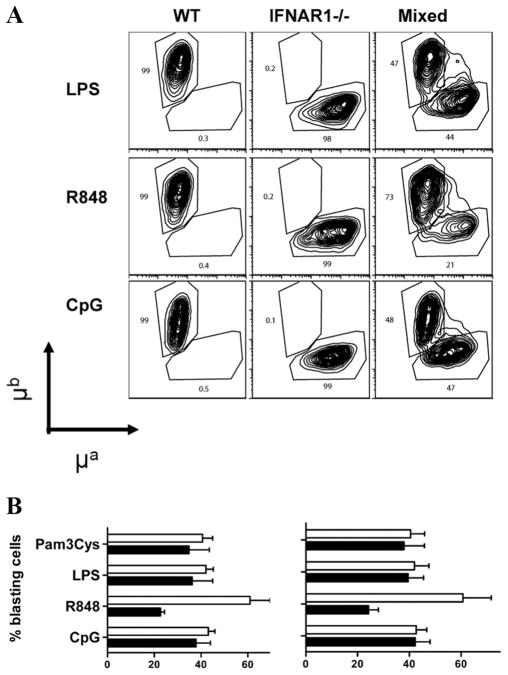
Type I IFNs play an important, yet poorly characterized, role in systemic lupus erythematosus. To better understand the interplay between type I IFNs and the activation of autoreactive B cells, we evaluated the effect of type I IFN receptor (IFNAR) deficiency in murine B cell responses to common TLR ligands. In comparison to wild-type B cells, TLR7-stimulated IFNAR(-/-) B cells proliferated significantly less well and did not up-regulate costimulatory molecules. By contrast, IFNAR1(-/-) B cells did not produce cytokines, but did proliferate and up-regulate activation markers in response to other TLR ligands. These defects were not due to a difference in the distribution of B cell populations or a failure to produce a soluble factor other than a type I IFN. Instead, the compromised response pattern reflected the disruption of an IFN-beta feedback loop and constitutively low expression of TLR7 in the IFNAR1(-/-) B cells. These results highlight subtle differences in the IFN dependence of TLR7 responses compared with other TLR-mediated B cell responses.
Conflict of interest statement
The authors have no financial conflict of interest.
Figures
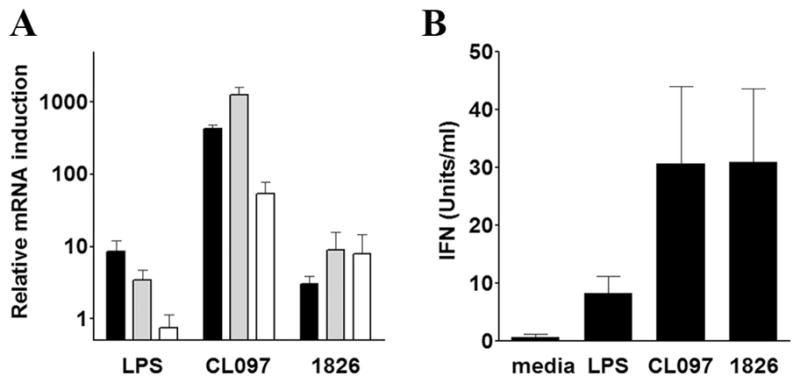
 , IFN-α2; and □, IFN-α4. Average ± SEM of three experiments. B, TLR-induced production of functional type I IFN. Type I IFN in the culture supernatant of B cells, stimulated for 6 h with indicated TLR-ligands, was measured by IFN bioassay. Average ± SEM of five experiments.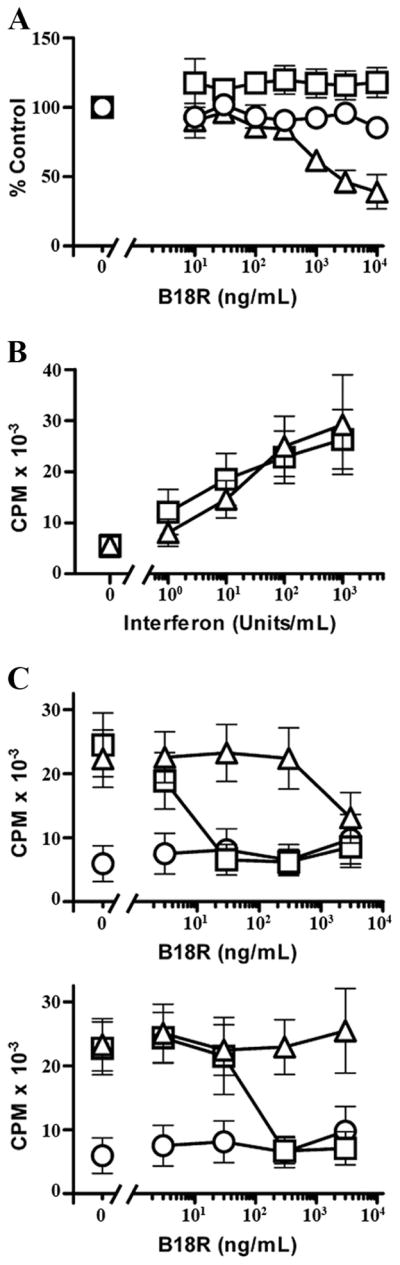
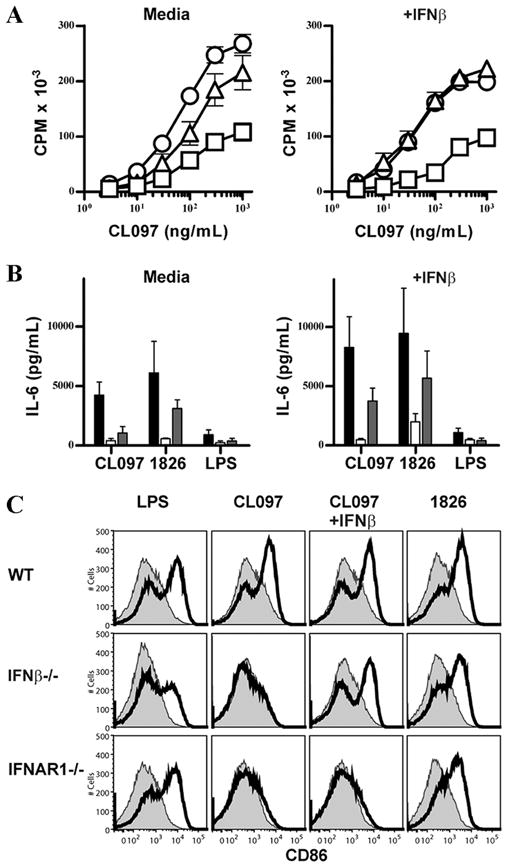 ) B cells were stimulated with 300 ng/ml CL097 in the absence (left) or presence (right) of 300 U/ml IFN-β. IL-6 concentration in the culture supernatants at 24 h was determined by ELISA. C, B cells from WT (top row), IFN-β−/− (middle row), and IFNAR1−/− (bottom row) mice were stimulated with LPS (left), CL097 (middle left), CL097 + IFN-β (middle right), or CpG (right). CD86 expression was measured by flow cytometry. Unstimulated B cells (shaded histogram) served as controls.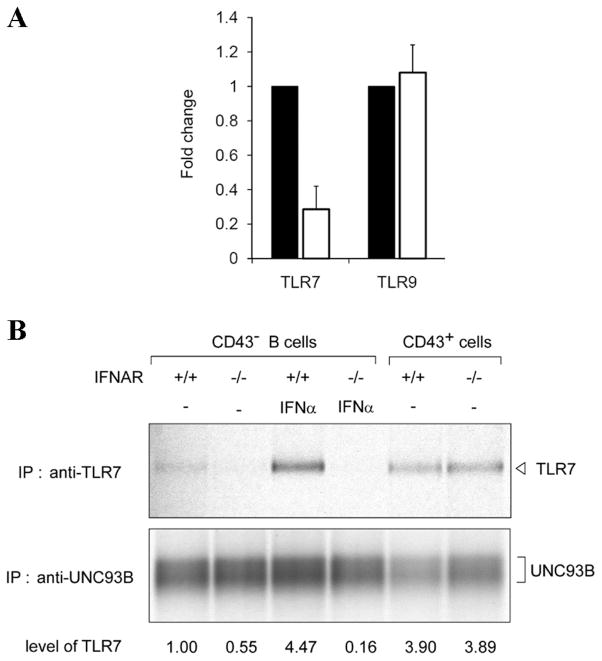
References
-
- Gota C, Calabrese L. Induction of clinical autoimmune disease by therapeutic interferon-α. Autoimmunity. 2003;36:511–518. - PubMed
-
- Hooks JJ, Moutsopoulos HM, Geis SA, Stahl NI, Decker JL, Notkins AL. Immune interferon in the circulation of patients with auto-immune disease. N Engl J Med. 1979;301:5–8. - PubMed
-
- Bengtsson AA, Sturfelt G, Truedsson L, Blomberg J, Alm G, Vallin H, Ronnblom L. Activation of type I interferon system in systemic lupus erythematosus correlates with disease activity but not with antiretroviral antibodies. Lupus. 2000;9:664–671. - PubMed
-
- Baechler EC, Gregersen PK, Behrens TW. The emerging role of interferon in human systemic lupus erythematosus. Cur Opin Immunol. 2004;16:801–807. - PubMed
Publication types
MeSH terms
Substances
Grants and funding
LinkOut - more resources
Full Text Sources
Molecular Biology Databases
