


Perceptual variation in umami taste and polymorphisms in TAS1R taste receptor genes
- PMID: 19587085
- PMCID: PMC3136006
- DOI: 10.3945/ajcn.2009.27462N
Perceptual variation in umami taste and polymorphisms in TAS1R taste receptor genes
Abstract
Background: The TAS1R1 and TAS1R3 G protein-coupled receptors are believed to function in combination as a heteromeric glutamate taste receptor in humans.
Objective: We hypothesized that variations in the umami perception of glutamate would correlate with variations in the sequence of these 2 genes, if they contribute directly to umami taste.
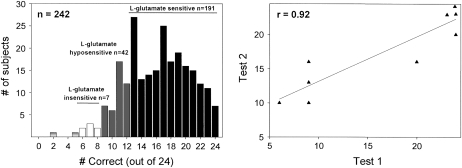
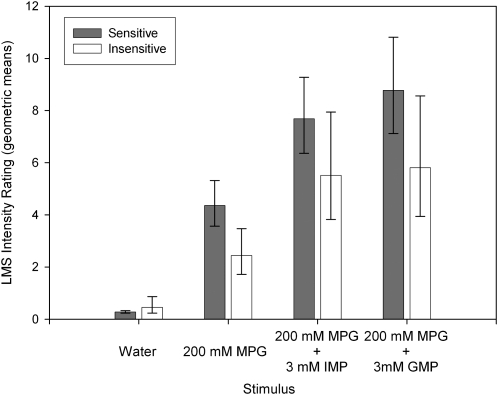
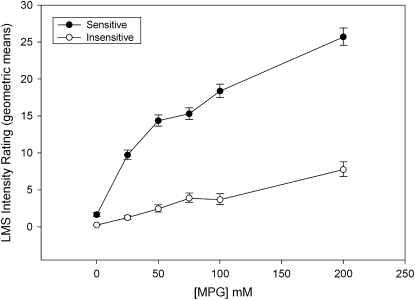
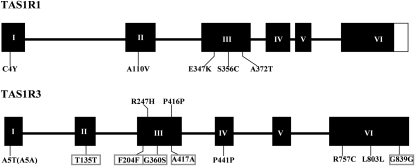
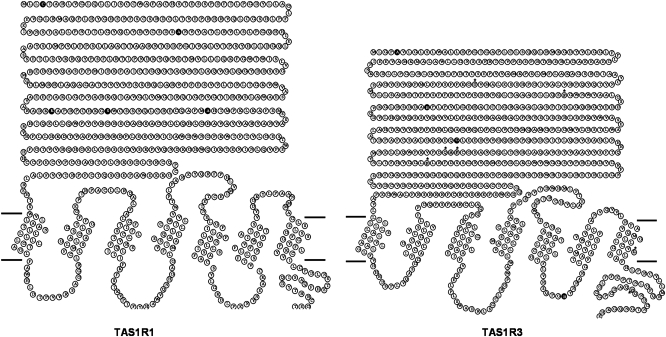
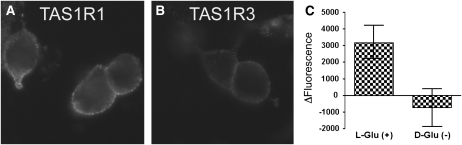
Design: In this study, we first characterized the general sensitivity to glutamate in a sample population of 242 subjects. We performed these experiments by sequencing the coding regions of the genomic TAS1R1 and TAS1R3 genes in a separate set of 87 individuals who were tested repeatedly with monopotassium glutamate (MPG) solutions. Last, we tested the role of the candidate umami taste receptor hTAS1R1-hTAS1R3 in a functional expression assay.
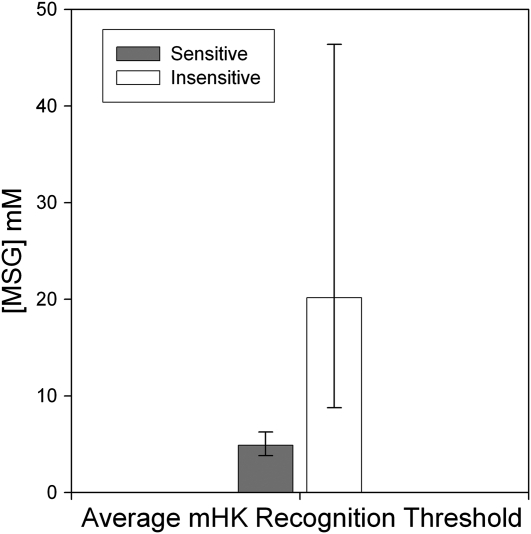
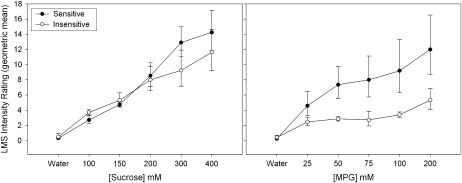
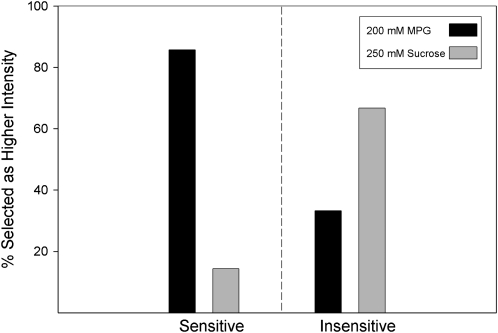
Results: A subset of subjects displays extremes of sensitivity, and a battery of different psychophysical tests validated this observation. Statistical analysis showed that the rare T allele of single nucleotide polymorphism (SNP) R757C in TAS1R3 led to a doubling of umami ratings of 25 mmol MPG/L. Other suggestive SNPs of TAS1R3 include the A allele of A5T and the A allele of R247H, which both resulted in an approximate doubling of umami ratings of 200 mmol MPG/L. We confirmed the potential role of the human TAS1R1-TAS1R3 heteromer receptor in umami taste by recording responses, specifically to l-glutamate and inosine 5'-monophosphate (IMP) mixtures in a heterologous expression assay in HEK (human embryonic kidney) T cells.
Conclusions: There is a reliable and valid variation in human umami taste of l-glutamate. Variations in perception of umami taste correlated with variations in the human TAS1R3 gene. The putative human taste receptor TAS1R1-TAS1R3 responds specifically to l-glutamate mixed with the ribonucleotide IMP. Thus, this receptor likely contributes to human umami taste perception.
Figures
References
-
- Ikeda K. Japanese patent 4805. 1908.
-
- Ikeda K. On a new seasoning. J Tokyo Chem Soc 1909;30:820–36
-
- Yamaguchi S. Basic properties of umami and effects on humans. Physiol Behav 1991;49:833–41 - PubMed
-
- Halpern BP. Glutamate and the flavor of foods. J Nutr 2000;130:910S–4S - PubMed
-
- Chaudhari N, Landin AM, Roper SD. A metabotropic glutamate receptor variant functions as a taste receptor. Nat Neurosci 2000;3:113–9 - PubMed
Publication types
MeSH terms
Substances
Grants and funding
LinkOut - more resources
Full Text Sources
Other Literature Sources
Medical
Miscellaneous
