


Potential population health outcomes and expenditures of HIV vaccination strategies in the United States
- PMID: 19591796
- PMCID: PMC2757634
- DOI: 10.1016/j.vaccine.2009.06.063
Potential population health outcomes and expenditures of HIV vaccination strategies in the United States
Abstract
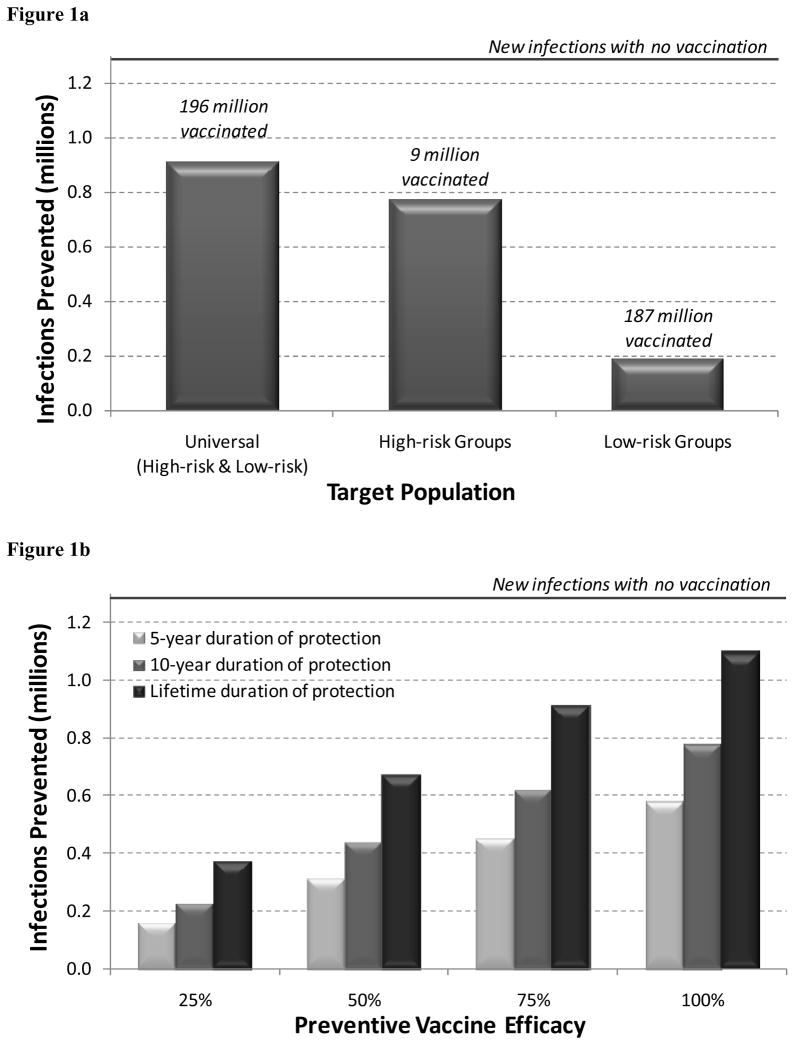
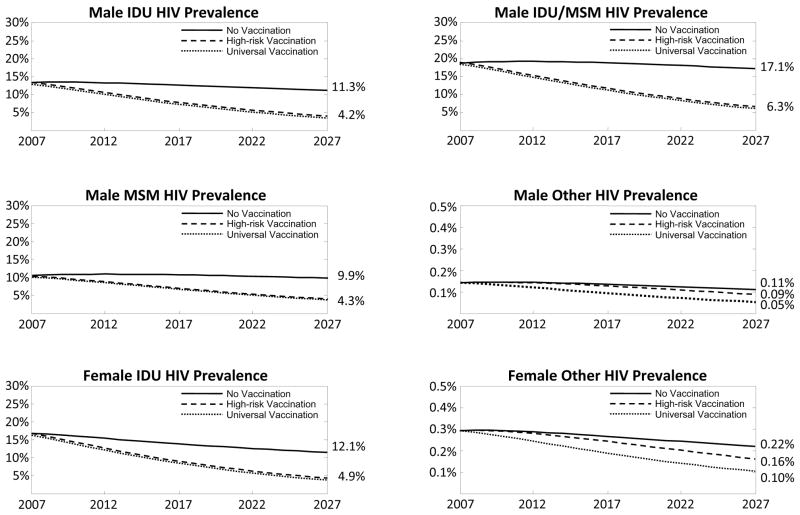
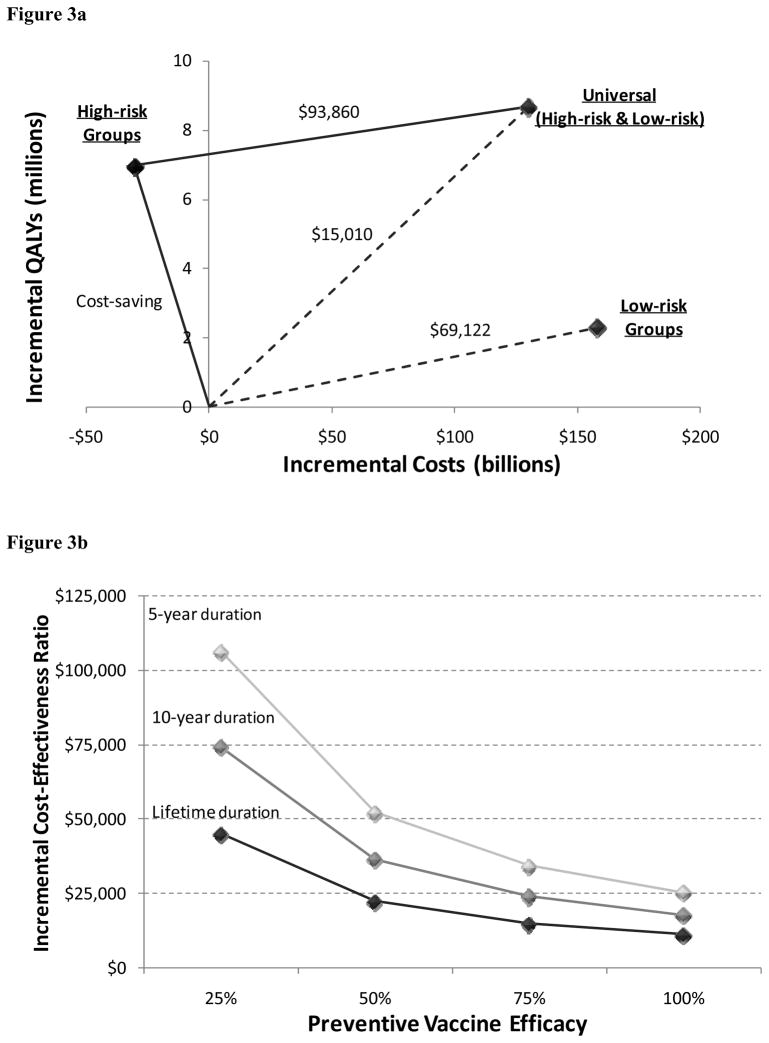
Estimating the potential health benefits and expenditures of a partially effective HIV vaccine is an important consideration in the debate about whether HIV vaccine research should continue. We developed an epidemic model to estimate HIV prevalence, new infections, and the cost-effectiveness of vaccination strategies in the U.S. Vaccines with modest efficacy could prevent 300,000-700,000 HIV infections and save $30 billion in healthcare expenditures over 20 years. Targeted vaccination of high-risk individuals is economically efficient, but difficulty in reaching these groups may mitigate these benefits. Universal vaccination is cost-effective for vaccines with 50% efficacy and price similar to other infectious disease vaccines.
Figures
References
-
- Kaiser J. AIDS research. Review of vaccine failure prompts a return to basics. Science. 2008 Apr 4;320(5872):30–1. - PubMed
-
- Cohen J. AIDS research. Did Merck's failed HIV vaccine cause harm? Science. 2007 Nov 16;318(5853):1048–9. - PubMed
-
- Cohen J. Public health. AIDS vaccine trial produces disappointment and confusion. Science. 2003 Feb 28;299(5611):1290–1. - PubMed
-
- VaxGen. VaxGen Announces Initial Results of its Phase III AIDS Vaccine Trial. Brisbane, California: 2003. Feb 24,
-
- NIAID to convene HIV vaccine summit. AIDS Patient Care STDS. 2008 Apr;22(4):350–1. - PubMed
Publication types
MeSH terms
Substances
Grants and funding
LinkOut - more resources
Full Text Sources
Other Literature Sources
Medical
