Medication errors: prescribing faults and prescription errors
- PMID: 19594530
- PMCID: PMC2723200
- DOI: 10.1111/j.1365-2125.2009.03425.x
Medication errors: prescribing faults and prescription errors
Abstract
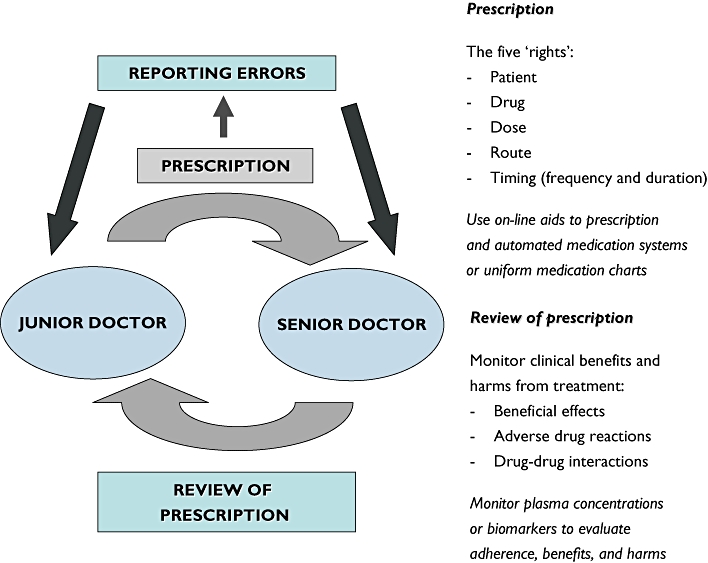
1. Medication errors are common in general practice and in hospitals. Both errors in the act of writing (prescription errors) and prescribing faults due to erroneous medical decisions can result in harm to patients. 2. Any step in the prescribing process can generate errors. Slips, lapses, or mistakes are sources of errors, as in unintended omissions in the transcription of drugs. Faults in dose selection, omitted transcription, and poor handwriting are common. 3. Inadequate knowledge or competence and incomplete information about clinical characteristics and previous treatment of individual patients can result in prescribing faults, including the use of potentially inappropriate medications. 4. An unsafe working environment, complex or undefined procedures, and inadequate communication among health-care personnel, particularly between doctors and nurses, have been identified as important underlying factors that contribute to prescription errors and prescribing faults. 5. Active interventions aimed at reducing prescription errors and prescribing faults are strongly recommended. These should be focused on the education and training of prescribers and the use of on-line aids. The complexity of the prescribing procedure should be reduced by introducing automated systems or uniform prescribing charts, in order to avoid transcription and omission errors. Feedback control systems and immediate review of prescriptions, which can be performed with the assistance of a hospital pharmacist, are also helpful. Audits should be performed periodically.
Figures
References
-
- Ferner RE, Aronson JK. Clarification of terminology in medication errors: definitions and classification. Drug Saf. 2006;29:1011–22. - PubMed
-
- Lesar TS, Briceland L, Stein DS. Factors related to errors in medication prescribing. JAMA. 1997;277:312–7. - PubMed
-
- Dean B, Vincent C, Schachter M, Barber N. The incidence of prescribing errors in hospital inpatients: an overview of the research methods. Drug Saf. 2005;28:891–900. - PubMed
MeSH terms
LinkOut - more resources
Full Text Sources
Medical