


Stochastic gene expression as a molecular switch for viral latency
- PMID: 19595626
- PMCID: PMC2760832
- DOI: 10.1016/j.mib.2009.06.016
Stochastic gene expression as a molecular switch for viral latency
Abstract
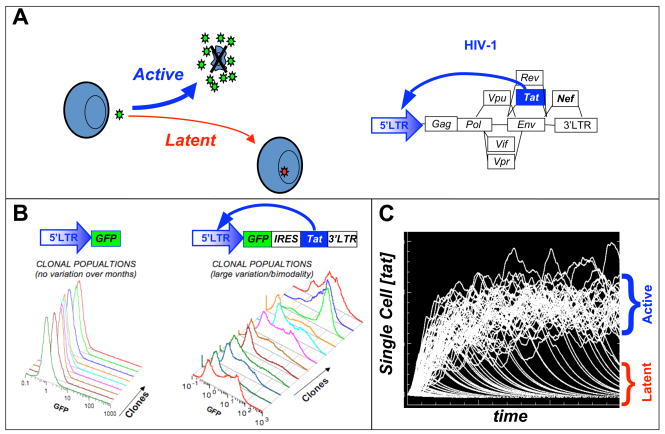
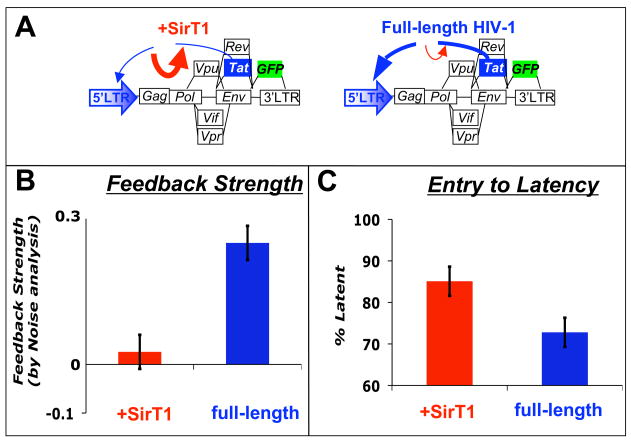
Stochastic 'noise' arises from random thermal fluctuations in the concentration of protein, RNA, or other molecules within the cell and is an unavoidable aspect of life at the single-cell level. Evidence is accumulating that this biochemical noise crucially influences cellular auto-regulatory circuits and can 'flip' genetic switches to drive probabilistic fate decisions in bacteria, viruses, cancer, and stem cells. Here, we review how stochastic gene expression in key auto-regulatory proteins can control fate determination between latency and productive replication in both phage-lambda and HIV-1. We highlight important new studies that synthetically manipulate auto-regulatory circuitry and noise, to bias HIV-1's ability to enter proviral latency. We argue that an appreciation of noise in gene expression may shed light on the mystery of animal virus latency and that strategies to manipulate noise may have impact on anti-viral therapeutics.
Figures
References
-
- Kaern M, Elston TC, Blake WJ, Collins JJ. Stochasticity in gene expression: from theories to phenotypes. Nat Rev Genet. 2005;6:451–464. - PubMed
-
- Blake WJ, Balazsi G, Kohanski MA, Isaacs FJ, Murphy KF, Kuang Y, Cantor CR, Walt DR, Collins JJ. Phenotypic consequences of promoter-mediated transcriptional noise. Mol Cell. 2006;24:853–865. - PubMed
-
- Raj A, van Oudenaarden A. Nature, nurture, or chance: stochastic gene expression and its consequences. Cell. 2008;135:216–226. The authors provide a comprehensive review of stochastic gene expression in the context of different biological systems ranging from microbes to metazoans. The benefits and negative effects of noise are discussed in detail. - PMC - PubMed
-
- Elowitz MB, Levine AJ, Siggia ED, Swain PS. Stochastic gene expression in a single cell. Science. 2002;297:1183–1186. - PubMed
Publication types
MeSH terms
Grants and funding
LinkOut - more resources
Full Text Sources
Other Literature Sources
