


AI-2/LuxS is involved in increased biofilm formation by Streptococcus intermedius in the presence of antibiotics
- PMID: 19596873
- PMCID: PMC2764162
- DOI: 10.1128/AAC.00546-09
AI-2/LuxS is involved in increased biofilm formation by Streptococcus intermedius in the presence of antibiotics
Abstract
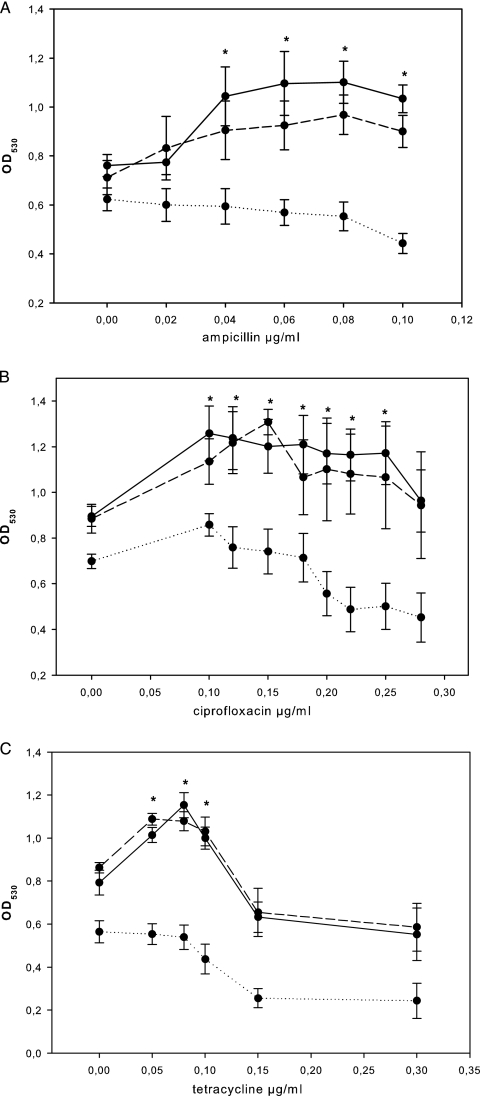
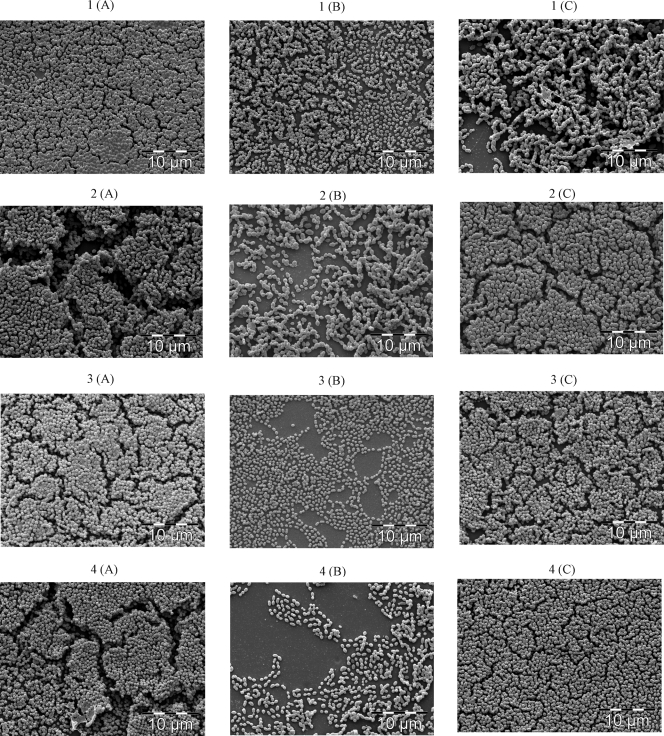
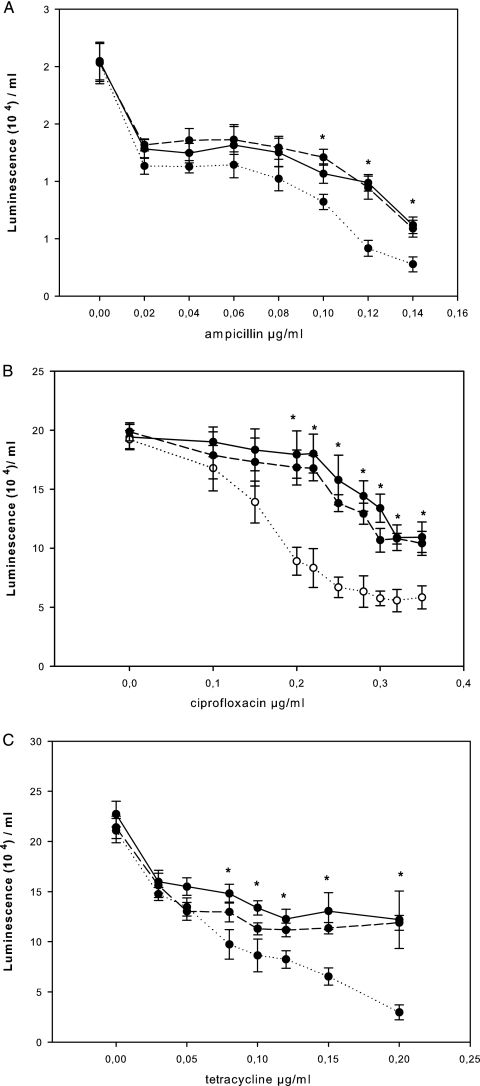
Bacteria utilize quorum-sensing communication to organize their behavior by monitoring the concentration of bacterial signals, referred to as autoinducers (AIs). The widespread detection of AI-2 signals and its enzymatic synthase (LuxS) in bacteria suggests that AI-2 is an inter- and intraspecies communication signal. We have previously shown that antibiotic susceptibility is affected by AI-2 signaling in Streptococcus anginosus. Since chronic infections involve persistent biofilms resilient to antibiotic treatment, we explored the role of AI-2/LuxS in Streptococcus intermedius biofilm formation and cell viability when the organism was exposed to sub-MICs of ampicillin, ciprofloxacin, or tetracycline. The S. intermedius wild type (WT) and its isogenic luxS mutant, strain SI006, were exposed to sub-MICs of ampicillin, ciprofloxacin, or tetracycline. Biofilms were formed on polystyrene discs in microtiter plates. To assess planktonic cell viability, the ATP microbial viability assay was performed and the numbers of CFU were determined. For complementation assays, the AI-2 precursor dihydroxy pentanedione (DPD) was used as a supplement for SI006. Relative luxS expression was quantified by real-time PCR. The sub-MICs of all three antibiotics increased biofilm formation in S. intermedius WT. However, biofilm formation by SI006 was either unaffected or reduced (P < or = 0.05). Bacterial viability tests of biofilm and planktonic cell cultures indicated that SI006 was more susceptible to antibiotics than the WT. DPD complemented the luxS mutant phenotype. Real-time PCR revealed modest yet significant changes in luxS expression in the presence of antibiotic concentrations that increased biofilm formation. In conclusion, in S. intermedius, AI-2/LuxS was involved in antibiotic susceptibility and increased biofilm formation at sub-MICs of antibiotic.
Figures
References
-
- Ahmed, N. A., F. C. Petersen, and A. A. Scheie. 2007. AI-2 quorum sensing affects antibiotic susceptibility in Streptococcus anginosus. J. Antimicrob. Chemother. 60:49-53. - PubMed
-
- Ahmed, N. A., F. C. Petersen, and A. A. Scheie. 2008. Biofilm formation and autoinducer-2 signaling in Streptococcus intermedius: role of thermal and pH factors. Oral Microbiol. Immunol. 23:492-497. - PubMed
-
- Anonymous. 2007. BacTiter-Glo™ microbial cell viability assay. Technical bulletin no. TB337. Promega, Madison, WI.
Publication types
MeSH terms
Substances
LinkOut - more resources
Full Text Sources
Other Literature Sources
Medical
Molecular Biology Databases
