


Antitumor compounds from marine actinomycetes
- PMID: 19597582
- PMCID: PMC2707044
- DOI: 10.3390/md7020210
Antitumor compounds from marine actinomycetes
Abstract
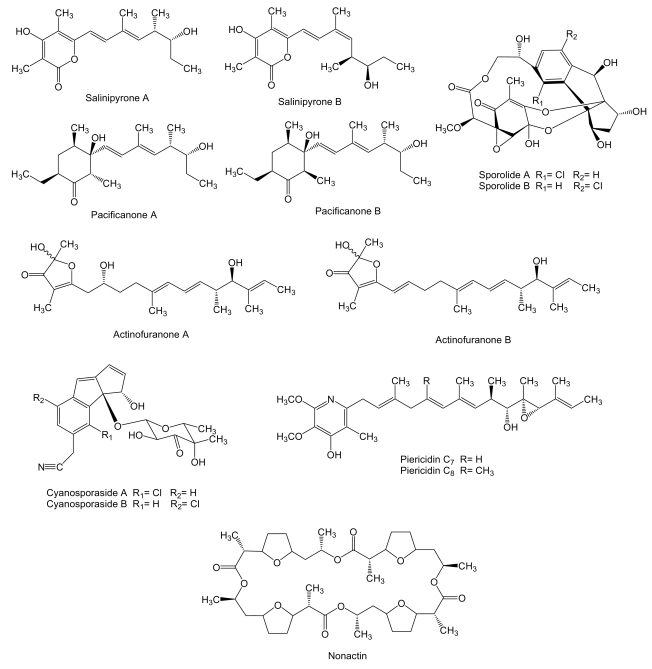
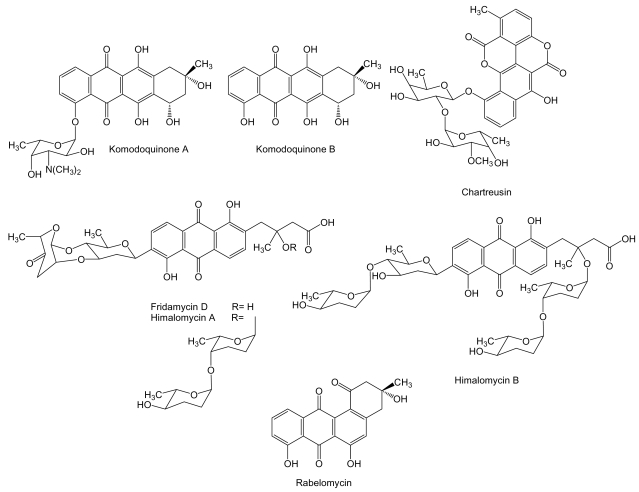
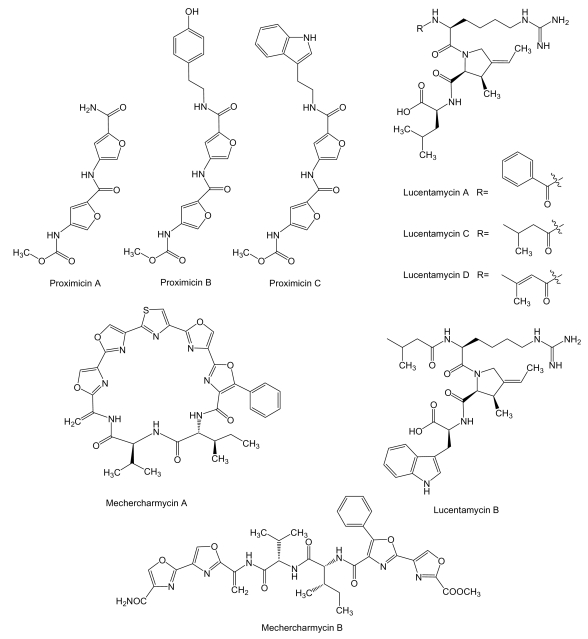
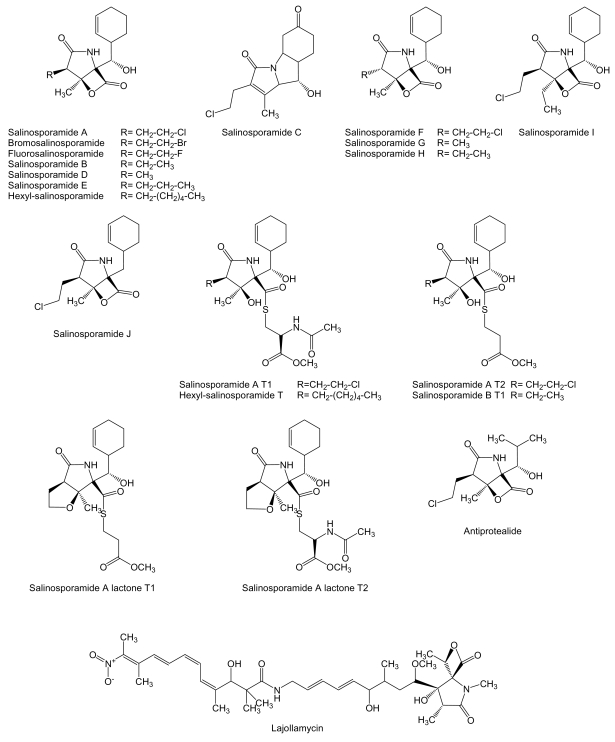
Chemotherapy is one of the main treatments used to combat cancer. A great number of antitumor compounds are natural products or their derivatives, mainly produced by microorganisms. In particular, actinomycetes are the producers of a large number of natural products with different biological activities, including antitumor properties. These antitumor compounds belong to several structural classes such as anthracyclines, enediynes, indolocarbazoles, isoprenoides, macrolides, non-ribosomal peptides and others, and they exert antitumor activity by inducing apoptosis through DNA cleavage mediated by topoisomerase I or II inhibition, mitochondria permeabilization, inhibition of key enzymes involved in signal transduction like proteases, or cellular metabolism and in some cases by inhibiting tumor-induced angiogenesis. Marine organisms have attracted special attention in the last years for their ability to produce interesting pharmacological lead compounds.
Keywords: anthracycline; indolocarbazole; macrolide; non-ribosomal peptide synthetase; polyketide synthase.
Figures







References
-
- Goodfellow M, Williams ST. Ecology of actinomycetes. Annu Rev Microbiol. 1983;37:189–216. - PubMed
-
- McCarthy AJ, Williams ST. Actinomycetes as agents of biodegradation in the environment-a review. Gene. 1992;115:189–192. - PubMed
-
- Stach JE, Bull AT. Estimating and comparing the diversity of marine actinobacteria. Antonie van Leeuwenhoek. 2005;87:3–9. - PubMed
-
- Wilkins K. Volatile metabolites from actinomycetes. Chemosphere. 1996;32:1427–1434.
Publication types
MeSH terms
Substances
LinkOut - more resources
Full Text Sources
Other Literature Sources
Molecular Biology Databases