Expression and function of anti-inflammatory interleukins: the other side of the vascular response to injury
- PMID: 19601851
- PMCID: PMC3290808
- DOI: 10.2174/157016109788340721
Expression and function of anti-inflammatory interleukins: the other side of the vascular response to injury
Abstract
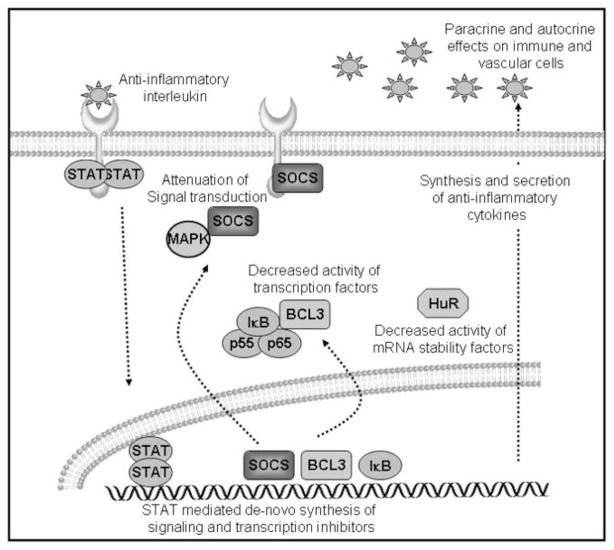
Common to multiple vascular diseases, including atherosclerosis, interventional restenosis, and transplant vasculopathy, is a localized inflammatory reaction. Activated vascular smooth muscle cells (VSMC) respond to local inflammation and migrate from the media into the lumen of the vessel where they proliferate and synthesize cytokines which they respond to in an autocrine fashion, sustaining the progression of the lesion. The deleterious effects of pro-inflammatory cytokines, particularly immunomodulatory interleukins, on vascular pathophysiology and development of these maladaptive processes have been the subject of intense study. Although a great deal of attention has been given to the negative effects of pro-inflammatory cytokines and interleukins, relatively little has been reported on the potentially beneficial paracrine and autocrine effects of anti-inflammatory interleukins on the vascular response to injury. The vast majority of emphasis on secretion and function of anti-inflammatory mediators has been placed on leukocytes. Consequently, the role of non-immune cells, and direct effects of anti-inflammatory interleukins on vascular cells is poorly understood. We will review the molecular mechanisms whereby anti-inflammatory interleukins inhibit signal transduction and gene expression in inflammatory cells. We will review studies in which beneficial "indirect" effects of anti-inflammatory interleukins on progression of vascular disease are achieved by modulation of immune function. We will also present the limited studies in which "direct" effects of these interleukins on VSMC and endothelial cells dampen the vascular response to injury. We propose that expression of immunomodulatory cytokines by activated vasculature may represent an auto-regulatory feed back mechanism to promote resolution of the vascular response to injury.
Figures
References
-
- Libby P. Inflammation in atherosclerosis. Nature. 2002;420:868–74. - PubMed
-
- Ross R. Atherosclerosis--an inflammatory disease. N Engl J Med. 1999;340:115–26. - PubMed
-
- Welt FGP, Rogers C. Inflammation and restenosis in the stent era. Arterioscler Thromb Vasc Biol. 2002;22:1769–76. - PubMed
-
- Ross R. The pathogenesis of atherosclerosis: a perspective for the 1990s. Nature. 1993;362:801–9. - PubMed
-
- Ventura HO, Mehra MR, Smart FW. Cardiac allograft vasculopathy: Current concepts. Am Heart J. 1995;129:791–8. - PubMed
Publication types
MeSH terms
Substances
Grants and funding
LinkOut - more resources
Full Text Sources
Medical