


Severe burn-induced endoplasmic reticulum stress and hepatic damage in mice
- PMID: 19603103
- PMCID: PMC2710291
- DOI: 10.2119/molmed.2009.00048
Severe burn-induced endoplasmic reticulum stress and hepatic damage in mice
Abstract
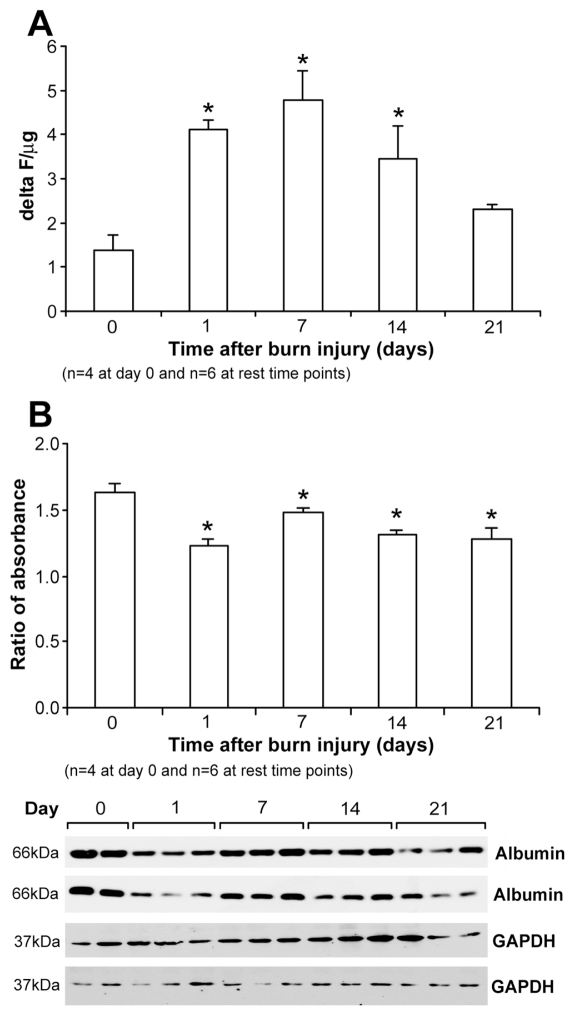
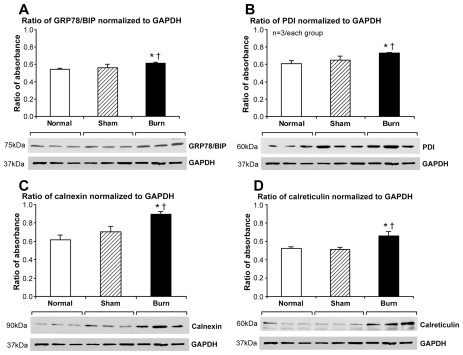
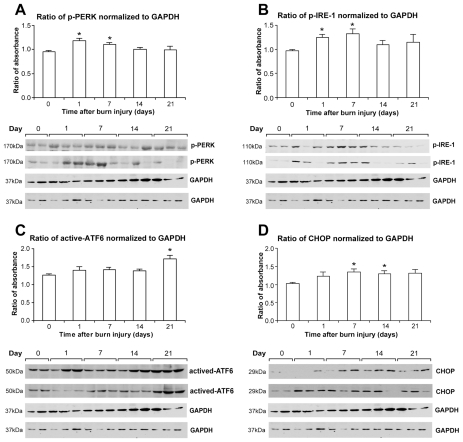
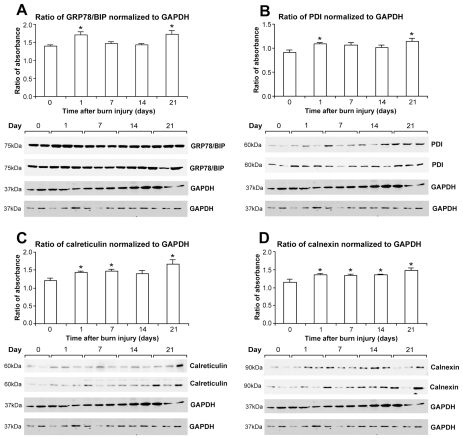
Severe burn injury results in liver dysfunction and damage, with subsequent metabolic derangements contributing to patient morbidity and mortality. On a cellular level, significant postburn hepatocyte apoptosis occurs and likely contributes to liver dysfunction. However, the underlying mechanisms of hepatocyte apoptosis are poorly understood. The endoplasmic reticulum (ER) stress response/unfolded protein response (UPR) pathway can lead to hepatocyte apoptosis under conditions of liver dysfunction. Thus, we hypothesized that ER stress/UPR may mediate hepatic dysfunction in response to burn injury. We investigated the temporal activation of hepatic ER stress in mice after a severe burn injury. Mice received a scald burn over 35% of their body surface and were killed at 1, 7, 14, and 21 d postburn. We found that severe burn induces hepatocyte apoptosis as indicated by increased caspase-3 activity (P < 0.05). Serum albumin levels decreased postburn and remained lowered for up to 21 d, indicating that constitutive secretory protein synthesis was reduced. Significantly, upregulation of the ER stress markers glucose-related protein 78 (GRP78)/BIP, protein disulfide isomerase (PDI), p-protein kinase R-like endoplasmic reticulum kinase (p-PERK), and inositol-requiring enzyme 1alpha (IRE-1alpha) were found beginning 1 d postburn (P < 0.05) and persisted up to 21 d postburn (P < 0.05). Hepatic ER stress induced by burn injury was associated with compensatory upregulation of the calcium chaperone/storage proteins calnexin and calreticulin (P < 0.05), suggesting that ER calcium store depletion was the primary trigger for induction of the ER stress response. In summary, thermal injury in mice causes long-term adaptive and deleterious hepatic function alterations characterized by significant upregulation of the ER stress response.
Figures
References
-
- Herndon DN, Hart DW, Wolf SE, Chinkes DL, Wolfe RR. Reversal of catabolism by beta-blockade after severe burns. N Engl J Med. 2001;345:1223–9. - PubMed
-
- Pereira C, Murphy K, Herndon D. Outcome measures in burn care: is mortality dead? Burns. 2004;30:761–71. - PubMed
-
- Brusselaers N, Monstrey SJ, Vandijck DM, Blot SI. Prediction of morbidity and mortality on admission to a burn unit. Plast Reconstr Surg. 2007;120:360–1. author reply 361. - PubMed
-
- Jeschke MG, Micak RP, Finnerty CC, Herndon DN. Changes in liver function and size after a severe thermal injury. Shock. 2007;28:172–7. - PubMed
-
- Thomas S, Wolf SE, Chinkes DL, Herndon DN. Recovery from the hepatic acute phase response in the severely burned and the effects of long-term growth hormone treatment. Burns. 2004;30:675–9. - PubMed
Publication types
MeSH terms
Substances
Grants and funding
LinkOut - more resources
Full Text Sources
Medical
Research Materials
Miscellaneous
